 Indietro
Gene Expression and Regulation: Mechanisms, Measurement, and Modeling
Guida di studio - Note intelligenti
 Appunti personalizzati basati sui tuoi materiali, ampliati con definizioni chiave, esempi e contesto.
Introduction to Gene Expression and Regulation
Overview
Gene expression is the process by which information encoded in DNA is used to produce proteins, which are essential for cellular structure and function. The regulation of gene expression determines which proteins are produced, in what quantity, and at what time, thereby controlling cellular behavior and organismal development.
Proteins are categorized as catalytic, defense, structural, transport, contractile, and gene regulatory proteins.
The diversity of life is a function of the assortment and combination of proteins expressed in cells.
The genetic code is composed of four nucleotide bases: adenine (A), cytosine (C), thymine (T), and guanine (G).
Each set of three bases (codon) specifies a particular amino acid.
DNA and Chromosome Structure
DNA Structure
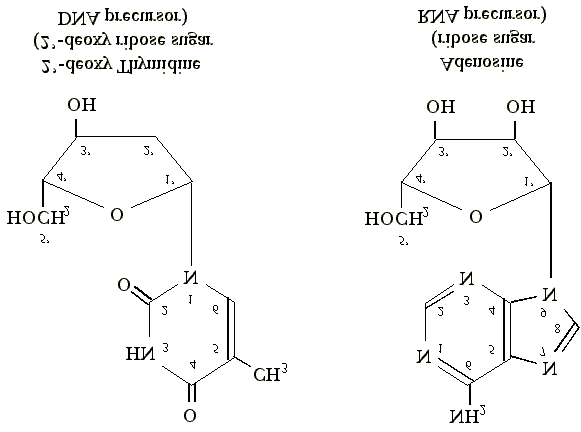
DNA exists as a double-stranded molecule, with each strand being complementary to the other. The strands are joined by specific base pairing: cytosine (C) pairs with guanine (G), and adenine (A) pairs with thymine (T).
DNA strands are directional, with a 5’ end and a 3’ end.
Hybridization is the process by which complementary DNA strands pair.
Redundancy in the double-stranded structure allows for repair mechanisms.
Transcription and Translation
Transcription
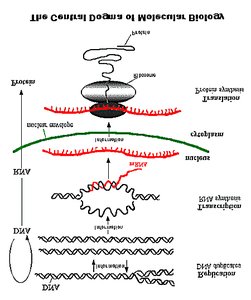
Transcription is the process by which DNA is copied into messenger RNA (mRNA) by RNA polymerase. The enzyme binds to an initiation site and synthesizes mRNA complementary to the DNA template.
Transcription proceeds from the 5’ to 3’ direction.
RNA uses uracil (U) instead of thymine (T).
Transcription ends at a termination signal.
Translation
Translation is the process by which mRNA is decoded to synthesize polypeptides (proteins). Ribosomes and transfer RNA (tRNA) facilitate the addition of amino acids to the growing polypeptide chain.
Polypeptides may undergo post-translational modification, such as folding, cleavage, or addition of functional groups.
Regulatory proteins produced can act as activators, enhancers, or inhibitors of further gene transcription.
Gene Regulation in Prokaryotes and Eukaryotes
Prokaryotic Gene Regulation
Prokaryotes (bacteria and archaea) have simpler gene regulatory mechanisms compared to eukaryotes.
Genome is a single circular DNA molecule, often supplemented by plasmids.
Gene arrangement is compact, with few non-coding regions.
Transcription is initiated at promoter sites, often regulated by activators and repressors.
Regulation strategies include regulated recruitment, polymerase activation, promoter activation, and repression.
Operons allow simultaneous expression of multiple genes involved in a single pathway.
Eukaryotic Gene Regulation
Eukaryotes have complex regulatory mechanisms due to chromosomal organization and the presence of non-coding regions.
Genome is organized into chromosomes, with DNA wrapped around histones forming nucleosomes.
Gene expression requires temporary unbinding of DNA from histones.
Genes are divided into exons (expressed) and introns (non-coding).
Pre-mRNA is processed by splicing, capping, and polyadenylation before translation.
Multiple RNA polymerases (Pol I, II, III) transcribe different types of genes.
Regulation involves transcription factors, enhancers, chromatin accessibility, methylation, and post-translational modifications.
Measurement of Gene Expression
Microarray Technology
Microarrays allow simultaneous measurement of expression levels of thousands of genes.
cDNA arrays: Spots of cDNA are deposited on a substrate; labeled cDNA from samples hybridizes to these spots.
Affymetrix arrays: Oligonucleotides are synthesized on a chip; signals from perfect match and mismatch probes are compared.
Hybridization conditions and labeling introduce sources of error; internal controls and replicates are used to minimize variability.
Experimental Manipulation of Gene Expression
Gene Knockout and Knockin
Gene manipulation techniques include knockout (disrupting a gene) and knockin (introducing a gene).
Single-celled organisms: Use viral vectors to introduce or disrupt genes.
Multicellular organisms: Use embryonic stem cells to create transgenic animals.
Mutagenesis: Induce mutations and observe phenotypic effects.
siRNA: Used for gene underexpression by blocking transcription.
Overexpression: Increase gene copy number or add promoter sequences.
Model Representation of Gene Regulation
Causal Models and Directed Acyclic Graphs (DAGs)
Gene regulatory networks are often modeled using DAGs, where nodes represent genes and edges represent regulatory relationships.
Variables can be boolean, discrete, or continuous.
Conditional independence and probability distributions are used to infer relationships from data.
Causal Markov Condition and Faithfulness are key assumptions for inferring causality.
Latent variables represent unmeasured causes.
Machine Learning Approaches to Gene Regulatory Networks
Search Strategies
Scoring searches: Assign scores to models based on likelihood and complexity (AIC, BIC).
Constraint-based searches: Use conditional independence tests to infer network structure (e.g., PC algorithm).
Hybrid approaches combine both strategies.
Clustering and PCA are used for exploratory analysis but do not infer causality.
Evaluating Machine Learning Models
Model Discovery and Validation
Models are evaluated by goodness-of-fit, ability to handle latent variables, noise tolerance, and complexity of transmission functions.
Bayesian networks are favored for their ability to model noisy data and latent variables, though they are limited to acyclic graphs.
"Gold standards" are partial regulatory networks established through traditional experiments, used for benchmarking algorithms.
Summary Table: Comparison of Prokaryotic and Eukaryotic Gene Regulation
Feature | Prokaryotes | Eukaryotes |
|---|---|---|
Genome Structure | Single circular DNA, plasmids | Multiple chromosomes, chromatin |
Gene Arrangement | Compact, few non-coding regions | Exons and introns, large non-coding regions |
Transcription | Single RNA polymerase | Multiple RNA polymerases (Pol I, II, III) |
Regulation | Promoters, activators, repressors, operons | Transcription factors, enhancers, chromatin remodeling, methylation |
mRNA Processing | None | Splicing, capping, polyadenylation |
