 Indietro
Genetic Variation and Its Clinical Impact on Drug Metabolism: Pharmacogenomics and CYP450 Enzymes
Guida di studio - Note intelligenti
 Appunti personalizzati basati sui tuoi materiali, ampliati con definizioni chiave, esempi e contesto.
Clinical Significance of Genomic Variations on Pharmacokinetics and Pharmacodynamics
Introduction to Pharmacogenomics
Pharmacogenomics is the study of how genetic variation influences individual responses to drugs, particularly through effects on pharmacokinetics (drug absorption, distribution, metabolism, and excretion) and pharmacodynamics (drug effects on the body). Genetic differences in drug-metabolizing enzymes (DMEs), especially the cytochrome P450 (CYP) family, can lead to significant variability in drug efficacy and toxicity among patients.
Pharmacokinetics: How the body processes a drug, including metabolism by DMEs.
Pharmacodynamics: How a drug affects the body, often mediated by genetic variation in drug targets.
Cytochrome P450 (CYP) Enzymes: A major class of DMEs responsible for metabolizing many drugs; genetic variants in these enzymes are commonly tested in clinical pharmacogenomics.
Classification of Metabolizer Phenotypes
Metabolizer Categories and Clinical Implications
Individuals are classified into metabolizer phenotypes based on their genetic variants in CYP genes, which determine the rate at which they metabolize drugs. The main categories are:
Poor Metabolizer (PM): Greatly diminished or absent enzyme activity; higher risk of drug toxicity due to slow elimination.
Intermediate Metabolizer (IM): Moderately reduced enzyme activity; somewhat higher risk of toxicity and slower drug clearance.
Extensive Metabolizer (EM): Normal enzyme activity; considered the reference or 'normal' metabolizer.
Ultra-Rapid Metabolizer (UM): Increased enzyme activity, often due to multiple gene copies; risk of subtherapeutic drug levels due to rapid elimination.
Drug Plasma Concentration Profiles by Metabolizer Status
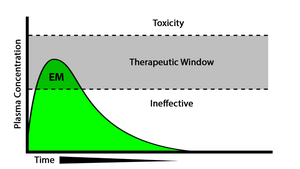
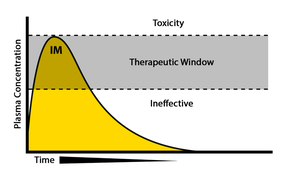
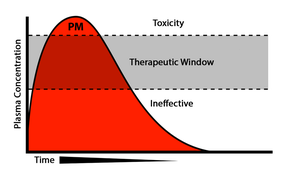
The plasma concentration of a drug over time varies significantly depending on metabolizer phenotype. Maintaining drug levels within the therapeutic window is crucial for efficacy and safety.
Extensive Metabolizer (EM): Achieves and maintains drug levels within the therapeutic window.
Intermediate Metabolizer (IM): Drug levels may approach or exceed the upper limit of the therapeutic window, increasing risk of toxicity.
Poor Metabolizer (PM): Drug levels often exceed the therapeutic window, with a high risk of toxicity and adverse effects.
Ultra-Rapid Metabolizer (UM): Drug is eliminated so quickly that therapeutic levels may not be reached, resulting in ineffective treatment.
Composite profiles illustrate the differences among all metabolizer types:
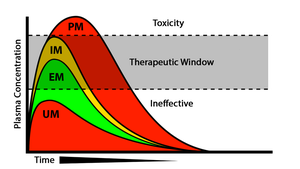
Genetic Variation in Drug Metabolism: CYP450 Enzymes
Star Allele Nomenclature and Example Reports
CYP gene variants are denoted using star (*) allele nomenclature (e.g., CYP2C9*1A/*2). Clinical pharmacogenomic reports summarize a patient's genotype for each CYP enzyme, guiding drug selection and dosing.
Example: A patient with CYP2C9*1A/*1A is an EM; CYP2C9*1A/*2 is an IM; CYP2C9*2/*2 is a PM.
Clinical Application: Drug and Pro-Drug Metabolism
It is essential to distinguish between drugs and pro-drugs:
Drugs: Active as administered; metabolized for elimination.
Pro-Drugs: Inactive until metabolized into active form by DMEs.
The clinical consequences of metabolizer status differ for drugs and pro-drugs:
Category | Drug | Pro-Drug |
|---|---|---|
Poor Metabolizer (PM) | Eliminates slowly (risk of toxicity) | Activates slowly (possibly ineffective) |
Intermediate Metabolizer (IM) | Eliminates somewhat slowly | Activates somewhat slowly |
Extensive Metabolizer (EM) | Eliminates at normal rate | Activates at normal rate |
Ultra-Rapid Metabolizer (UM) | Eliminates very fast (possibly ineffective) | Activates very fast (risk of toxicity) |
Interpreting Pharmacogenomic (PGx) Test Reports
PGx Report Structure and Clinical Use
PGx reports summarize a patient's genotype for key CYP enzymes, using star allele nomenclature to classify metabolizer status. This information helps clinicians tailor drug selection and dosing to minimize adverse effects and maximize efficacy.
Example Table: CYP gene, genotype, and corresponding metabolizer status for a patient.
Common CYP Enzymes and Drug Substrates
Many clinically important drugs are metabolized by CYP enzymes. Knowledge of a patient's CYP genotype can inform the choice and dosing of drugs such as antidepressants, anticoagulants, beta-blockers, and statins.
CYP1A2: Caffeine, clozapine
CYP2C19: Omeprazole, clopidogrel
CYP2C9: Ibuprofen, warfarin
CYP2D6: Codeine, metoprolol
CYP3A4/5: Statins, benzodiazepines
Key Pharmacogenomic Resources
Essential Databases and Guidelines
Several resources provide evidence-based information for interpreting pharmacogenomic data:
PharmGKB: Curates drug-gene relationships and dosing guidelines.
FDA Table of Pharmacogenomic Biomarkers: Lists drugs with pharmacogenomic labeling.
CPIC Guidelines: Provides clinical recommendations for drug selection and dosing based on genotype.
PharmVar: Maintains standardized nomenclature for pharmacogene variants.
These resources are essential for translating genetic information into clinical practice, ensuring safe and effective drug therapy tailored to individual genetic profiles.
