 Indietro
Mendelian Genetics: Principles, Crosses, and Applications
Guida di studio - Note intelligenti
 Appunti personalizzati basati sui tuoi materiali, ampliati con definizioni chiave, esempi e contesto.
Mendelian Genetics
Introduction to Mendel and His Research
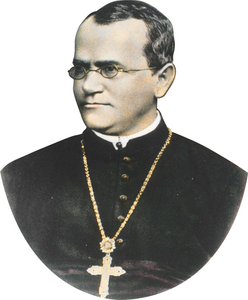
Mendelian genetics is founded on the pioneering work of Gregor Mendel, whose experiments with garden peas established the basic principles of heredity. Mendel's background in physics and botany, along with his methodical approach and support from the monastery, set the stage for his success in genetic research.
Key Point 1: Mendel's education and scientific training enabled him to design rigorous experiments.
Key Point 2: His choice of Pisum sativum (garden peas) was crucial due to their diverse traits, ease of cultivation, and short generation times.
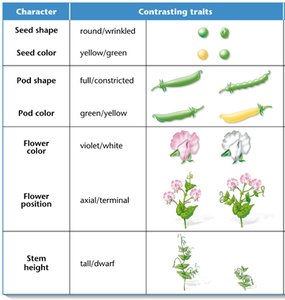
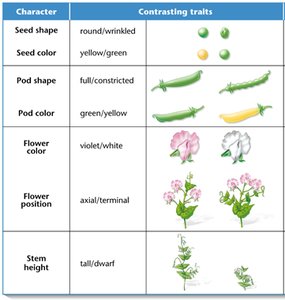
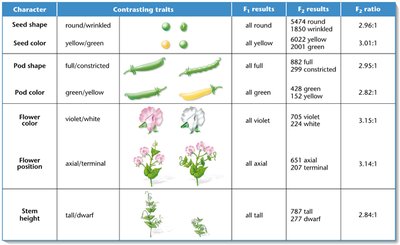
Example: Mendel examined traits such as seed shape, seed color, pod shape, pod color, flower color, flower position, and stem height.
Experimental Design and True Breeding Strains
Mendel's experiments were carefully structured, focusing on traits with two contrasting phenotypes and using true breeding strains to ensure consistency across generations. His meticulous record-keeping allowed for accurate analysis of inheritance patterns.
Key Point 1: True breeding strains produce offspring identical to themselves for a given trait.
Key Point 2: Limiting traits to two phenotypes simplified the analysis of inheritance.
Monohybrid Crosses and Reciprocal Crosses
Monohybrid crosses involve one characteristic with two possible traits, such as round versus wrinkled seeds. Reciprocal crosses demonstrate that inheritance is not sex-linked, as the outcome is the same regardless of which parent contributes the trait.
Key Point 1: The parental (P1) generation consists of true breeding individuals for each trait.
Key Point 2: The F1 generation shows only the dominant trait, while the F2 generation reveals both traits in a specific ratio.
Example: Crossing round seed plants (RR) with wrinkled seed plants (rr) produces all round seeds in F1, but both round and wrinkled seeds in F2.

Mendel's Three Postulates
Based on his F2 results, Mendel formulated three foundational postulates:
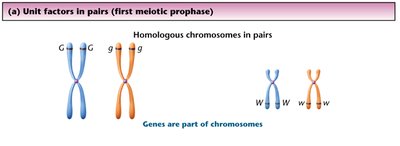
Postulate 1: Unit Factors in Pairs - Each individual receives one unit factor (gene) from each parent, resulting in pairs.
Postulate 2: Dominance and Recessiveness - When two different unit factors are present, one is dominant and expressed, while the other is recessive and masked.
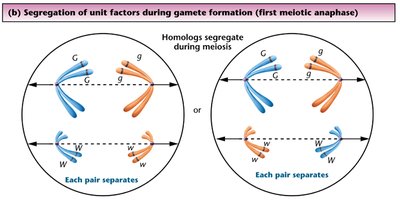
Postulate 3: Segregation - During gamete formation, paired unit factors segregate randomly, so each gamete receives only one factor.
Genotype and Phenotype
The genotype refers to the genetic makeup (e.g., RR, Rr, rr), while the phenotype is the observable trait (e.g., round or wrinkled seeds). The relationship between genotype and phenotype is central to Mendelian genetics.
Key Point 1: Homozygous dominant (RR) and heterozygous (Rr) both produce the dominant phenotype.
Key Point 2: Homozygous recessive (rr) produces the recessive phenotype.
Punnett Squares and Monohybrid Crosses
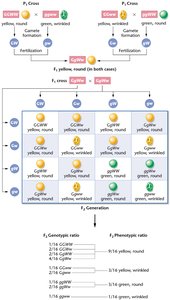
Punnett squares are used to visualize the possible gametic combinations and predict the outcome of genetic crosses. In a monohybrid cross, the F1 generation is heterozygous, and the F2 generation shows a 3:1 phenotypic ratio.
Key Point 1: Punnett squares help calculate genotype and phenotype ratios.
Key Point 2: The F2 generation from Rr x Rr yields RR, Rr, and rr genotypes in a 1:2:1 ratio.
Example: Phenotypic ratio is 3 round : 1 wrinkled.
Dihybrid Crosses and Mendel's Fourth Postulate
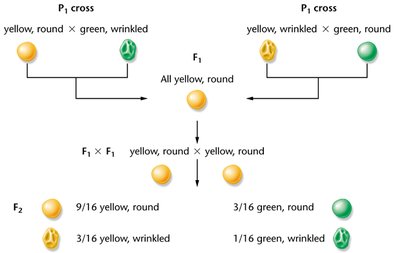
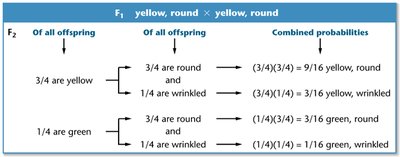
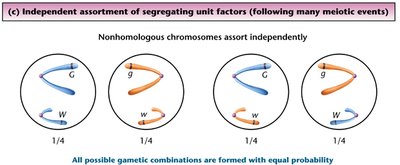
Dihybrid crosses examine two traits simultaneously, revealing the principle of independent assortment. Mendel's fourth postulate states that genes for different traits assort independently during gamete formation.
Key Point 1: Dihybrid crosses produce a 9:3:3:1 phenotypic ratio in the F2 generation.
Key Point 2: Independent assortment increases genetic variation.
Example: Crossing RRDD x rrdd yields RrDd offspring; crossing RrDd x RrDd produces four phenotypes.
Trihybrid Crosses and Probability
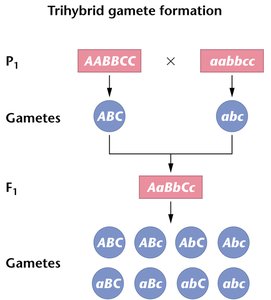
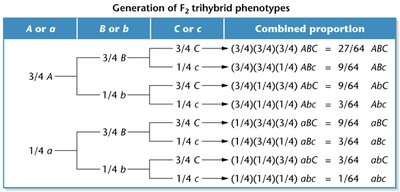
Trihybrid crosses involve three traits, and probability calculations are used to determine the expected phenotypic ratios. The combined probability for each phenotype is calculated by multiplying the probabilities for each trait.
Key Point 1: Trihybrid crosses yield 64 possible combinations in the F2 generation.
Key Point 2: Probability theory simplifies the calculation of expected outcomes.
Example: The probability of obtaining a specific phenotype (e.g., AaBbCc) is .
Test Crosses
A test cross is used to determine the genotype of an individual displaying a dominant phenotype. By crossing with a homozygous recessive individual, the resulting offspring reveal whether the dominant individual is homozygous or heterozygous.
Key Point 1: If all offspring show the dominant trait, the tested individual is homozygous dominant.
Key Point 2: If offspring show both dominant and recessive traits, the tested individual is heterozygous.
Mendel's Postulates and Modern Genetics
Mendel's postulates, developed before molecular genetics, align closely with current understanding of gene behavior during meiosis. Chromosomes carry genes, and their segregation and independent assortment explain Mendel's observations.
Key Point 1: Unit factors correspond to genes located on chromosomes.
Key Point 2: Segregation and independent assortment occur during meiosis.
Genetic Variation and Independent Assortment
Independent assortment of homologous chromosomes during meiosis leads to extensive genetic variation. The number of possible gamete combinations is , where n is the haploid chromosome number. Fertilization further increases genetic diversity.
Key Point 1: For humans, , so possible gametes.
Key Point 2: Fertilization results in over possible genetic combinations.
Key Point 3: Crossing over during meiosis adds even more variation.
Additional info: Mendel's principles are foundational to classical genetics and remain relevant in modern molecular biology.
