 Indietro
Modification of Mendelian Ratios: Non-Mendelian Inheritance Patterns
Guida di studio - Note intelligenti
 Appunti personalizzati basati sui tuoi materiali, ampliati con definizioni chiave, esempi e contesto.
Modification of Mendelian Ratios
Introduction
While Mendel's laws describe the basic principles of inheritance, many traits do not follow simple dominant and recessive patterns. Modification of Mendelian ratios occurs when alleles of one gene do not exhibit simple dominance and recessiveness, or when more than one gene affects a given trait. These phenomena are central to understanding complex inheritance patterns in genetics.
Non-Mendelian Genetic Ratios
Wild-Type, Loss-of-Function, Gain-of-Function, and Neutral Alleles
Alleles can affect gene function in various ways:
Wild-type allele: The most prevalent, often dominant, but not always.
Loss-of-function allele: Reduces gene product function; extreme cases are called null alleles.
Gain-of-function allele: Results from overexpression or new function of a gene.
Neutral mutation: No visible phenotypic difference.
Different Alleles and Genetic Notation
Genetic Notation and Allelic Variation
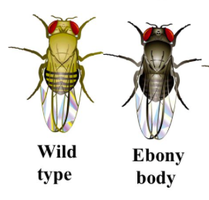
Researchers use various notations to represent alleles. Genes are often named after the recessive trait. For example, in fruit flies:
e+/e+ or +/+: Gray (wildtype) homozygote
e+/e or +/e: Gray heterozygote
e/e: Ebony (mutant) homozygote
Alternative alleles may be designated by superscripts, such as IA, IB, and IO for blood types.
Incomplete (Partial) Dominance
Definition and Example
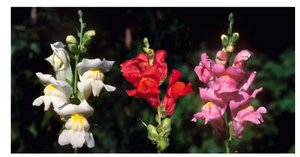
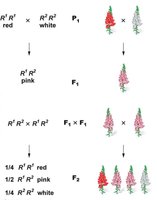
Incomplete dominance occurs when neither allele is dominant, and the heterozygote exhibits an intermediate phenotype. For example, in snapdragons, crossing red and white flowers produces pink offspring.
R1R1: Red
R2R2: White
R1R2: Pink (intermediate)
Genotypic and Phenotypic Ratios
Genotypic ratio: 1:1 (R1R1 : R1R2)
Phenotypic ratio: 1:1 (Red : Pink)
Co-dominance
Definition and Example
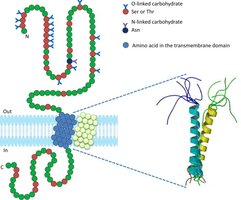
Co-dominance occurs when both alleles at a locus produce fully functional, distinct products. An example is the MN blood group system:
Genotype | Phenotype |
|---|---|
LMLM | M |
LMLN | MN |
LNLN | N |
At the molecular level, these are distinct glycoproteins on the surface of red blood cells.
Multiple Alleles
ABO Blood Group System
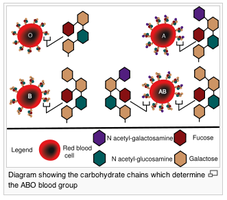
Some loci have more than two alleles. The ABO blood group system is a classic example:
Genotype | Antigen | Phenotype |
|---|---|---|
IAIA | A | A |
IAIO | A | A |
IBIB | B | B |
IBIO | B | B |
IAIB | A and B | AB |
IOIO | None | O |
The A and B antigens are derived from a common precursor (H antigen), and the gene encodes a glycosyltransferase enzyme.
Lethal Alleles
Definition and Example
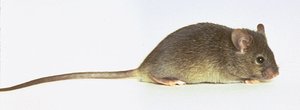
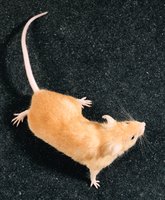
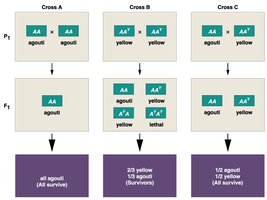
Lethal alleles are mutations in essential genes that cause death when present in a homozygous state. For example, the agouti gene in mice:
A: Agouti color (wild-type)
AY: Yellow (gain-of-function mutation)
AYAY: Lethal (embryonic death)
Gene Interaction and Epistasis
Epistasis
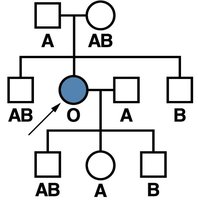
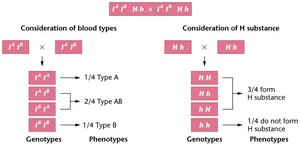
Epistasis occurs when the expression of one gene masks or modifies the expression of another gene. For example, the Bombay phenotype in humans:
hh: Masks A or B antigens, resulting in O phenotype
Complementation Analysis
Definition and Example
Complementation analysis determines whether two mutations are in the same gene or different genes. If crossing two mutants produces wild-type offspring, the mutations are in different genes.
Pleiotropy
Definition and Examples
Pleiotropy occurs when a single gene affects multiple traits. Examples include:
Marfan syndrome: Mutation in fibrillin protein affects multiple organs.
Porphyria variegata: Mutation affects hemoglobin metabolism, leading to multiple symptoms.
X-Linkage
Definition and Example
X-linked genes are located on the X chromosome. The Y chromosome contains few genes and acts as a homologue during meiosis. X-linkage was first documented in Drosophila by Thomas Hunt Morgan.
XY: Male
XX: Female
Hemizygous: Males have only one copy of X-linked genes
Sex-Limited and Sex-Influenced Inheritance
Definition and Examples
Sex-limited traits are expressed only in one gender, while sex-influenced traits are affected by gender. Examples:
Sex-limited: Milk production in cows, cock feathering in fowl
Sex-influenced: Pattern baldness in humans
Phenotypic Expression and Environmental Effects
Penetrance and Expressivity
Phenotypic expression can be influenced by genetic background and environment:
Penetrance: Percentage of individuals expressing a trait
Expressivity: Range of expression of a mutant genotype
Genetic Background and Environmental Effects
Timing of disease onset: Some diseases show late onset (e.g., Huntington's disease)
Genetic anticipation: Disease severity increases in successive generations
Conditional mutations: Phenotype depends on environmental conditions (e.g., temperature-sensitive alleles)
Position effects: Gene location affects expression
Extranuclear Inheritance
Definition and Examples
Genes in mitochondria and chloroplasts do not follow Mendelian inheritance. Mutations in these organelles can affect traits such as leaf color in plants and energy production in humans.
Summary Table: Modified Mendelian Ratios
Inheritance Pattern | Key Features | Example |
|---|---|---|
Incomplete Dominance | Intermediate phenotype in heterozygotes | Snapdragon flower color |
Co-dominance | Both alleles fully expressed | MN blood group |
Multiple Alleles | More than two alleles at a locus | ABO blood group |
Lethal Alleles | Homozygous state causes death | Agouti gene in mice |
Epistasis | One gene masks another | Bombay phenotype |
Pleiotropy | One gene affects multiple traits | Marfan syndrome |
X-Linkage | Gene located on X chromosome | Color blindness |
Sex-Limited/Influenced | Trait expression depends on sex | Pattern baldness |
Extranuclear Inheritance | Organelle genes affect traits | Leaf color in plants |
