 Indietro
Sex Determination and Dosage Compensation in Humans and Drosophila
Guida di studio - Note intelligenti
 Appunti personalizzati basati sui tuoi materiali, ampliati con definizioni chiave, esempi e contesto.
Sex Determination and Sex Chromosomes
Overview of Sex Determination Mechanisms
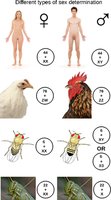
Sex determination is the biological system that establishes the development of sexual characteristics in an organism. In many species, this process is governed by specific chromosomes known as sex chromosomes. The mechanisms of sex determination can vary widely among different organisms, including chromosomal, environmental, and behavioral systems.
Chromosomal Sex Determination: Involves specific combinations of sex chromosomes (e.g., XX/XY in humans, ZZ/ZW in birds).
Environmental Sex Determination: Sex is determined by environmental factors such as temperature (e.g., some reptiles).
Behavioral Sex Determination: Social interactions can influence sex in some fish species.
Sex Determination in Humans
Chromosomal Basis of Sex
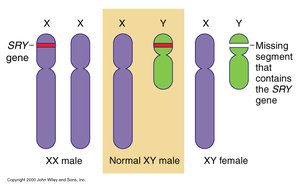
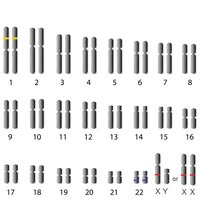
In humans, sex is determined by the presence or absence of the Y chromosome. Females are homogametic (XX), while males are heterogametic (XY). The critical determinant of male development is the presence of the SRY gene on the Y chromosome.
Females (XX): Homogametic, produce only X-bearing gametes.
Males (XY): Heterogametic, produce both X- and Y-bearing gametes.
SRY Gene: The sex-determining region of the Y chromosome, responsible for initiating male development.
Evidence for Chromosomal Sex Determination
The role of the Y chromosome in sex determination was established through the study of unusual karyotypes and molecular analyses. Individuals with atypical numbers or structures of sex chromosomes often display altered sexual development, providing insight into the genetic basis of sex determination.
Sex Chromosome Aneuploidies
Abnormal numbers of sex chromosomes can lead to syndromes with distinct phenotypes:
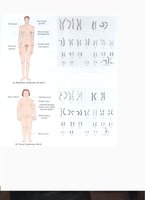
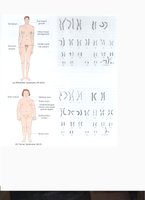
Turner Syndrome (45, X): Individuals have a single X chromosome, leading to reduced fertility and other developmental features.
Klinefelter Syndrome (47, XXY): Individuals have an extra X chromosome, resulting in reduced fertility and variable intellectual disability.
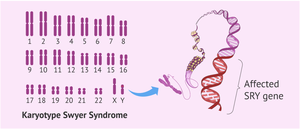
Swyer Syndrome (46, XY): Individuals have an XY karyotype but develop as females due to mutations affecting the SRY gene.
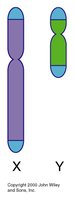
Structure of the X and Y Chromosomes
The X and Y chromosomes contain regions of homology known as pseudoautosomal regions (PARs), which allow for pairing during meiosis. The SRY (or MSY) region on the Y chromosome is critical for male development.
Pseudoautosomal Regions (PAR1 and PAR2): Shared regions between X and Y chromosomes, containing several genes.
SRY/MSY Locus: Contains the testis-determining factor (TDF) gene, essential for male differentiation.
Sex Determination in Drosophila
Chromosomal Mechanism
In Drosophila melanogaster (fruit flies), sex is determined by the ratio of X chromosomes to sets of autosomes (X:A ratio), rather than the presence of a Y chromosome. Normal diploid females are XX, and males are XY, but the mechanism differs from humans.
X:A Ratio: The number of X chromosomes divided by the number of sets of autosomes determines sex.
Females: X:A ratio = 1 (e.g., XX with two sets of autosomes).
Males: X:A ratio = 0.5 (e.g., XY with two sets of autosomes).
Intersex: X:A ratio between 0.5 and 1 leads to ambiguous sexual characteristics.
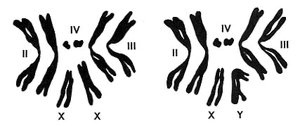
Examples of Drosophila Karyotypes and Sex
Karyotype | Sex |
|---|---|
XX, diploid autosomes | Female |
XY, diploid autosomes | Male |
X, diploid autosomes | Male |
XXY, diploid autosomes | Female |
XXX, triploid autosomes | Female |
XX, triploid autosomes | Intersex |
Gene Function and Dosage
Gene Function and Interaction
Genes encode proteins that carry out cellular functions. The products of genes often interact in complex pathways to accomplish cellular processes. For example, enzymes in a metabolic pathway work together to convert substrates into final products.
Gene Dosage: The number of copies of a gene can affect the amount of protein produced.
Hemizygosity: Males (XY) have only one copy of X-linked genes, which can lead to dosage imbalances compared to females (XX).
Dosage Compensation
Dosage compensation is the mechanism that balances the expression of X-linked genes between males and females. This ensures that both sexes produce similar amounts of X-linked gene products, despite differences in chromosome number.
In Drosophila: X-linked genes are hyperactivated in males to match the expression in females.
In Mammals: One X chromosome in females is randomly inactivated (Barr body), as described by the Lyon Hypothesis.
Lyon Hypothesis and X Inactivation
The Lyon Hypothesis states that one X chromosome in each somatic cell of female mammals is inactivated, forming a Barr body. This process is random and leads to mosaic expression of X-linked genes in heterozygous females.
Barr Body: The inactivated X chromosome visible in the nucleus.
Phenotype Mosaics: Females heterozygous for X-linked genes can show mosaic phenotypes, such as tortoiseshell and calico coat patterns in cats.


Mechanism of X Inactivation
X inactivation is controlled by the X-inactivation center (Xic) on the X chromosome, which contains the Xist gene. Xist RNA coats the chromosome to be inactivated, recruiting proteins that compact it into a Barr body. The process involves initiation, spreading, and maintenance phases.
Initiation: Occurs during embryonic development; one X chromosome is chosen for inactivation.
Spreading: Xist RNA coats the chromosome, leading to its compaction.
Maintenance: The inactivated state is preserved through subsequent cell divisions.
Dosage Compensation Mechanisms in Different Species
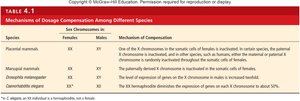
Different organisms use distinct mechanisms to achieve dosage compensation. The table below summarizes these mechanisms:
Species | Sex Chromosomes | Mechanism of Compensation |
|---|---|---|
Placental mammals | XX (female), XY (male) | One X chromosome in females is inactivated in somatic cells. |
Marsupial mammals | XX (female), XY (male) | Paternal X chromosome is inactivated in somatic cells of females. |
Drosophila melanogaster | XX (female), XY (male) | Male X chromosome is hyperactivated to match female expression. |
C. elegans | XX (hermaphrodite), XO (male) | Expression of X-linked genes is reduced by half in hermaphrodites. |
Summary
Sex determination in humans is controlled by the presence of the Y chromosome and the SRY gene, while in Drosophila it is determined by the X:A ratio.
Abnormalities in sex chromosome number or structure can lead to syndromes with distinct phenotypes.
Dosage compensation mechanisms ensure balanced expression of X-linked genes between sexes, with different strategies in mammals and Drosophila.
X inactivation in mammals leads to mosaic phenotypes in heterozygous females.
Additional info: Environmental and behavioral sex determination mechanisms exist in other species, such as reptiles and some fish, but are not the primary focus of this summary.
