 Indietro
Sex Determination and Sex Chromosomes
Guida di studio - Note intelligenti
 Appunti personalizzati basati sui tuoi materiali, ampliati con definizioni chiave, esempi e contesto.
Sex Determination and Sex Chromosomes
Introduction to Sex Determination
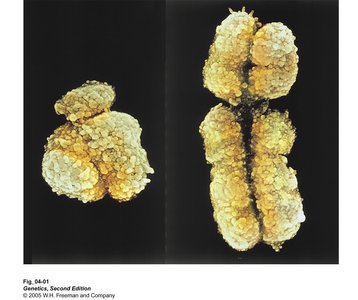
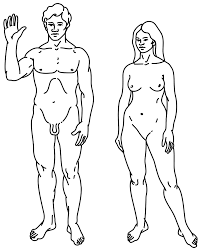
Sex determination is the biological system that establishes the development of sexual characteristics in an organism. In animals, including humans, this is often visible as phenotypic dimorphism, where males and females have distinct physical traits. The underlying genetic mechanisms involve heteromorphic chromosomes, which are dissimilar chromosomes such as the X and Y chromosomes in mammals.
Mechanisms of Sex Determination
Genetic Mechanisms: Determined by the presence or absence of specific chromosomes or the balance of chromosomes.
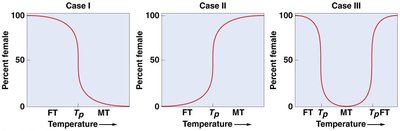
Environmental Mechanisms: Factors such as temperature, behavior, chemicals, or selective pressures can influence sex determination in some species.
Genetic Sex Determination Systems
Humans and Mammals: The XY System
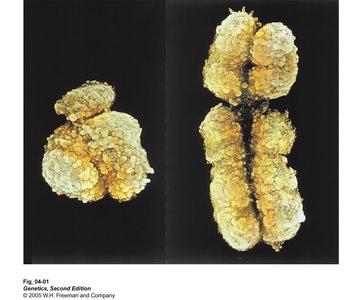
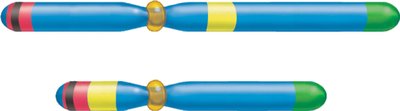
Humans have 46 chromosomes: 44 autosomes and 2 sex chromosomes (X or Y). Males are XY (heterogametic, hemizygous for X), and females are XX (homogametic). The presence of the Y chromosome determines maleness.
Birds: The ZW System
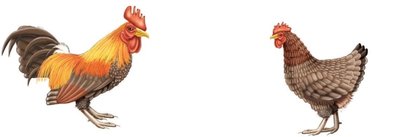
In birds, sex chromosomes are designated Z and W. Males are ZZ (homogametic), and females are ZW (heterogametic). This is the opposite of the mammalian system.
Plants: Monoecious and Dioecious Systems
Most plants are monoecious, producing both male and female gametes. Dioecious plants are either male or female, with some species using X and Y chromosomes for sex determination, similar to animals.


Insects: XO and XY Systems
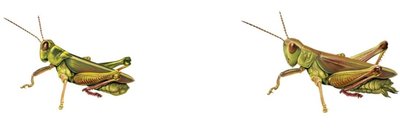
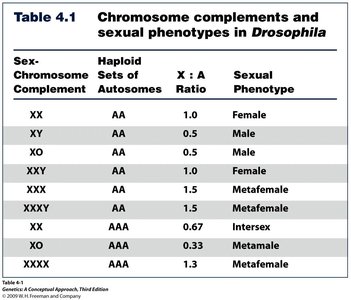
In some insects, such as crickets, males are XO (one X chromosome, no Y), and females are XX. In others, like Drosophila, males are XY or XO, and females are XX. The ratio of X chromosomes to sets of autosomes (X:A ratio) determines sex in Drosophila:
If X:A = 0.5, the fly is male.
If X:A = 1.0, the fly is female.
Haplo-Diploid System in Hymenoptera (Bees, Ants, Wasps)
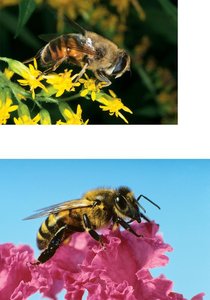
In honeybees, males (drones) are haploid and develop from unfertilized eggs, while females (workers and queens) are diploid and develop from fertilized eggs.
Environmental Sex Determination
Examples in Reptiles and Fish
Behavioral: Clownfish are protandrous hermaphrodites, switching gender based on hormonal control.
Temperature: In American alligators, temperature during egg incubation determines sex: at 33°C, males develop; below 33°C, females; above 33°C, mostly males.
Dosage Compensation
Need for Dosage Compensation
Because males and females can have different numbers of X chromosomes, mechanisms are required to equalize the expression of X-linked genes. Dosage compensation ensures that gene expression from the X chromosome is balanced between sexes.
Mechanisms of Dosage Compensation
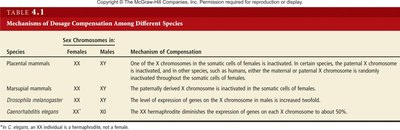
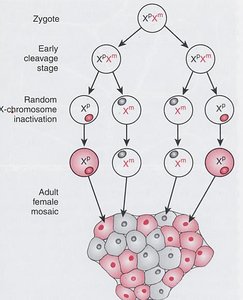
In mammals, one X chromosome in females is inactivated (X-chromosome inactivation).
In Drosophila, the single X in males is hyperactivated.
In C. elegans, both X chromosomes in hermaphrodites are partially inactivated.
X-Chromosome Inactivation in Mammals (Lyon Hypothesis)
According to the Lyon hypothesis, one X chromosome in each somatic cell of XX females is randomly inactivated during early development. This inactivation is maintained in all descendant cells, resulting in mosaic gene expression.

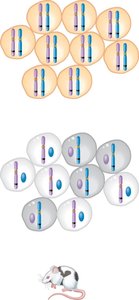
Barr Bodies
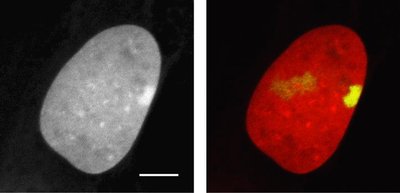
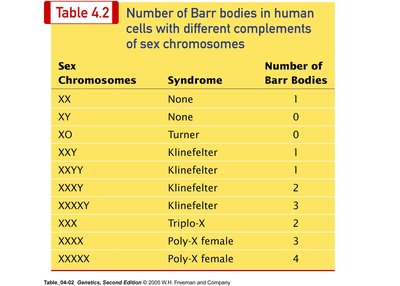
The inactivated X chromosome condenses into a Barr body, which is visible under a microscope. The number of Barr bodies is always one less than the number of X chromosomes in a cell.

X Inactivation in Aneuploid Karyotypes
Klinefelter Syndrome (XXY): One Barr body, phenotypically male.
Turner Syndrome (XO): No Barr body, phenotypically female.
Triple X Syndrome (XXX): Two Barr bodies, phenotypically female.
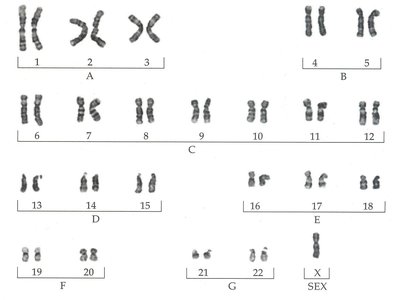
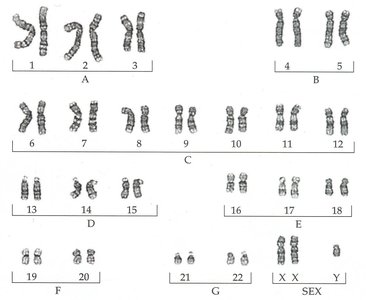
Mechanism of X-Chromosome Inactivation
X inactivation involves the X-inactivation center (Xic) and the Xist gene. Xist RNA coats the X chromosome to be inactivated, recruiting proteins that compact it into a Barr body. The process includes initiation (counting X chromosomes), spreading (coating and compaction), and maintenance (through cell divisions).
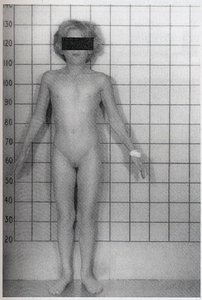
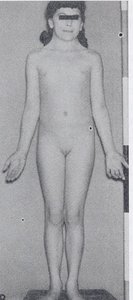
Properties of Mammalian X and Y Chromosomes
Pseudoautosomal and Sex-Linked Genes
Pseudoautosomal regions: Genes found on both X and Y chromosomes, inherited like autosomal genes.
Sex-linked genes: Genes unique to X (X-linked) or Y (holandric) chromosomes, with distinct inheritance patterns.
Sex Determining Region Y (SRY) Gene
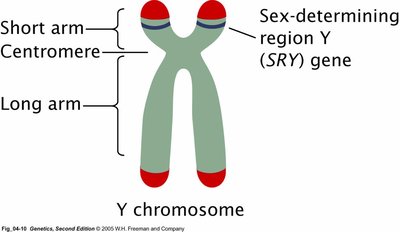
The SRY gene, located on the short arm of the Y chromosome, is the primary determinant of male development. Translocation of SRY to the X chromosome can result in XX males, while mutations or deletions can cause XY females.
Examples of Sex Chromosome Abnormalities
XX Male Syndrome: Caused by translocation of SRY to the X chromosome.
XY Female Syndrome: Caused by mutation or deletion of SRY.
Summary Table: Number of Barr Bodies in Human Cells
Sex Chromosomes | Syndrome | Number of Barr Bodies |
|---|---|---|
XX | None | 1 |
XY | None | 0 |
XO | Turner | 0 |
XXY | Klinefelter | 1 |
XXXY | Klinefelter | 2 |
XXXXY | Klinefelter | 3 |
XXX | Triplo-X | 2 |
XXXX | Poly-X female | 3 |
XXXXX | Poly-X female | 4 |
