 Indietro
Sex Determination, Dosage Compensation, and X Inactivation in Mammals
Guida di studio - Note intelligenti
 Appunti personalizzati basati sui tuoi materiali, ampliati con definizioni chiave, esempi e contesto.
Sex Determination and Sex Chromosomes
Overview of Sex Chromosomes
Sex determination in many organisms is governed by the presence of specific sex chromosomes. In mammals, females are typically XX and males are XY. The difference in the number of X chromosomes between sexes creates a need for mechanisms to balance gene expression.
XX Females: Two X chromosomes
XY Males: One X chromosome
This difference can lead to unequal expression of X-linked genes if not compensated.
Dosage Compensation
Mechanisms of Dosage Compensation
Dosage compensation ensures that organisms with different numbers of X chromosomes have similar levels of X-linked gene products. The mechanism varies among species:
Drosophila (fruit flies): Males "upregulate" their single X chromosome so that X-linked genes are expressed at levels comparable to females.
Mammals (including humans, mice, and cats): One X chromosome in each XX cell is randomly inactivated, forming a Barr body.
X Inactivation and Barr Bodies
In mammals, X inactivation is the process by which one of the two X chromosomes in females is silenced to balance gene expression with males. The inactivated X chromosome condenses into a structure called a Barr body.
Barr Body: A dense, compact structure in the nucleus representing the inactivated X chromosome.
All normal XX females are genetic mosaics, with different cells inactivating different X chromosomes.
Formation of Patches of Colored Fur in Mammals
Random X Inactivation and Mosaicism
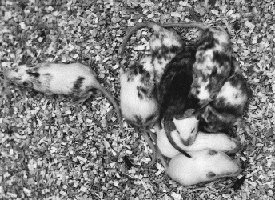
Random X inactivation during early embryonic development leads to mosaic expression of X-linked genes. This phenomenon is visually evident in animals with X-linked coat color genes, such as mice and cats.
In early embryos, all X chromosomes are active. As development proceeds, one X is randomly inactivated in each cell.
Cells descended from a single progenitor will have the same X chromosome inactivated, leading to patches of tissue expressing different alleles.
Calico Cats: A Classic Example
Calico cats display patches of black and orange fur due to X inactivation. The gene for coat color is X-linked, with two alleles: black and orange. Most calico cats are female because they have two X chromosomes, allowing for mosaic expression.
Genotypes: XBXO (calico), XBXB (black), XOXO (orange)
Random inactivation of one X chromosome in each cell leads to patches of black or orange fur.

Mechanism of X Inactivation
Stages of X Inactivation
X inactivation in mammals occurs in three main stages:
Initiation: During early embryogenesis, the number of X inactivation centers (Xics) is counted, and one X chromosome is targeted for inactivation.
Spreading: The Xist gene produces a long noncoding RNA that coats the X chromosome, leading to its compaction and inactivation.
Maintenance: The inactivated state is preserved through subsequent cell divisions (mitosis) but is reset during oogenesis.
The inactivated X chromosome remains condensed as a Barr body throughout the organism's life, except during the formation of eggs, when both X chromosomes become active again.
Methods of Sex Determination in Different Organisms
Sex Determination Systems
Different organisms use various mechanisms for sex determination:
Humans: XY system (XX = female, XY = male); variations include XO (female), XXY (male), XYY (male)
Drosophila: Ratio of X chromosomes to autosomes determines sex (XO = male, XXY = female)
Reptiles: Temperature-dependent sex determination
Practice Problems: X-Linked Inheritance and Coat Color
Genetic Crosses in Cats and Mice
Understanding X-linked inheritance can be reinforced through genetic crosses involving coat color in cats and mice. Below are some example problems and their solutions:
Cross | Predicted Offspring (with Sex) |
|---|---|
Two orange cats (XOXO × XOY) | All offspring are orange: females (XOXO), males (XOY) |
Two black cats (XBXB × XBY) | All offspring are black: females (XBXB), males (XBY) |
Calico female × orange male (XBXO × XOY) | 1 black male : 1 orange male : 1 calico female : 1 orange female |
Spotted female mouse × black male (XBXW × XBY) | 1 black male : 1 white male : 1 black female : 1 spotted female |
White female mouse × black male (XWXW × XBY) | All males white, all females spotted |
Key: XB = black allele, XO = orange allele, XW = white allele
Summary
Sex determination and dosage compensation are essential for balancing gene expression between sexes.
X inactivation leads to mosaicism in females, which is visually evident in coat color patterns in mammals.
Practice problems reinforce understanding of X-linked inheritance and its phenotypic consequences.
