 Indietro
Telomeres, Telomerase, and DNA Repair Mechanisms
Guida di studio - Note intelligenti
 Appunti personalizzati basati sui tuoi materiali, ampliati con definizioni chiave, esempi e contesto.
Telomeres and Chromosome Structure
Chromosome Anatomy
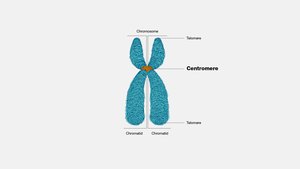
Chromosomes are linear DNA molecules with specialized structures at their ends and center. The centromere is the constricted region essential for proper segregation during cell division, while telomeres are repetitive DNA sequences at the ends that protect chromosomes from degradation and fusion.
Centromere: Region where sister chromatids are joined and spindle fibers attach during mitosis and meiosis.
Telomere: Repetitive nucleotide sequences (e.g., TTAGGG in humans) at chromosome ends, ranging from 2–50 kilobases, with 300–8,000 repeats.
DNA Replication and the End-Replication Problem
DNA Replication Overview
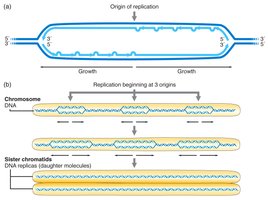
DNA replication is a semi-conservative process involving multiple enzymes. The lagging strand requires RNA primers, which are later removed and replaced with DNA. However, at the very end of linear chromosomes, this process leaves a gap that cannot be filled, leading to progressive shortening of chromosomes with each cell division.
Primase: Synthesizes short RNA primers needed for DNA polymerase to initiate synthesis on the lagging strand.
DNA Polymerase: Extends DNA from the primers but cannot fill the final gap at the 5' end after primer removal.
End-Replication Problem: The inability to replicate the extreme ends of linear DNA, resulting in telomere shortening.
Telomerase: The Solution to Telomere Shortening
Structure and Function of Telomerase
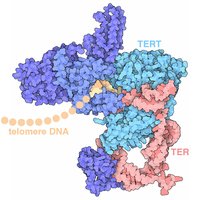
Telomerase is a ribonucleoprotein enzyme that extends telomeres. It contains an RNA template and an RNA-dependent DNA polymerase (reverse transcriptase) activity, allowing it to synthesize telomeric DNA repeats onto the 3' ends of chromosomes.
RNA Component: Serves as a template for adding telomeric repeats.
TERT (Telomerase Reverse Transcriptase): The catalytic protein subunit that synthesizes DNA from the RNA template.
Mechanism: Telomerase binds to the single-stranded 3' overhang, extends it by adding repeats, then translocates and repeats the process. The RNA component also acts as a primer for DNA polymerase to fill in the complementary strand.
Biological Significance of Telomerase
Telomerase activity is essential for maintaining telomere length in certain cell types. Most somatic cells repress telomerase after embryonic development, leading to gradual telomere shortening and cellular aging. In contrast, germ cells, stem cells, and many cancer cells maintain telomerase activity, allowing for continued division.
Hayflick Limit: The finite number of cell divisions before telomeres become critically short, leading to cellular senescence.
Immortal Cells: Cells that express telomerase indefinitely (e.g., germ cells, stem cells, cancer cells).
Cancer: Many cancers reactivate telomerase, enabling unlimited proliferation.
Medical and Research Implications
Telomerase in Aging and Disease
Telomere length is associated with cellular aging and organismal lifespan. Short telomeres are linked to age-related diseases, while excessive telomerase activity is a hallmark of cancer. Therapeutic strategies include telomerase inhibitors for cancer and potential telomerase activation for age-related conditions.
Imetelstat: A telomerase inhibitor in clinical trials for cancer therapy.
Research: Ongoing studies aim to manipulate telomerase for treating cancer and delaying aging.
Telomere Length and Aging: Data Analysis
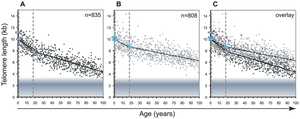
Studies show that telomere length decreases with age in human blood cells. The rate of shortening varies between cell types, such as lymphocytes and granulocytes.
Cell Type | Telomere Shortening Rate |
|---|---|
Lymphocytes | Shorten more slowly |
Granulocytes | Shorten more rapidly |
DNA Repair Mechanisms
DNA Proofreading and Mismatch Repair (MMR)
DNA replication is highly accurate due to proofreading by DNA polymerase, which removes mismatched bases using 3'-5' exonuclease activity. However, some errors escape proofreading and are corrected by the mismatch repair (MMR) system.
Proofreading: Reduces error rate to ~1 per 1 billion nucleotides.
MMR: Identifies, nicks, digests, replaces, and ligates mismatched bases post-replication.
Strand Discrimination: In bacteria, the parent strand is methylated, allowing the repair machinery to distinguish it from the newly synthesized strand. In eukaryotes, nicks in the new strand serve as signals.
Key Proteins: MutS, MutL, and MutH in bacteria.
Other DNA Repair Pathways
Cells possess multiple repair mechanisms to address different types of DNA damage:
BER (Base Excision Repair): Repairs small, non-helix-distorting base lesions.
NER (Nucleotide Excision Repair): Removes bulky, helix-distorting lesions (e.g., UV-induced thymine dimers).
HR (Homologous Recombination): Repairs double-strand breaks using a homologous template.
NHEJ (Non-Homologous End Joining): Repairs double-strand breaks without a template, often causing mutations.
Summary Table: DNA Repair Mechanisms
Repair Mechanism | Type of Damage | Key Features |
|---|---|---|
Proofreading | Mismatched bases during replication | 3'-5' exonuclease activity of DNA polymerase |
MMR | Mismatches post-replication | MutS, MutL, MutH; strand discrimination |
BER | Small base lesions | Glycosylases remove damaged bases |
NER | Bulky adducts, thymine dimers | Excision of oligonucleotide segment |
HR | Double-strand breaks | Uses homologous DNA as template |
NHEJ | Double-strand breaks | Direct ligation, error-prone |
Key Terms and Concepts
Telomere: Protective DNA-protein structure at chromosome ends.
Telomerase: Enzyme that extends telomeres using an RNA template.
Senescence: State where cells stop dividing due to critically short telomeres.
Mismatch Repair (MMR): Post-replication repair system for correcting base mismatches.
Proofreading: DNA polymerase activity that removes misincorporated nucleotides during replication.
