 Indietro
Telomeres, Telomerase, and DNA Repair Mechanisms: Study Notes for Genetics
Guida di studio - Note intelligenti
 Appunti personalizzati basati sui tuoi materiali, ampliati con definizioni chiave, esempi e contesto.
Telomeres and Chromosome Structure
Chromosome Anatomy
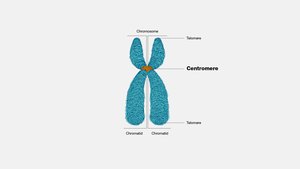
Chromosomes are linear structures composed of DNA and associated proteins. They contain specialized regions called centromeres and telomeres. The centromere is the constricted region where sister chromatids are joined, while telomeres are repetitive DNA sequences at the ends of chromosomes that protect them from degradation.
Centromere: Essential for proper chromosome segregation during cell division.
Telomere: Consists of thousands of repeats (e.g., TTAGGG in humans) and prevents chromosome ends from being recognized as DNA breaks.
Chromatid: Each chromosome consists of two sister chromatids after DNA replication.
DNA Replication and the End-Replication Problem
DNA Replication Overview
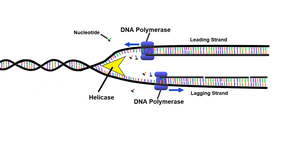
DNA replication is a highly regulated process that ensures genetic material is accurately copied before cell division. Key molecular players include DNA polymerase, primase, helicase, and ligase.
DNA Polymerase: Synthesizes new DNA strands using existing DNA as a template.
Primase: Adds RNA primers to initiate DNA synthesis, especially on the lagging strand.
Helicase: Unwinds the DNA double helix.
Ligase: Joins DNA fragments together.
The End-Replication Problem
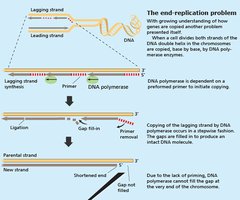
During DNA replication, the lagging strand requires RNA primers. When these primers are removed at the very end of the chromosome, there is no upstream DNA to fill the gap, resulting in progressive telomere shortening with each cell division.
Lagging Strand Synthesis: Involves Okazaki fragments and RNA primers.
Gap Formation: Removal of the final RNA primer leaves a gap that cannot be filled, causing telomere shortening.
Biological Consequence: Over many cell divisions, telomeres become critically short, affecting cell viability.
Telomerase: Structure and Function
Telomerase Mechanism
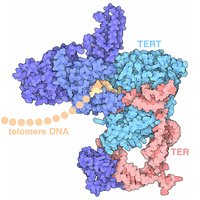
Telomerase is a ribonucleoprotein enzyme that solves the end-replication problem by extending telomeres. It contains an RNA template and a protein component with reverse transcriptase activity.
RNA-dependent DNA Polymerase: Telomerase uses its RNA template to synthesize DNA at chromosome ends.
TERT and TER: TERT is the protein component; TER is the RNA template.
Process: Telomerase binds to the telomere, extends the DNA, then translocates and repeats the process.
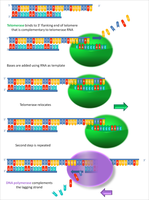
Telomerase Activity in Cells
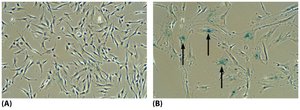
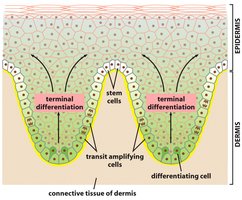
Most somatic cells do not express telomerase after embryonic development, leading to telomere shortening and cellular aging. However, germ cells, stem cells, and some cancer cells maintain telomerase activity, conferring 'immortality'.
Hayflick Limit: When telomeres become critically short, cells enter senescence and stop dividing.
Immortal Cells: Germ cells and somatic stem cells continue to express telomerase.
Cancer: Many cancer cells reactivate telomerase, enabling unlimited division.
Medical Applications and Research
Telomerase inhibitors are being explored as cancer therapies, while telomerase activation is studied for anti-aging interventions.
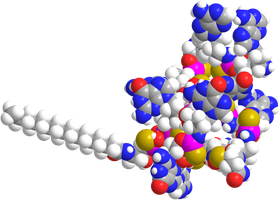
Imetelstat: A telomerase inhibitor in clinical trials for cancer treatment.
Telomere Length and Aging
Research Evidence
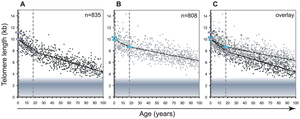
Studies show that telomere length decreases with age in various cell types, such as lymphocytes and granulocytes. The rate of shortening varies between cell types.
Telomere Length Measurement: Used as a biomarker for cellular aging.
Cell Type Differences: Lymphocytes and granulocytes exhibit different rates of telomere shortening.
DNA Repair Mechanisms
DNA Proofreading and Mismatch Repair (MMR)
DNA polymerase possesses proofreading activity, reducing replication errors. Mismatch repair (MMR) corrects errors that escape proofreading, further safeguarding genome integrity.
Proofreading: DNA polymerase uses 3'-5' exonuclease activity to remove mismatched bases.
MMR Steps: Identify, nick, digest, replace, ligate.
Strand Recognition: In bacteria, methylation distinguishes the template strand; in humans, nicks in the new strand are recognized.
Other DNA Repair Pathways
Cells employ multiple repair mechanisms to address different types of DNA damage:
BER (Base Excision Repair): Repairs single-base lesions.
NER (Nucleotide Excision Repair): Removes bulky DNA adducts.
HR (Homologous Recombination): Repairs double-strand breaks using a homologous template.
NHEJ (Non-Homologous End Joining): Repairs double-strand breaks without a template.
DNA Damage and Mutation
Sources of DNA Damage
DNA can be damaged by endogenous processes (e.g., spontaneous mutations, replication errors) and environmental agents (e.g., UV light, tobacco smoke, industrial pollutants).
Spontaneous Mutations: Deamination, depurination, replication slippage.
Environmental Mutagens: UV light, chemicals, food-related mutagens.
Biological Impact
Mutations drive evolution but can also cause disease. Efficient DNA repair is essential for maintaining genome stability and preventing cancer.
Summary Table: DNA Repair Mechanisms
Repair Mechanism | Type of Damage | Key Proteins/Enzymes |
|---|---|---|
Proofreading | Replication errors | DNA polymerase (3'-5' exonuclease) |
MMR | Mismatched bases | MutS, MutL, MutH |
BER | Single-base lesions | DNA glycosylase, AP endonuclease |
NER | Bulky adducts | Excision nuclease |
HR | Double-strand breaks | Rad51, BRCA1/2 |
NHEJ | Double-strand breaks | Ku70/80, DNA-PK |
Key Equations
Telomere Repeat Sequence (Human): $\text{Telomere sequence} = (\text{TTAGGG})_n$
DNA Polymerase Error Rate: $\text{Error rate after proofreading} \approx 1/10^9$
Conclusion
Telomeres and telomerase are crucial for chromosome stability and cellular longevity. DNA repair mechanisms, including proofreading and mismatch repair, protect the genome from mutations that can lead to disease and aging. Understanding these processes is fundamental in genetics and has important medical applications.
