 Indietro
Atoms and the Periodic Table: Foundations of GOB Chemistry
Guida di studio - Note intelligenti
 Appunti personalizzati basati sui tuoi materiali, ampliati con definizioni chiave, esempi e contesto.
Atomic Theory and the Structure of Atoms
Introduction to the Atom
The atom is the smallest unit of an element that retains the chemical properties of that element. The concept of the atom originated from the Greek word atomos, meaning "indivisible." Modern atomic theory has evolved to describe the atom as a complex structure composed of subatomic particles.
Modern Atomic Theory
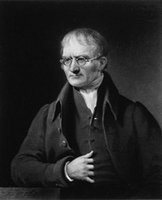
John Dalton formulated the first modern atomic theory, which states:
All matter is composed of atoms.
Atoms of a given element are unique and differ from those of other elements.
Chemical compounds are formed by atoms combining in specific ratios.
Chemical reactions involve rearrangement of atoms, not their destruction.
Subatomic Particles
Atoms are composed of three main subatomic particles:
Protons: Positively charged particles found in the nucleus.
Neutrons: Neutral particles also located in the nucleus.
Electrons: Negatively charged particles that occupy the electron cloud surrounding the nucleus.
The atomic mass unit (amu) is used to express atomic and subatomic masses, defined relative to the mass of a carbon-12 atom.
Describing the Atom: Elements and Atomic Number
Atomic Number and Mass Number
Atomic Number (Z): The number of protons in the nucleus of an atom; defines the element.
Mass Number (A): The total number of protons and neutrons in the nucleus.
In a neutral atom, the number of electrons equals the number of protons.
Formulas:
Atomic number:
Mass number:
Isotopes
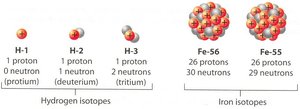
Isotopes are atoms of the same element (same atomic number) but with different numbers of neutrons, resulting in different mass numbers.
Nuclear Symbol and Isotope Notation
Nuclear symbol: , where X is the atomic symbol, A is the mass number, and Z is the atomic number.
Alternative notation: X-A (e.g., C-12, C-14).
Practice Table: Determining Subatomic Particles
The following table helps organize information about isotopes and their subatomic particles:
Protons | Neutrons | Electrons | Atomic Number | Mass Number | Atomic Symbol |
|---|---|---|---|---|---|
6 | 7 | ||||
42 | |||||
55 | 133 |

Isotopes and Atomic Weight (Mass)
Atomic Weight
The atomic weight (or atomic mass) of an element is the weighted average mass of all naturally occurring isotopes of that element, measured in amu.
Formula for atomic weight:
Example: Calculating the atomic mass of gallium or chlorine using their isotopic abundances and masses.
The Periodic Table
Development and Structure
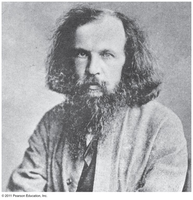
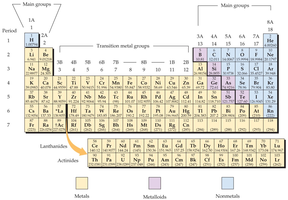
The periodic table organizes elements by increasing atomic number and recurring chemical properties. Dmitri Mendeleev is credited with its development.
Classification of Elements
Metals: Malleable, ductile, lustrous, and good conductors of heat and electricity.
Nonmetals: Poor conductors, brittle, and have low melting/boiling points.
Metalloids: Exhibit properties intermediate between metals and nonmetals.
Groups and Periodicity
Elements in the same group (vertical column) have similar chemical behavior due to similar valence electron configurations.
Periodicity refers to the repeating patterns of properties across periods (rows) and groups (columns).
Characteristics of Selected Groups
Group 1/1A – Alkali Metals: Shiny, soft, very reactive metals with low melting points. Not found pure in nature; react vigorously with water.
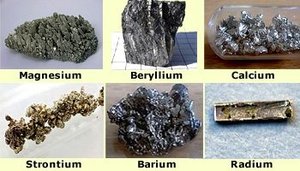
Group 2A – Alkaline Earth Metals: Lustrous, silvery, less reactive than alkali metals, never found pure in nature.
Halogens (Group 7A): Colorful, corrosive nonmetals, found only in compounds in nature (e.g., NaCl).
Group 8A – Noble Gases: Colorless, chemically inert gases.

Electronic Structure of Atoms
Quantum Mechanical Model
Electrons in atoms have both particle-like and wave-like properties. They occupy quantized energy levels, meaning only certain energies are allowed. The arrangement of electrons determines the chemical properties of elements.
Shells, Subshells, and Orbitals
Shells (Energy Levels): Indicated by numbers (1, 2, 3, ...); higher numbers mean higher energy and greater distance from the nucleus.
Subshells: Regions within shells (s, p, d, f) with specific shapes and energies.
Orbitals: Regions within subshells where electrons are likely to be found; each orbital can hold up to two electrons.
Electron Configurations
The electron configuration of an atom describes the arrangement of electrons in shells and subshells. The rules for filling electrons are:
Aufbau Principle: Electrons fill the lowest energy orbitals first.
Pauli Exclusion Principle: Each orbital can hold a maximum of two electrons with opposite spins.
Hund’s Rule: Electrons occupy degenerate orbitals singly before pairing up.
Example configuration for nitrogen:
Valence Electrons and the Periodic Table
Valence electrons are the electrons in the outermost shell and are responsible for chemical bonding.
Elements in the same group have the same number of valence electrons, leading to similar chemical properties.
Electron-Dot (Lewis) Symbols
Lewis Symbols
The electron-dot (Lewis) symbol represents an element’s valence electrons as dots around the atomic symbol. This notation is useful for visualizing bonding and predicting chemical reactivity.
Example: For an element in group 5A, the Lewis symbol would have five dots around the symbol.
