 Indietro
Chapter 2 Atoms, Molecules, and Ions: Foundations of Modern Chemistry
Guida di studio - Note intelligenti
 Appunti personalizzati basati sui tuoi materiali, ampliati con definizioni chiave, esempi e contesto.
Atoms, Molecules, and Ions
Evolution of Atomic Theory
The concept of the atom has evolved significantly from ancient philosophy to modern science. Early Greek philosophers, such as Democritus, proposed that matter is composed of indivisible particles called "atomos." Over time, scientific discoveries led to the development of several atomic models, each improving our understanding of atomic structure.
Dalton's Model (1803): Atoms are solid, indivisible spheres.
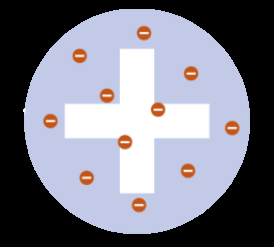
Thomson's Model (1904): Atoms contain negatively charged electrons embedded in a positive sphere (plum pudding model).
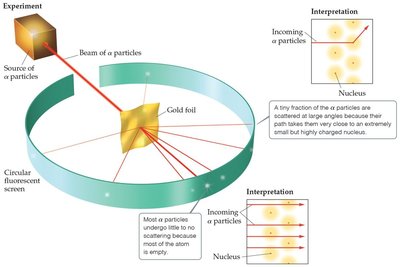
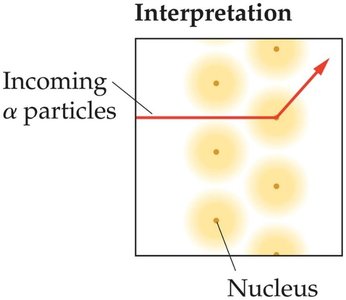
Rutherford's Model (1911): Atoms have a small, dense, positively charged nucleus with electrons orbiting around it.
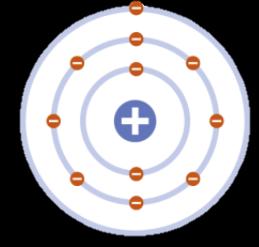
Bohr's Model (1913): Electrons move in fixed orbits with quantized energies around the nucleus.
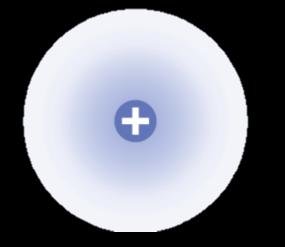
Schrödinger's Model (1926): Electrons exist in probabilistic clouds called orbitals, not fixed paths.

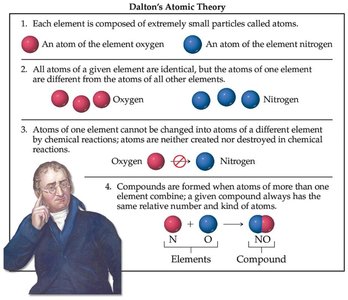
Dalton’s Atomic Theory
John Dalton formulated the first modern atomic theory, which laid the foundation for our understanding of chemical reactions and matter.
All matter is composed of extremely small particles called atoms.
Atoms of a given element are identical in mass and properties; atoms of different elements differ.
Atoms cannot be created or destroyed in chemical reactions.
Compounds are formed by the combination of atoms in fixed, whole-number ratios.
Fundamental Laws of Chemistry
Law of Constant Composition (Proust): A chemical compound always contains the same proportion of elements by mass.
Law of Conservation of Mass (Lavoisier): Mass is neither created nor destroyed in chemical reactions.
Law of Multiple Proportions (Dalton): When two elements form more than one compound, the masses of one element that combine with a fixed mass of the other are in small whole-number ratios.
Discovery of Subatomic Particles
Experiments in the late 19th and early 20th centuries revealed that atoms are composed of smaller particles: electrons, protons, and neutrons.
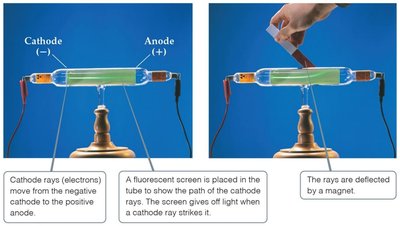
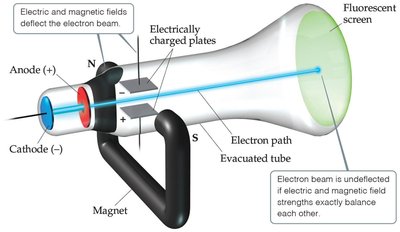
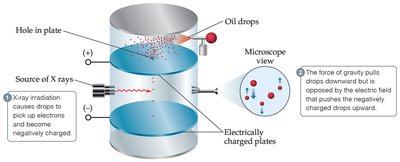
Electron: Discovered by J.J. Thomson using cathode ray tubes; negatively charged and much lighter than protons or neutrons.
Proton: Positively charged particle found in the nucleus.
Neutron: Neutral particle found in the nucleus, similar in mass to the proton.
Atomic Models and Structure
Plum Pudding Model (Thomson): Atoms are spheres of positive charge with embedded electrons.
Nuclear Model (Rutherford): Most of the atom's mass and all positive charge are concentrated in a tiny nucleus; electrons move around the nucleus.
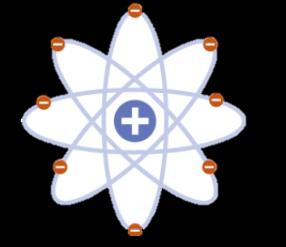
Bohr Model: Electrons occupy fixed orbits with quantized energies.
Quantum Model (Schrödinger): Electrons exist in orbitals, regions of probability rather than fixed paths.
Radioactivity and Subatomic Particles
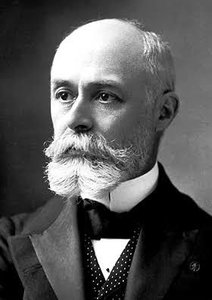
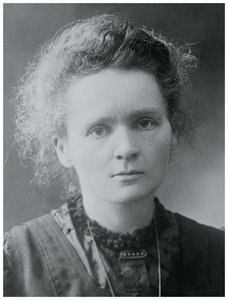
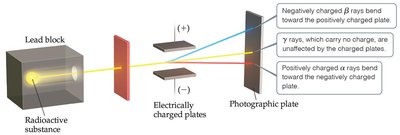
Radioactivity is the spontaneous emission of radiation from unstable atomic nuclei. Discovered by Becquerel and studied by the Curies, it revealed the existence of subatomic particles and nuclear energy.
Alpha (α) particles: Positively charged, relatively heavy.
Beta (β) particles: Negatively charged, similar to electrons.
Gamma (γ) rays: Uncharged, high-energy electromagnetic radiation.
Subatomic Particles: Properties
Particle | Charge | Mass (amu) |
|---|---|---|
Proton | +1 | 1.0073 |
Neutron | 0 | 1.0087 |
Electron | -1 | 5.486 \times 10^{-4} |
1 atomic mass unit (amu) = g
The Periodic Table
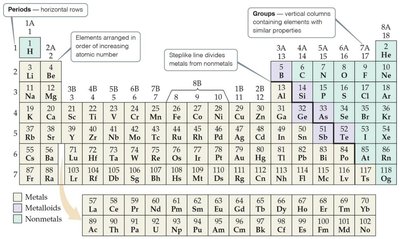
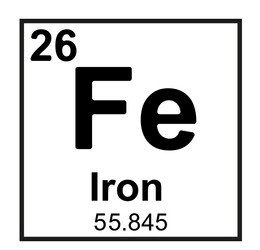
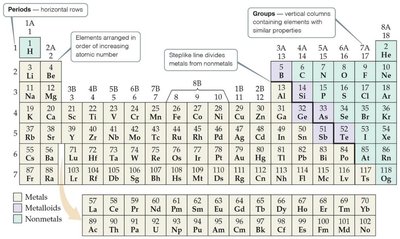
The periodic table organizes elements by increasing atomic number and recurring chemical properties. Each element is identified by its atomic number (number of protons), symbol, and atomic mass.
Atomic Notation and Isotopes
Atomic Number (Z): Number of protons in the nucleus.
Mass Number (A): Total number of protons and neutrons.
Isotopes: Atoms of the same element with different numbers of neutrons (and thus different masses).
Symbol | Protons | Electrons | Neutrons |
|---|---|---|---|
11C | 6 | 6 | 5 |
12C | 6 | 6 | 6 |
13C | 6 | 6 | 7 |
14C | 6 | 6 | 8 |
Atomic Weight and Mass Spectrometry
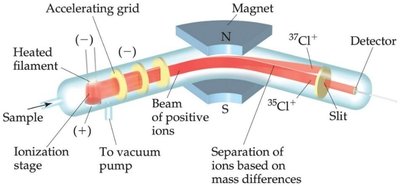
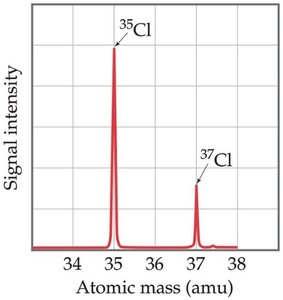
The atomic weight of an element is the weighted average of the masses of its naturally occurring isotopes. Mass spectrometry is used to determine atomic and molecular weights and isotopic abundances.
Atomic Weight Formula:
Classification of Elements
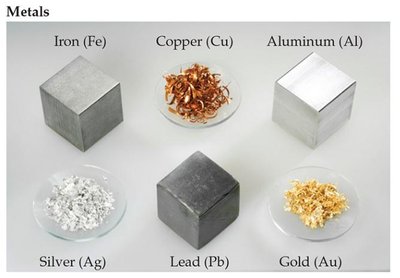
Metals: Shiny, conduct heat and electricity, mostly solids.
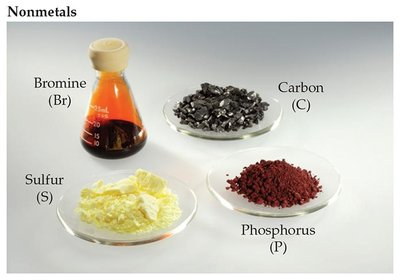
Nonmetals: Found on the right side of the periodic table; can be solids, liquids, or gases.
Metalloids: Have properties intermediate between metals and nonmetals; found along the stair-step line.
Chemical Formulas and Molecular Structure
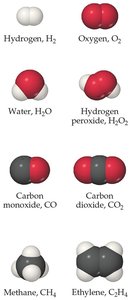
Chemical Formula: Indicates the elements present and the number of atoms of each in a compound (e.g., H2O).
Empirical Formula: Simplest whole-number ratio of atoms in a compound.
Molecular Formula: Actual number of atoms of each element in a molecule.
Structural Formula: Shows how atoms are bonded together.

Ions and Ionic Compounds
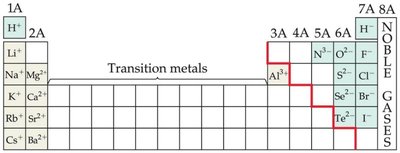
Cation: Positively charged ion formed by loss of electrons (usually metals).
Anion: Negatively charged ion formed by gain of electrons (usually nonmetals).
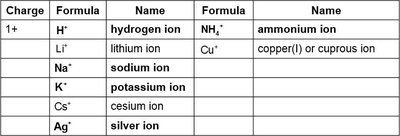
Polyatomic Ion: A charged group of covalently bonded atoms (e.g., NH4+, SO42−).
Ionic Compounds: Formed from the electrostatic attraction between cations and anions; empirical formulas are used.
Chemical Nomenclature
Chemical nomenclature is the system for naming chemical compounds. The rules differ for ionic compounds, acids, binary molecular compounds, and simple organic compounds.
Ionic Compounds: Name the cation first, then the anion. Use Roman numerals for cations with variable charge.
Oxyanions: Ions containing oxygen. Fewer oxygens: -ite; more oxygens: -ate. Prefixes hypo- (fewest) and per- (most) are used when more than two oxyanions exist.
Acids: If the anion ends in -ide, the acid name begins with hydro- and ends in -ic acid. If the anion ends in -ite, the acid ends in -ous acid; if -ate, ends in -ic acid.
Binary Molecular Compounds: Use prefixes to indicate the number of each atom; the second element ends in -ide.
Organic Compounds (Alkanes and Alcohols): Alkanes are hydrocarbons ending in -ane; alcohols are derived from alkanes by replacing a hydrogen with -OH, ending in -ol.
Example: CO2 is named carbon dioxide; HCl is hydrochloric acid; Na2SO4 is sodium sulfate.
*Additional info: This summary covers the foundational concepts of atomic structure, periodic table organization, chemical formulas, and nomenclature, as outlined in a typical GOB Chemistry curriculum.*
