 Indietro
Basic Concepts of Chemical Bonding: Ionic and Covalent Bonds, Lewis Structures, and Exceptions to the Octet Rule
Guida di studio - Note intelligenti
 Appunti personalizzati basati sui tuoi materiali, ampliati con definizioni chiave, esempi e contesto.
Basic Concepts of Chemical Bonding
Types of Chemical Bonds
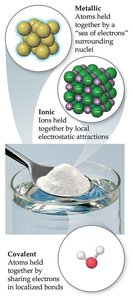
Chemical bonds are the forces that hold atoms together in compounds. There are three primary types of chemical bonds:
Ionic Bonds: Formed by the electrostatic attraction between oppositely charged ions, typically between metals and nonmetals. Involves the transfer of electrons from one atom to another.
Covalent Bonds: Formed when two atoms share one or more pairs of electrons, usually between nonmetals.
Metallic Bonds: Involves a 'sea of electrons' that are delocalized over a lattice of metal atoms, holding the metal together.
Lewis Symbols and the Octet Rule
Lewis Symbols
Lewis symbols are a simple way to represent the valence electrons of an atom. Each dot around the element symbol represents a valence electron. This notation helps visualize how atoms bond in molecules and compounds.
Octet Rule: Atoms tend to gain, lose, or share electrons to achieve eight valence electrons, similar to the electron configuration of noble gases.

Ionic Bonding
Formation of Ionic Compounds
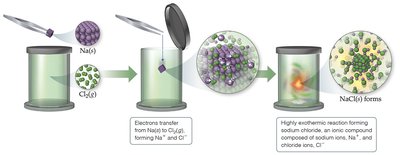
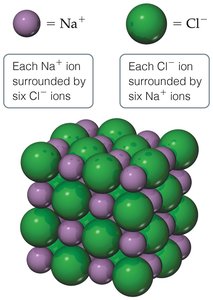
Ionic bonding occurs when electrons are transferred from a metal (low ionization energy) to a nonmetal (high electron affinity), resulting in the formation of cations and anions. The resulting electrostatic attraction holds the ions together in a crystal lattice.
Example: Sodium (Na) reacts with chlorine (Cl) to form sodium chloride (NaCl).

Properties of Ionic Substances
Brittle and crystalline
High melting points
Cleave along smooth lines due to their well-defined 3D structures
Lattice Energy
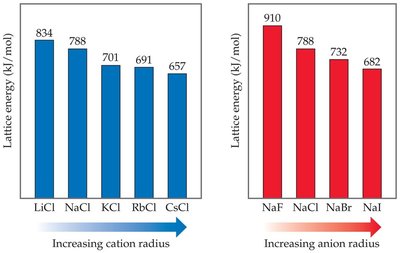
Lattice energy is the energy required to completely separate one mole of a solid ionic compound into its gaseous ions. It is a measure of the strength of the ionic bonds in a crystal lattice.
Lattice energy increases with increasing charge on the ions and decreasing size of the ions.
Electron Configuration of Ions
Main group metals lose electrons to achieve the electron configuration of the previous noble gas.
Nonmetals gain electrons to achieve the electron configuration of the nearest noble gas.
Transition metals lose valence electrons first, then d-electrons as needed for the ion charge.
Covalent Bonding
Nature of Covalent Bonds
In covalent bonds, atoms share electrons to achieve a stable electron configuration. The bond forms when the attraction between the nuclei and shared electrons outweighs the repulsion between the nuclei and between the electrons.
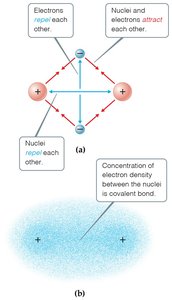
Lewis Structures for Covalent Molecules
Lewis structures are used to represent the arrangement of electrons in covalent molecules. Each shared pair of electrons is shown as a line (bond), and lone pairs are shown as dots.
Atoms share electrons to achieve the octet rule (except hydrogen, which achieves a duet).

Number of Bonds for Nonmetals
The number of bonds an atom forms is typically equal to the number of electrons needed to complete its octet.
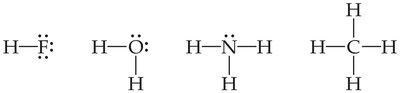
Single, Double, and Triple Bonds
Single bond: One pair of shared electrons
Double bond: Two pairs of shared electrons
Triple bond: Three pairs of shared electrons

Bond Polarity and Electronegativity
Polarity of Bonds
Bond polarity describes the distribution of electron density in a bond. If electrons are shared equally, the bond is nonpolar. If one atom attracts electrons more strongly, the bond is polar.
Electronegativity: The ability of an atom to attract shared electrons in a bond.
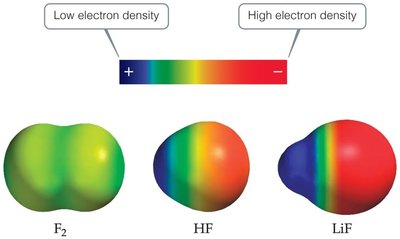
Determining Bond Type
Metal + nonmetal: usually ionic
Nonmetal + nonmetal: usually covalent
Electronegativity difference can help predict bond type, but exceptions exist.
Writing Lewis Structures: Stepwise Method
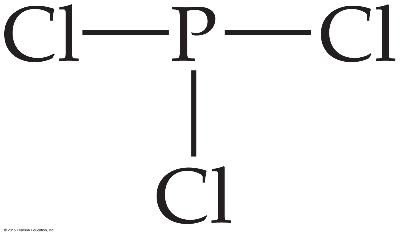
Steps for Drawing Lewis Structures
Sum the valence electrons from all atoms, adjusting for charge (add for anions, subtract for cations).
Write the symbols for the atoms, connect them with single bonds, and subtract the bonding electrons from the total.
Complete the octets of the outer atoms first, then the central atom.
Place any remaining electrons on the central atom. If the central atom lacks an octet, form multiple bonds as needed.
Assign formal charges to determine the most stable structure.
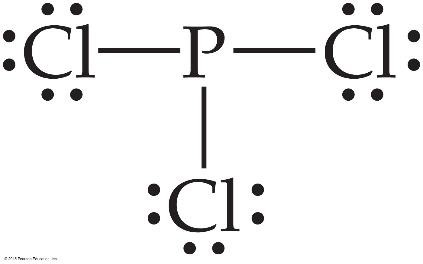
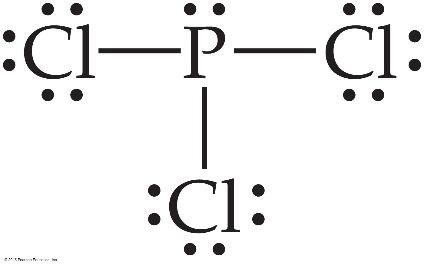

Formal Charge
Formal charge helps determine the most stable Lewis structure. It is calculated as:
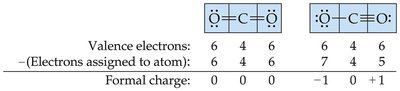
The dominant Lewis structure has formal charges closest to zero and places negative charges on the most electronegative atoms.
Resonance Structures
Resonance in Molecules
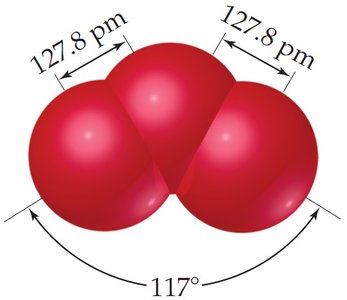
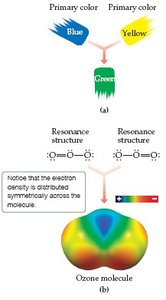
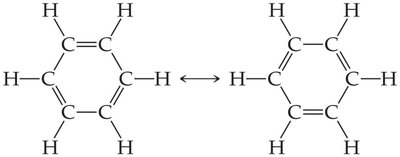
Some molecules cannot be adequately represented by a single Lewis structure. Resonance structures are used to depict delocalized electrons within the molecule.
Ozone (O3) and benzene (C6H6) are classic examples.

Exceptions to the Octet Rule
Types of Exceptions
Molecules with an odd number of electrons (e.g., NO)
Molecules with fewer than eight electrons (e.g., BF3)
Molecules with more than eight electrons (expanded octet, e.g., PF5, phosphate)

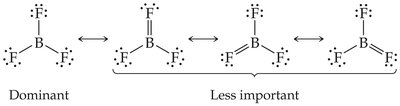
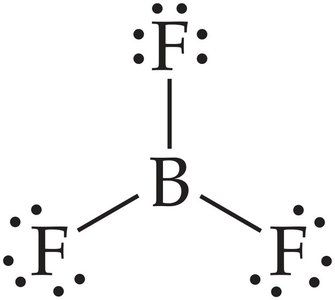
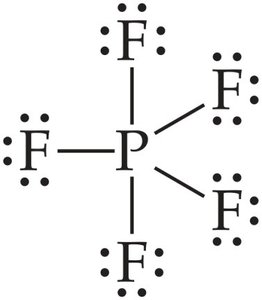
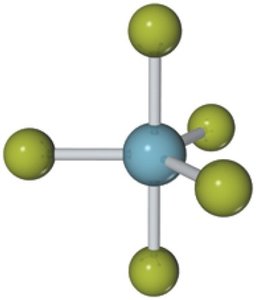
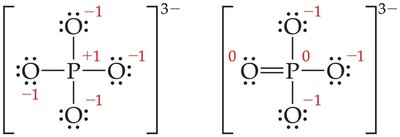
Additional info: The octet rule is a useful guideline but not a strict law. Many molecules, especially those involving elements in period 3 or beyond, can accommodate more than eight electrons due to available d-orbitals.
