 Indietro
Building Blocks of Molecules: Matter, Atoms, Elements, and the Periodic Table
Guida di studio - Note intelligenti
 Appunti personalizzati basati sui tuoi materiali, ampliati con definizioni chiave, esempi e contesto.
Building Blocks of Molecules
Introduction to Biochemistry
Biochemistry is the study of the chemistry of life, focusing on the molecules and reactions that occur within biological systems. Understanding these systems requires breaking them down into their component parts, studying these parts in isolation, and then reconstructing the system from these components. The main molecular components of life include proteins, nucleic acids, carbohydrates, and lipids, all of which are governed by the principles of chemistry.
Proteins: Polymers of amino acids, essential for structure and function.
Nucleic Acids: DNA and RNA, carriers of genetic information.
Carbohydrates: Sugars and polysaccharides, energy storage and structural roles.
Lipids: Fats and oils, important for energy storage and membrane structure.
Definitions and Key Concepts
Understanding the basic terminology is essential for studying chemistry and biochemistry.
Matter: Physical material of the universe; anything that has mass and occupies space.
Mass: Amount of matter present in a substance.
Pure Substance: A material with uniform chemical composition.
Mixture: A material with variable composition that can be physically separated.
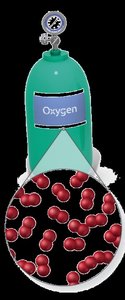
Molecule: The smallest unit of a pure substance that retains its properties; composed of atoms.
Atom: The smallest particle of an element.
Element: A pure substance consisting of only one kind of atom.
Compound: A pure substance composed of two or more kinds of atoms.
Examples of Elements and Compounds
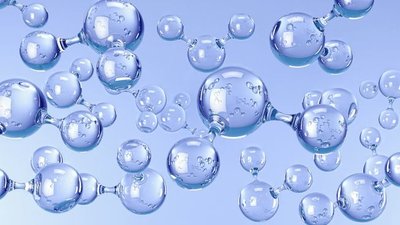
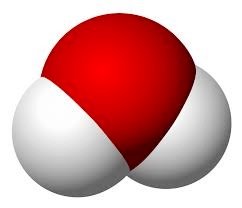
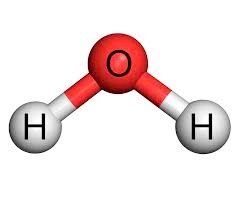
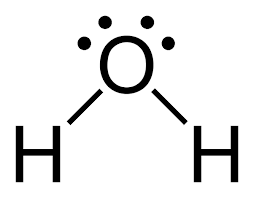
Water (H2O): Compound of 2 hydrogen atoms and 1 oxygen atom.
Table Salt (NaCl): Compound of 1 sodium atom and 1 chlorine atom.
Glucose (C6H12O6): Compound of 6 carbon, 12 hydrogen, and 6 oxygen atoms.
Elements in Biological Systems
The structure of biological molecules is determined by the elements that compose them. The most common elements found in cells and biological systems are carbon (C), nitrogen (N), oxygen (O), and hydrogen (H). 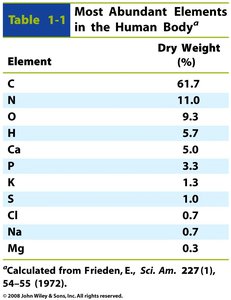
Carbon (C): 61.7% dry weight
Nitrogen (N): 11.0% dry weight
Oxygen (O): 9.3% dry weight
Hydrogen (H): 5.7% dry weight
Atoms, Subatomic Particles, and Isotopes
Atomic Structure
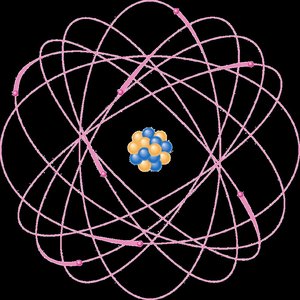
Atoms are composed of subatomic particles: protons, neutrons, and electrons. The nucleus contains protons and neutrons, while electrons occupy energy shells around the nucleus.
Proton: Positively charged, located in the nucleus.
Neutron: Neutral, located in the nucleus.
Electron: Negatively charged, located outside the nucleus.

Definitions
Neutral Atom: An atom with equal numbers of protons and electrons.
Atomic Number (Z): Number of protons in an element.
Isotopes: Atoms with the same number of protons but different numbers of neutrons.
Mass Number (A): Number of protons plus neutrons in an atom.
Atomic Weight: Average mass of an element, based on isotope abundance.
Hydrogen Isotopes
Name | Symbol | Mass Number | # Neutrons |
|---|---|---|---|
Protium | 11H | 1 | 0 |
Deuterium | 21H | 2 | 1 |
Tritium | 31H | 3 | 2 |
Atomic Weight and Molecular Weight
Atomic Weight: Weighted average of the masses of an element's isotopes.
Molecular Weight: Sum of the atomic weights of all atoms in a molecule.
For water (H2O):
For glucose (C6H12O6):
Electronic Structure and the Periodic Table
Periodic Table Organization
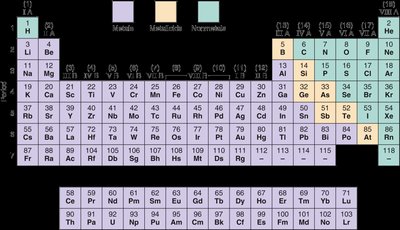
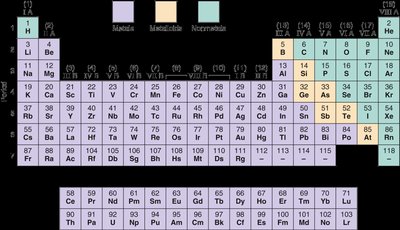
The periodic table is organized by atomic number and electron configuration. Elements with similar properties appear at regular intervals. 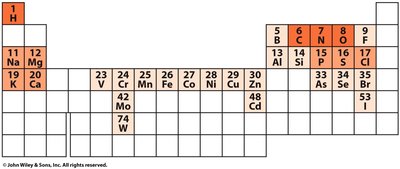
Periods: Horizontal rows, correspond to principal energy shells (n).
Groups/Families: Vertical columns, correspond to subshells and number of valence electrons.
Electronic Structure
Electrons are arranged in energy shells (n=1, 2, 3, ...).
Each shell contains subshells (s, p, d, f).
Each subshell contains orbitals, each holding 2 electrons.
Valence electrons are in the outermost shell and determine chemical properties.
Valence Electrons
Valence Shell: Outermost electron shell.
Valence Electron: Electron in the valence shell.
Main-group elements (s and p blocks) can have up to 8 valence electrons.
Periodic Properties
Metallic Character
Metals transmit heat and electricity, can be formed into wires and sheets, and have metallic luster.
Metallic character increases towards the bottom left of the periodic table.
Atomic Size and Density
Atomic size increases down a group and decreases across a period.
Density increases as atomic size and mass increase.
Ionization Energy and Electronegativity
Ionization Energy: Energy required to remove an electron from an atom.
Electronegativity: Tendency of an atom to attract electrons in a bond.
Both increase towards the top right of the periodic table.
The Octet Rule and Bonding
Noble Gases and the Octet Rule
Noble gases have a full valence shell (8 electrons, s2p6) and are stable and unreactive.
The octet rule states that atoms are most stable with 8 valence electrons.
Atoms form bonds to achieve a full octet.
Types of Chemical Bonds
Ionic Bonding: Atoms transfer electrons to form ions, which are held together by electrostatic attraction.
Covalent Bonding: Atoms share electrons to achieve a full octet.
Ions and Ionic Bonding
Ion Formation
Simple Ion: Element with unequal numbers of protons and electrons.
Cation: Ion with more protons than electrons (positive charge).
Anion: Ion with more electrons than protons (negative charge).
Metals tend to lose electrons (form cations), nonmetals tend to gain electrons (form anions).
Polyatomic Ions
Polyatomic ions are covalently bonded groups of atoms with an overall charge. Common examples include:
NH4+ (ammonium)
H3O+ (hydronium)
OH- (hydroxide)
HCO3- (bicarbonate)
CO32- (carbonate)
SO42- (sulfate)
PO43- (phosphate)
CN- (cyanide)
Ionic Compounds
Ionic compounds are formed by the electrostatic attraction between cations and anions.
The formula represents the lowest possible ratio of ions to form a neutral compound.
Examples: NaCl, MgF2, K2O, Na2CO3, Mg(OH)2
Summary
Elements are made of atoms, which combine to form molecules and compounds.
The most prevalent elements in biological systems are C, N, O, and H.
Atoms are defined by their subatomic particles and atomic number.
Isotopes have the same number of protons but different numbers of neutrons.
The periodic table is organized by electron configuration and valence electrons.
Periodic properties include metallic character, atomic size, ionization energy, and electronegativity.
The octet rule explains why atoms form bonds.
Ions and ionic bonds are essential for forming stable compounds, including many biological ions.
