 Indietro
Cell Structure and Membrane Transport: Foundations for GOB Chemistry
Guida di studio - Note intelligenti
 Appunti personalizzati basati sui tuoi materiali, ampliati con definizioni chiave, esempi e contesto.
Cell Structure and Membrane Transport
Introduction to Cells
Cells are the fundamental units of life, each performing specialized physiological functions essential for the survival and operation of living organisms. Human bodies contain over 200 different types of cells, each adapted for specific roles but sharing several core physiological processes.
Shared Functions: Structure, movement, metabolism, protein synthesis, communication, replication, and transport of materials.
Specialization: Each cell type may have unique functions based on its structure and location in the body.
Cell Membrane Structure
Lipid Bilayer Membranes
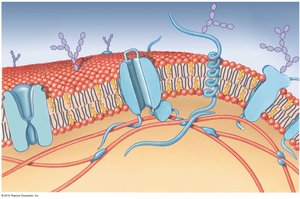
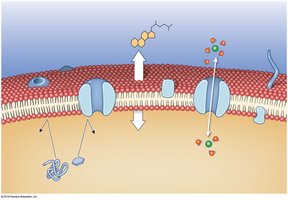
The cell membrane, or plasma membrane, is a dynamic structure that separates the cell's interior from its external environment. It is primarily composed of a lipid bilayer with embedded proteins and carbohydrates, providing both a physical barrier and a platform for cellular communication and transport.
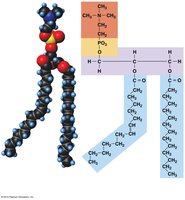
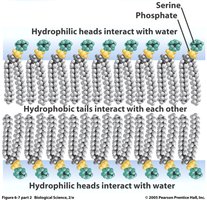
Phospholipids: Make up about 75% of the membrane; consist of hydrophilic (water-loving) phosphate heads and hydrophobic (water-fearing) fatty acid tails.
Glycolipids: Lipids with attached sugar groups, found on the outer surface (5%).
Cholesterol: Stabilizes membrane fluidity and structure (20%).
Membrane Proteins and Carbohydrates
Proteins and carbohydrates are integral to membrane function, enabling communication, transport, and recognition.
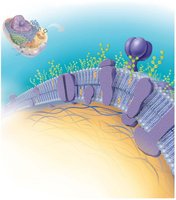
Integral Proteins: Span the membrane; involved in transport and signaling.
Peripheral Proteins: Attached to the membrane surface; support and signaling roles.
Glycoproteins and Glycolipids: Serve as identification markers for cell recognition and immune response.
Glycocalyx: A carbohydrate-rich area on the cell surface important for protection and recognition.
Functions of the Plasma Membrane
Mechanical Barrier: Separates internal and external environments.
Selective Permeability: Controls entry and exit of substances.
Electrochemical Gradient: Maintains voltage differences essential for nerve and muscle function.
Communication: Facilitates cell signaling and recognition.
Cell Signaling: Membrane proteins relay messages from the environment to the cell interior.
Membrane Transport Mechanisms
Types of Membrane Permeability
Impermeable: No substances pass through.
Freely Permeable: All substances can pass.
Selectively Permeable: Only certain substances can cross, based on size, charge, shape, and lipid solubility.
Passive Transport
Passive transport does not require cellular energy (ATP) and relies on concentration gradients.
Diffusion: Movement of molecules from high to low concentration.
Simple Diffusion: For lipid-soluble molecules and gases (e.g., O2, CO2).
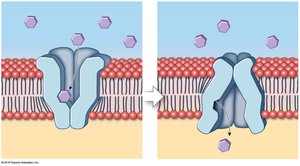
Channel-Mediated Diffusion: For small water-soluble molecules and ions through protein channels.
Facilitated Diffusion: Carrier proteins transport larger molecules (e.g., glucose, amino acids).
Osmosis
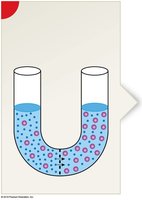
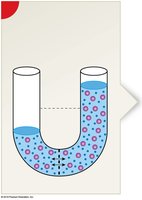
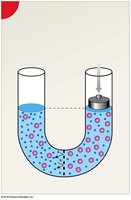
Osmosis is the diffusion of water across a selectively permeable membrane toward a higher solute concentration.
Osmotic Pressure: The force required to stop water movement.
Hydrostatic Pressure: The opposing force to osmosis.
Osmolarity: Total solute concentration in a solution.
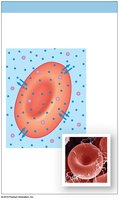
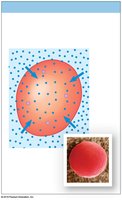
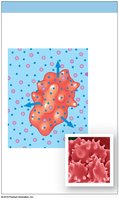
Tonicity: The effect of a solution on cell volume (isotonic, hypotonic, hypertonic).
Effects of Tonicity on Cells
Isotonic Solution: No net water movement; cell remains normal.
Hypotonic Solution: Water enters cell; cell may swell and burst (lysis).
Hypertonic Solution: Water leaves cell; cell shrinks (crenation).
Carrier-Mediated Transport
Carrier proteins facilitate the movement of specific molecules across the membrane, either passively or actively.
Specificity: Each carrier transports specific substances.
Saturation: Transport rate depends on carrier availability.
Regulation: Activity can be modified by cofactors (e.g., hormones).
Symport (Cotransport): Two substances move in the same direction.
Antiport (Countertransport): Substances move in opposite directions.
Active Transport
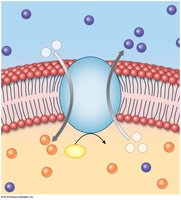
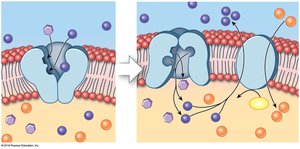
Active transport requires energy (usually ATP) to move substances against their concentration gradients.
Primary Active Transport: Direct use of ATP (e.g., sodium-potassium pump).
Secondary Active Transport: Uses the gradient established by primary active transport to move other substances.
Vesicular (Bulk) Transport
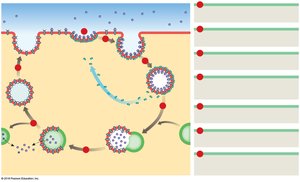
Vesicular transport moves large particles or volumes using vesicles and requires energy.
Endocytosis: Import of materials into the cell via vesicles.
Exocytosis: Export of materials out of the cell via vesicles.
Phagocytosis: "Cell eating" of large particles.
Pinocytosis: "Cell drinking" of extracellular fluid.
Receptor-Mediated Endocytosis: Specific uptake of molecules after binding to receptors.
Cellular Organelles and Their Functions
Nonmembranous Organelles
Cytoskeleton: Provides structural support and facilitates movement.
Centrioles: Organize spindle fibers during cell division.
Ribosomes: Sites of protein synthesis.
Proteasomes: Degrade damaged or unneeded proteins.
Microvilli: Increase surface area for absorption.
Cilia and Flagella: Move fluids or the cell itself.
Membranous Organelles
Endoplasmic Reticulum (ER): Synthesis and transport of proteins (rough ER) and lipids (smooth ER).
Golgi Apparatus: Modifies, sorts, and packages proteins and lipids for secretion or delivery to other organelles.
Lysosomes: Contain digestive enzymes for breakdown of waste and cellular debris.
Peroxisomes: Break down fatty acids and neutralize toxic compounds.
Mitochondria: Produce ATP through aerobic respiration.
Nucleus
Nuclear Envelope: Double membrane with pores for molecular exchange.
Nucleolus: Site of ribosomal RNA synthesis and ribosome assembly.
Chromatin: DNA-protein complex; condenses to form chromosomes during cell division.
Genetic Code: DNA sequence encoding proteins; triplet code (three bases = one amino acid).
Summary Table: Membrane Transport Mechanisms
Transport Type | Energy Required? | Direction | Example Substances |
|---|---|---|---|
Simple Diffusion | No | High to Low | O2, CO2, lipids |
Facilitated Diffusion | No | High to Low | Glucose, amino acids |
Osmosis | No | Water: Low to High solute | Water |
Primary Active Transport | Yes (ATP) | Low to High | Na+, K+ |
Secondary Active Transport | Indirect (ATP) | Low to High (coupled) | Glucose, amino acids |
Endocytosis/Exocytosis | Yes (ATP) | Bulk transport | Proteins, debris, fluids |
Key Equations
Osmosis (Osmotic Pressure): Where = osmotic pressure, = van 't Hoff factor, = molarity, = gas constant, = temperature (K)
Cellular Respiration (Mitochondria):
Additional info: Understanding cell structure and membrane transport is foundational for topics such as metabolism, cellular communication, and the action of drugs and toxins, all of which are central to GOB Chemistry and health sciences.
