 Indietro
Lecture 5: Hydrocarbons
Guida di studio - Note intelligenti
 Appunti personalizzati basati sui tuoi materiali, ampliati con definizioni chiave, esempi e contesto.
Introduction to Organic Molecules and Hydrocarbons
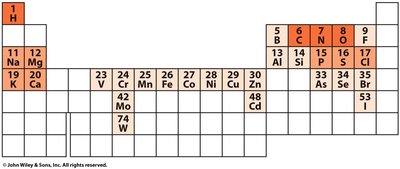
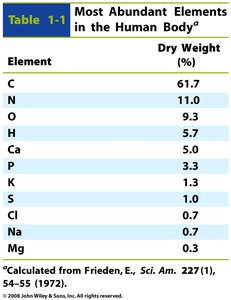
Elements Commonly Found in Biological Molecules
Organic molecules are primarily composed of a select group of elements, most notably carbon, hydrogen, nitrogen, oxygen, phosphorus, and sulfur. These elements are essential for the structure and function of biological molecules.
Carbon: Tetravalent, forms four covalent bonds, central to organic chemistry.
Hydrogen: Forms one bond, present in all hydrocarbons.
Nitrogen, Oxygen, Phosphorus, Sulfur: Contribute to functional groups and molecular diversity.
Bonding and Geometry of Carbon
Carbon Bonding Types and Molecular Geometry
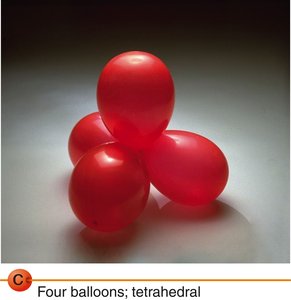
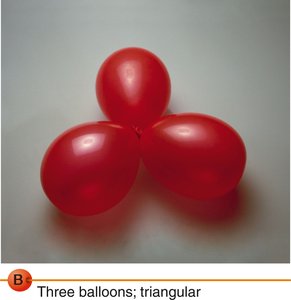
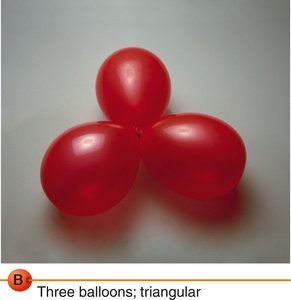
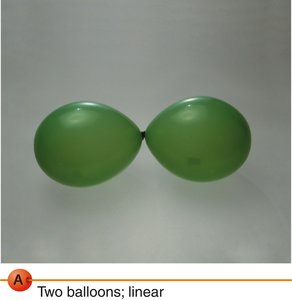
Carbon can form single, double, or triple bonds, each resulting in distinct molecular geometries:
Single Bonds (Tetrahedral): Four single bonds, bond angle ~109.5°.
Double Bonds (Trigonal Planar): One double and two single bonds, bond angle ~120°.
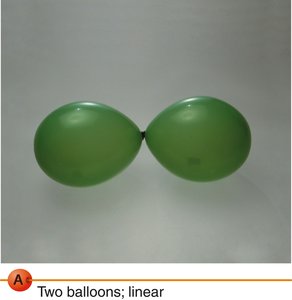
Triple Bonds (Linear): One triple and one single bond, bond angle ~180°.
The geometry is determined by the number of electron groups around the carbon atom.
Classification of Hydrocarbons
Saturated and Unsaturated Hydrocarbons
Hydrocarbons are compounds containing only carbon and hydrogen. They are classified based on the types of bonds present:
Alkanes: Saturated hydrocarbons with only single bonds (CnH2n+2).
Alkenes: Unsaturated hydrocarbons with at least one double bond (CnH2n).
Alkynes: Unsaturated hydrocarbons with at least one triple bond (CnH2n-2).
Aromatics: Hydrocarbons with benzene-like rings (alternating double and single bonds).
Alkanes are the least reactive, while alkenes and alkynes are more reactive due to their unsaturation.
Structural Representation of Hydrocarbons
Line-Angle and Condensed Structures
Hydrocarbons can be represented in several ways:
Lewis Dot Structures: Show all atoms and bonds.
Line-Angle Structures: Vertices represent carbon atoms; hydrogens are often omitted for simplicity.
Condensed Structures: Show groups of atoms together (e.g., CH3CH2CH3).
Isomerism in Hydrocarbons
Structural Isomers and Conformers
Isomers are molecules with the same molecular formula but different structures:
Structural (Constitutional) Isomers: Differ in the connectivity of atoms.
Conformers: Same connectivity, differ by rotation around single bonds.
Example: C5H12 can exist as three structural isomers (straight-chain, branched, double-branched).
Cis-Trans Isomerism and Stereoisomers
Cis-trans isomers occur in molecules with restricted bond rotation, such as alkenes and cycloalkanes:
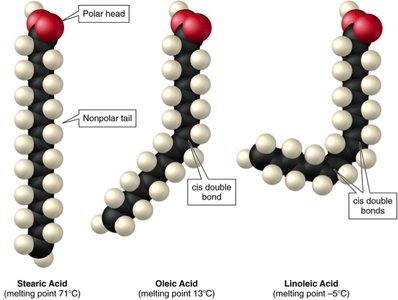
Cis Isomer: Groups on the same side of the double bond or ring.
Trans Isomer: Groups on opposite sides.
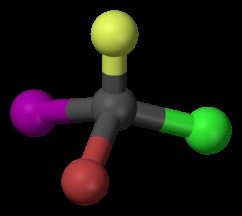
Stereoisomers differ in the spatial arrangement around a chiral carbon (a carbon with four different groups attached).
Physical Properties of Hydrocarbons
Polarity and Intermolecular Forces
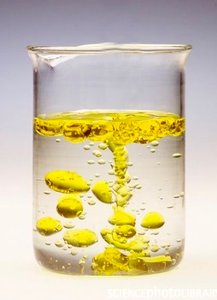
Hydrocarbons are generally non-polar and hydrophobic, meaning they do not dissolve well in water. Their intermolecular forces are primarily London dispersion forces.
Melting/Boiling Point: Increases with molecular size and surface area.
Hydrophobicity: Explains why oil and water do not mix.
Reactions of Hydrocarbons
General Types of Reactions
Organic molecules undergo four general types of reactions:
Addition: Two reactants combine to form one product.
Elimination: One reactant splits into two or more products.
Substitution: Two reactants exchange parts to give two new products.
Rearrangement: A molecule undergoes bond reorganization to give an isomer.
Combustion of Alkanes
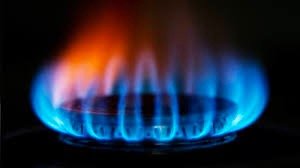
Alkanes undergo combustion, reacting with oxygen to produce carbon dioxide and water:
Properties and Reactions of Unsaturated Hydrocarbons
Geometry and Bond Rotation
Double and triple bonds do not rotate due to the electron density above and below the bond axis. This leads to planar (alkenes) and linear (alkynes) geometries.
Addition Reactions: Hydrogenation and Hydration
Unsaturated hydrocarbons undergo addition reactions:
Hydrogenation: Addition of H2 across a double bond, converting an alkene to an alkane.
Hydration: Addition of H2O across a double bond, forming an alcohol.
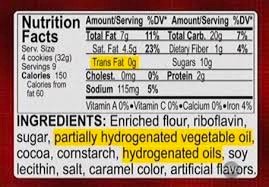
Hydrogenation of fatty acids changes their physical properties, producing "trans fats" when partial hydrogenation occurs.
Aromatics and Conjugation
Benzene and Aromaticity
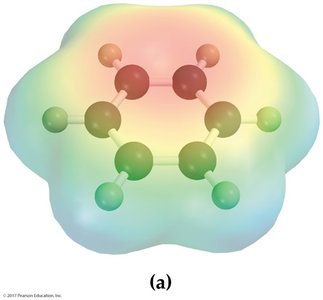
Aromatic hydrocarbons contain benzene-like rings with alternating double and single bonds. These rings are planar, and the electron density is delocalized above and below the plane, making them less reactive.
Conjugated Double Bonds
Conjugation refers to alternating double and single bonds in a non-ring structure. Conjugated systems are also planar and less reactive due to electron delocalization.
Example: Beta-carotene, a precursor to vitamin A, is a conjugated molecule.
Summary Table: Hydrocarbon Formulas
Type | General Formula | Example |
|---|---|---|
Alkane | CnH2n+2 | C6H14 |
Cycloalkane | CnH2n | C6H12 |
Alkene | CnH2n | C6H12 |
Alkyne | CnH2n-2 | C6H10 |
Benzene | CnHn | C6H6 |
Conclusion
Hydrocarbons are fundamental to organic chemistry, with their properties and reactivity determined by the types of bonds and molecular geometry. Understanding isomerism, physical properties, and reactions is essential for studying biological molecules and their functions.
