 Indietro
Matter and Measurements: Fundamentals of General, Organic, and Biological Chemistry
Guida di studio - Note intelligenti
 Appunti personalizzati basati sui tuoi materiali, ampliati con definizioni chiave, esempi e contesto.
Matter and Measurements
Chemistry: The Central Science
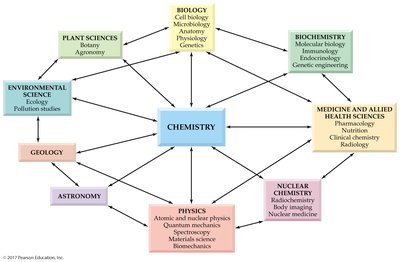
Chemistry is known as the central science because it connects and underpins many other scientific disciplines. It is the study of the nature, properties, and transformations of matter, which is anything that has mass and occupies space.
Matter: Physical material of the universe; has mass and volume.
Scientific Method: Process of observation, hypothesis, and experimentation.
Property: Characteristic useful for identifying a substance (e.g., size, color, temperature, chemical composition, chemical reactivity).
Physical Change: Change that does not affect chemical makeup.
Chemical Change: Change in chemical makeup of a substance.
Example: Burning, rusting, and digestion are chemical changes; melting and boiling are physical changes.
States of Matter
Matter exists in three primary states: solid, liquid, and gas. Each state has distinct properties regarding shape and volume.
Solid: Definite shape and volume.
Liquid: Definite volume, shape conforms to container.
Gas: Neither definite shape nor volume; fills container.
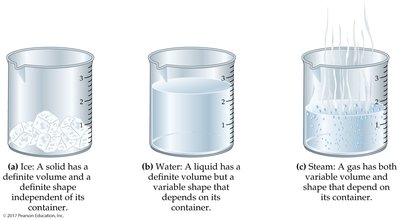
Change of State: Conversion from one state to another (e.g., melting, boiling).
Classification of Matter
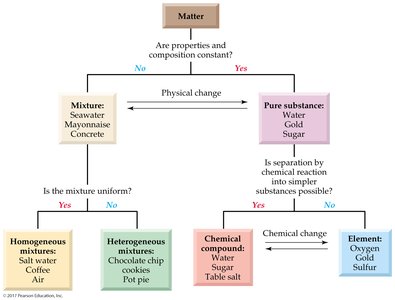
All matter can be classified as either a pure substance or a mixture. Pure substances are further divided into elements and compounds, while mixtures can be homogeneous or heterogeneous.
Pure Substance: Uniform chemical composition throughout.
Mixture: Blend of two or more substances, each retaining its identity.
Homogeneous Mixture: Uniform composition (e.g., salt water).
Heterogeneous Mixture: Non-uniform composition (e.g., chocolate chip cookies).
Element: Fundamental substance that cannot be broken down chemically.
Chemical Compound: Pure substance that can be broken down by chemical reactions.
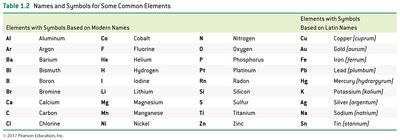
Chemical Elements and Symbols
There are 118 known elements, each represented by a unique one- or two-letter symbol. Most symbols are based on English names, but some are derived from Latin.
Chemical Formula: Notation using element symbols and subscripts to show atom counts.
Subscript: Indicates number of atoms; if absent, '1' is implied.
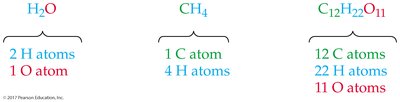
Example: H2O (water) contains 2 hydrogen atoms and 1 oxygen atom.
Chemical Reactions: Examples of Chemical Change
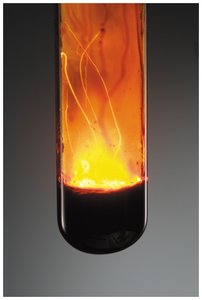
Chemical reactions involve the transformation of reactants into products, often accompanied by observable changes such as color change, gas production, or energy release.
Chemical Reaction: Process changing identity and composition of substances.
Reactant: Starting substance.
Product: Substance formed.
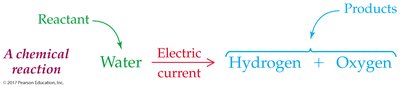

Example: Electrolysis of water produces hydrogen and oxygen gases.
Physical Quantities: Units and Scientific Notation
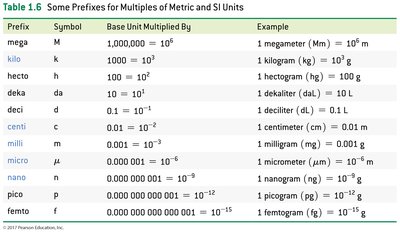
Physical properties such as mass, volume, and temperature are measured using units. The International System of Units (SI) is the standard, and scientific notation is used for very large or small numbers.
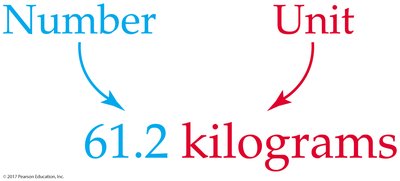
Physical Quantity: Measurable property.
Unit: Standard of measurement (e.g., kilogram, meter).
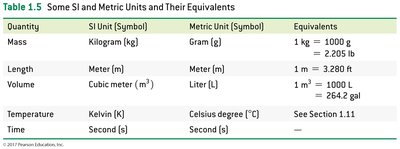
SI Units: Mass (kg), Length (m), Volume (m3), Temperature (K), Time (s).
Metric Units: Gram (g), Liter (L), Celsius (°C).
Scientific Notation: where and is an integer.



Measuring Mass, Length, and Volume
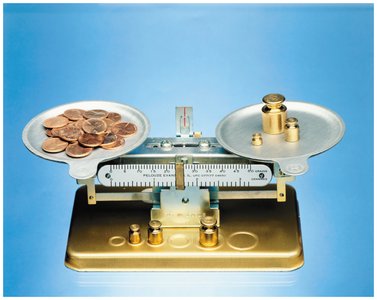
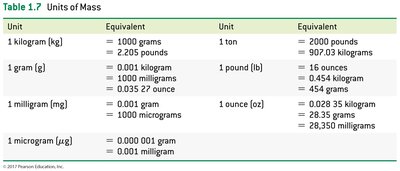
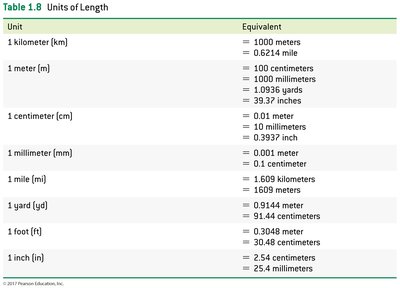
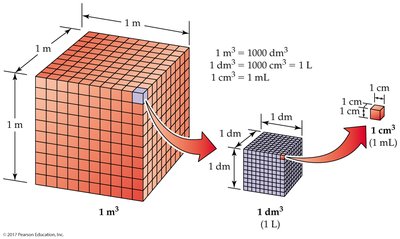
Mass, length, and volume are fundamental measurements in chemistry. Mass is the amount of matter, while weight is the force exerted by gravity. Volume is the space occupied by an object.
Mass: Measured in kilograms (kg) or grams (g).
Weight: Gravitational force on an object.
Length: Measured in meters (m), centimeters (cm), etc.
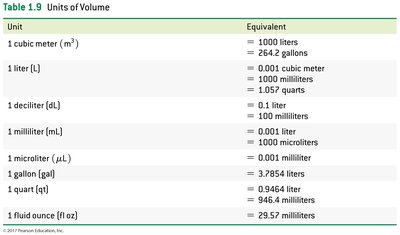
Volume: Measured in liters (L), milliliters (mL), cubic meters (m3).
Measurement and Significant Figures
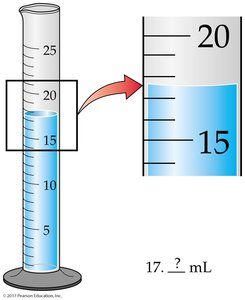
All measurements have uncertainty. Significant figures reflect the precision of a measurement, and rules exist for determining which digits are significant.
Significant Figures: Meaningful digits in a measurement.
Rules: Zeroes in the middle are significant; leading zeroes are not; trailing zeroes after decimal are significant; trailing zeroes before implied decimal may or may not be significant.
Rounding Off Numbers
Rounding is used to delete nonsignificant figures. The number of significant figures in a calculated result depends on the operation performed.
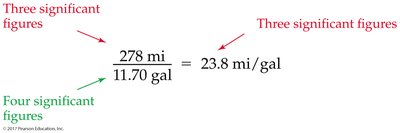
Multiplication/Division: Result has same number of significant figures as the least precise measurement.
Addition/Subtraction: Result has same number of decimal places as the least precise measurement.
Rounding: If the first dropped digit is 4 or less, drop it; if 5 or greater, round up.

Problem Solving: Unit Conversions and Estimating Answers
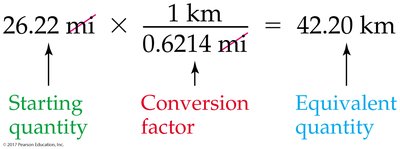
Unit conversions are essential in laboratory and medical settings. The factor-label method (dimensional analysis) is used to convert between units.
Conversion Factor: Expression of numerical relationship between units; always equals one.
Factor-Label Method: Set up equations so unwanted units cancel.
Ballpark Estimate: Rough estimate to check reasonableness of answer.

Temperature, Heat, and Energy
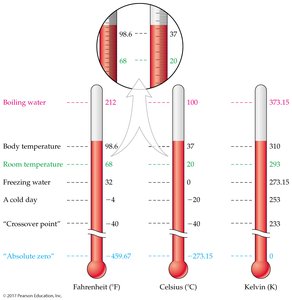
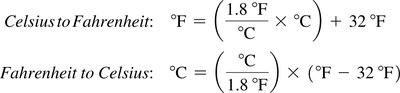
All chemical reactions involve energy changes. Temperature is a measure of heat energy, and conversions between temperature scales are common in chemistry.
Energy: Capacity to do work or supply heat.
Temperature: Measured in Celsius (°C), Fahrenheit (°F), or Kelvin (K).
Heat: Energy transferred due to temperature difference.
Calorie (cal): Amount of heat to raise 1 g of water by 1 °C.
Joule (J): SI unit of energy; 1 cal = 4.184 J.
Density and Specific Gravity
Density is a physical property relating mass to volume. Specific gravity compares the density of a substance to that of water.
Density:
Units: g/cm3 for solids, g/mL for liquids.
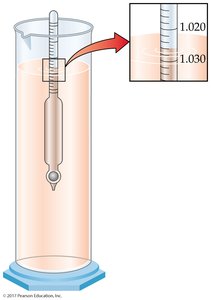
Specific Gravity: Ratio of density of a substance to density of water.
Hydrometer: Instrument for measuring specific gravity.

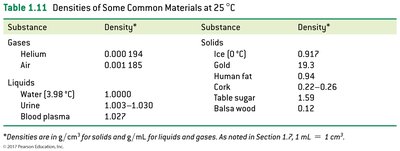
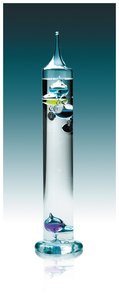
Example: Ice floats on water because its density is less than that of liquid water.
