 Indietro
Molecular Shapes, Functional Groups, and Stereoisomerism in Organic Chemistry
Guida di studio - Note intelligenti
 Appunti personalizzati basati sui tuoi materiali, ampliati con definizioni chiave, esempi e contesto.
Molecular Shapes and Isomers
Introduction to Molecular Shapes and Isomerism
Understanding the three-dimensional arrangement of atoms in molecules is essential in organic chemistry. Isomers are compounds with the same molecular formula but different structures or spatial arrangements, leading to distinct chemical and physical properties.
Functional Groups in Organic Molecules
Definition and Importance of Functional Groups
Functional groups are specific groups of atoms within molecules that are responsible for the characteristic chemical reactions of those molecules. They often contain atoms other than carbon and hydrogen, such as oxygen, nitrogen, or sulfur, but also include carbon-carbon multiple bonds (alkenes and alkynes).
Key Point 1: Functional groups determine the reactivity and physical properties of organic molecules.
Key Point 2: Multiple functional groups can be present in a single molecule, influencing its overall behavior.
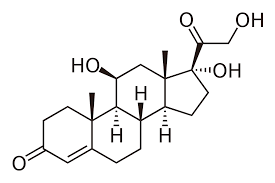
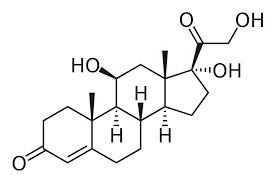
Example: The hormone cortisol contains ketone, alcohol, and alkene functional groups.
Common Functional Groups
Alcohols (–OH)
Ketones (C=O within a carbon chain)
Alkenes (C=C double bond)
Amines (–NH2, –NHR, –NR2)
Carboxylic acids (–COOH)
Aldehydes (–CHO)
Esters (–COOR)
Amides (–CONH2, –CONHR, –CONR2)

Representing Organic Molecules
Types of Structural Representations
Organic molecules can be represented in several ways to convey different levels of structural detail:
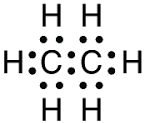
Lewis structures: Show all atoms, bonds, and lone pairs.
Condensed formulae: Compact notation, e.g., CH3CH2OH.
Structural formulae: Show the connectivity of atoms.
Ball-and-stick models: 3D models showing atoms as balls and bonds as sticks.
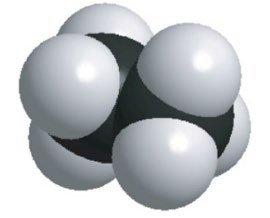
Space-filling models: Show the relative sizes of atoms and their spatial arrangement.
Newman projections: Visualize conformations around single bonds.
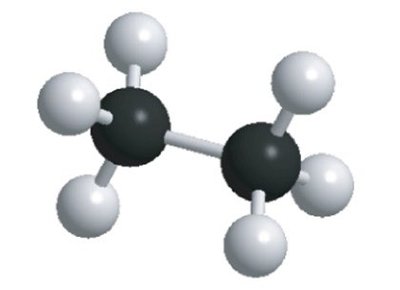
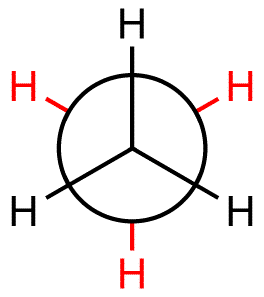
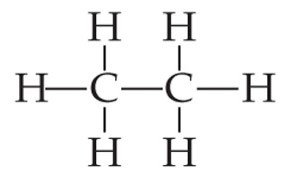
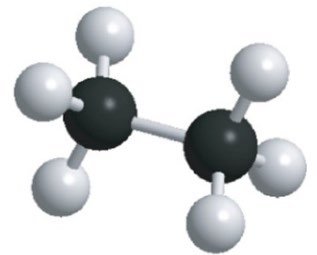
Isomerism in Organic Chemistry
Constitutional (Structural) Isomers
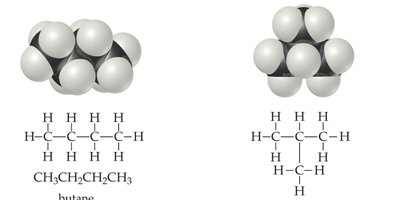
Constitutional isomers are compounds with the same molecular formula but different connectivity of their atoms. This leads to differences in their physical and chemical properties.
Example: Butane (C4H10) and 2-methylpropane are constitutional isomers.
Isomer | Melting Point (°C) | Boiling Point (°C) |
|---|---|---|
Butane | -135 | -0.5 |
2-methylpropane | -145 | -10 |
Stereoisomers
Stereoisomers have the same molecular formula and connectivity but differ in the spatial arrangement of atoms. The most important type in biological systems is chirality.
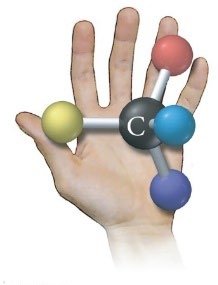
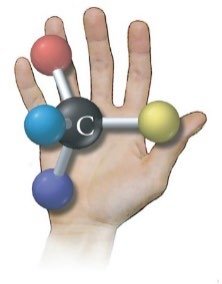
Chiral center: A carbon atom bonded to four different substituents.
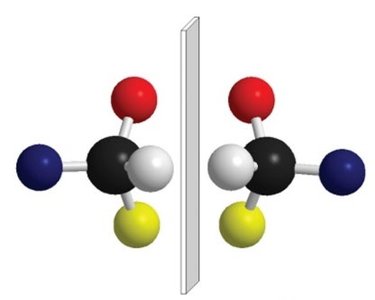
Enantiomers: Non-superimposable mirror images of each other.
Properties of Enantiomers
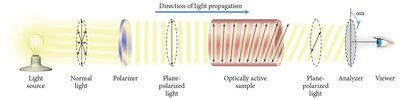
Enantiomers have identical physical properties (melting point, boiling point) except for their interaction with plane-polarized light and reactions in chiral environments.
They rotate plane-polarized light in equal but opposite directions: dextrorotatory (d-(+)) rotates clockwise, levorotatory (l-(–)) rotates counterclockwise.
Racemic Mixtures
An equal mixture of d-(+) and l-(–) enantiomers is called a racemic mixture or racemate. Such a mixture does not rotate plane-polarized light (net rotation = 0°).
Recognizing Chiral Centers
A carbon atom is a chiral center if it is attached to four different groups.
If a molecule has a plane of symmetry, it is achiral and will not rotate plane-polarized light.
Assigning Absolute Configuration (R/S System)
The Cahn-Ingold-Prelog rules are used to assign the absolute configuration (R or S) to chiral centers:
Locate the stereocenter.
Assign priority to each substituent (1 = highest atomic number, 4 = lowest).
Orient the molecule so the lowest priority group is directed away from you.
Trace a path from priority 1 → 2 → 3: clockwise = R (rectus), counterclockwise = S (sinister).
Biological Importance of Chirality
Chirality in Pharmaceuticals and Biomolecules
Many pharmaceuticals are chiral, and only one enantiomer may be biologically active. For example, the R-isomer of thalidomide is therapeutic, while the S-isomer causes birth defects. Amino acids (L-form), sugars, and DNA are all chiral, making stereochemistry crucial in biochemistry and medicinal chemistry.
Example: Thalidomide, amino acids, proteins, sugars, DNA, ibuprofen.
Practice Questions
Relevant textbook questions for further study: 24.31, 24.33, 26.10, 26.11, 26.12, 25.16, 25.17, 26.12, 25.44 (Brown, Le May et al., Chemistry the Central Science: 15th Global Edition).
