 Indietro
Oxygen Compounds: Alcohols and Carbonyls – Properties, Reactions, and Biological Relevance
Guida di studio - Note intelligenti
 Appunti personalizzati basati sui tuoi materiali, ampliati con definizioni chiave, esempi e contesto.
Oxygen Compounds: Alcohols and Carbonyls
Properties of Alcohols, Ethers, and Phenols
Oxygen-containing organic compounds such as alcohols, ethers, and phenols play a central role in chemistry and biochemistry. The introduction of oxygen atoms into hydrocarbons significantly alters their physical and chemical properties due to increased polarity and the potential for hydrogen bonding.
Heteroatoms: Atoms in organic molecules other than carbon and hydrogen (e.g., O, N, S, P).
Polarity: The C—O bond is polarized, making these compounds more hydrophilic and reactive than hydrocarbons.
Hydrogen Bonding: Alcohols can both donate and accept hydrogen bonds, leading to higher boiling points and water solubility compared to ethers and alkanes.
Solubility: Alcohols are generally water-soluble unless the hydrocarbon portion dominates the molecule. Ethers are less soluble and have lower boiling points due to weaker intermolecular forces (dipole-dipole interactions).
Phenols: Compounds containing a hydroxyl group directly bonded to an aromatic ring. They are more acidic than alcohols due to resonance stabilization of the conjugate base.
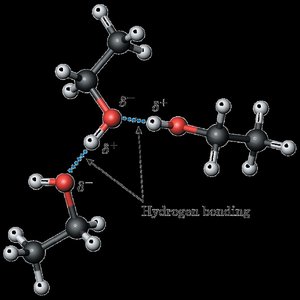
Example: Cholesterol contains a single alcohol group, but the large hydrophobic region makes it overall insoluble in water.
Classification and Reactions of Alcohols
Alcohols are classified based on the number of carbon atoms attached to the carbon bearing the hydroxyl group:
Primary (1°) Alcohol: The carbon with the OH group is attached to one other carbon.
Secondary (2°) Alcohol: The carbon with the OH group is attached to two other carbons.
Tertiary (3°) Alcohol: The carbon with the OH group is attached to three other carbons.
Dehydration Reaction: Alcohols can undergo elimination (dehydration) to form alkenes, typically in the presence of acid catalysts such as H2SO4:
Oxidation of Alcohols
Alcohols can be oxidized to carbonyl-containing compounds. The product depends on the class of alcohol:
Primary (1°) Alcohols: Oxidized first to aldehydes, then to carboxylic acids.
Secondary (2°) Alcohols: Oxidized to ketones.
Tertiary (3°) Alcohols: Do not undergo oxidation under mild conditions (no hydrogen on the carbon bearing the OH group).
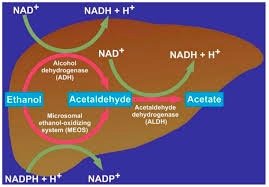
Example: Ethanol metabolism in the liver involves oxidation to acetaldehyde and then to acetate.
Properties and Types of Carbonyl Compounds
The carbonyl group (C=O) is a defining feature of several important functional groups:
Aldehydes: Carbonyl at the end of a chain (R-CHO).
Ketones: Carbonyl within a chain (R-CO-R').
Carboxylic Acids: Carbonyl bonded to an OH group (R-COOH).
Esters: Carbonyl bonded to an OR group (R-COOR').
Amides: Carbonyl bonded to a nitrogen (R-CONR'R").
Carbonyl compounds are polar and can act as hydrogen bond acceptors, but only carboxylic acids and amides can donate hydrogen bonds.
Redox Reactions of Aldehydes and Ketones
Aldehydes can be oxidized to carboxylic acids, while ketones generally do not undergo further oxidation. Both can be reduced to alcohols:
Aldehyde oxidation:
Ketone oxidation: No reaction under normal conditions.
Reduction: Aldehydes to primary alcohols, ketones to secondary alcohols.
Example: The breathalyzer test uses the oxidation of ethanol (a 1° alcohol) to acetic acid, with a color change indicating the presence of alcohol.
Special Tests for Aldehydes and Ketones
Tollens’ Test: Selectively oxidizes aldehydes, producing a silver mirror.
Benedict’s Test: Detects alpha-hydroxy aldehydes and ketones (reducing sugars), producing a red-brown precipitate.
Formation of (Hemi)acetals and (Hemi)ketals
Aldehydes and ketones react with alcohols to form hemiacetals/hemiketals (addition of one alcohol) and acetals/ketals (addition of two alcohols). These reactions are important in carbohydrate chemistry, especially for the formation of cyclic structures in sugars.
Condensation Reaction: Two molecules combine with the loss of water.
Hydrolysis Reaction: Addition of water splits a molecule into two parts.
Example: Glucose exists predominantly as a cyclic hemiacetal in solution.
Summary Table: Oxidation and Reduction of Alcohols, Aldehydes, and Ketones
Functional Group | Oxidation Product | Reduction Product |
|---|---|---|
Primary Alcohol (1°) | Aldehyde → Carboxylic Acid | — |
Secondary Alcohol (2°) | Ketone | — |
Tertiary Alcohol (3°) | No Reaction | — |
Aldehyde | Carboxylic Acid | Primary Alcohol |
Ketone | No Reaction | Secondary Alcohol |
Key Equations
Alcohol Dehydration:
Primary Alcohol Oxidation:
Aldehyde Oxidation:
Ketone Reduction:
Additional info:
Alcohols, ethers, and phenols are foundational in organic and biological chemistry, with their reactivity and physical properties underpinning many metabolic and synthetic processes.
Understanding the classification and reactivity of these compounds is essential for predicting reaction outcomes and for applications in biochemistry, such as metabolism and drug design.
