 Indietro
Cell Structure, Membrane Function, and Transport Mechanisms
Guida di studio - Note intelligenti
 Appunti personalizzati basati sui tuoi materiali, ampliati con definizioni chiave, esempi e contesto.
Cell Structure and Function
Subcellular Components and Organelles
The structure and function of subcellular components and organelles are fundamental to the operation of all cells. Each organelle has a specialized role that contributes to the overall function and survival of the cell.
Ribosomes: Composed of ribosomal RNA (rRNA) and proteins, ribosomes are found in all forms of life and are responsible for synthesizing proteins according to mRNA sequences. Their universal presence reflects the common ancestry of all known life.
Endomembrane System: This system includes the endoplasmic reticulum (ER), Golgi complex, lysosomes, vacuoles, transport vesicles, nuclear envelope, and plasma membrane. These organelles work together to modify, package, and transport proteins, lipids, and polysaccharides within the cell.
Endoplasmic Reticulum (ER): Provides mechanical support and facilitates intracellular transport. The rough ER is studded with ribosomes and is involved in protein synthesis and compartmentalization. The smooth ER is involved in lipid synthesis and detoxification.
Golgi Complex: A series of flattened membrane sacs that fold, chemically modify, and package proteins for trafficking within or outside the cell.
Mitochondria: Double-membraned organelles where aerobic cellular respiration occurs. The inner membrane is highly folded, increasing surface area for ATP synthesis.
Lysosomes: Membrane-enclosed sacs containing hydrolytic enzymes for digestion of materials and programmed cell death (apoptosis).
Vacuoles: Membrane-bound sacs for storage and maintaining turgor pressure in plant cells. Animal cells have smaller, more numerous vacuoles.
Chloroplasts: Double-membraned organelles found in plants and photosynthetic algae, serving as the site of photosynthesis.
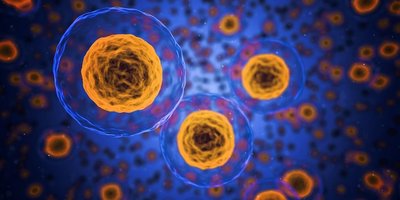
Cell Size and Surface Area-to-Volume Ratio
Surface Area-to-Volume Ratio and Exchange of Materials
The surface area-to-volume ratio is a critical factor that influences the efficiency of material exchange between cells and their environment.
Smaller cells have a higher surface area-to-volume ratio, allowing for more efficient exchange of nutrients and waste products.
As cells increase in size, their surface area-to-volume ratio decreases, limiting the rate of exchange and increasing the demand for internal resources.
Complex structures, such as membrane folds, increase surface area to facilitate exchange.
In multicellular organisms, smaller organisms have higher metabolic rates per unit body mass due to their higher surface area-to-volume ratios.
Plasma Membranes
Structure and Function of the Cell Membrane
The plasma membrane is a selectively permeable barrier that maintains the internal environment of the cell. Its structure is described by the Fluid Mosaic Model.
Phospholipids: Have hydrophilic (water-attracting) heads and hydrophobic (water-repelling) tails, forming a bilayer with heads facing outward and tails inward.
Proteins: Embedded in the membrane, they can be hydrophilic or hydrophobic, and serve as channels, receptors, or enzymes.
Other Components: Steroids (e.g., cholesterol), glycoproteins, and glycolipids contribute to membrane fluidity and cell recognition.
Membrane Permeability
Selective Permeability of Biological Membranes
The structure of the plasma membrane allows selective permeability, enabling the cell to control the movement of substances.
Small nonpolar molecules (e.g., N2, O2, CO2) pass freely through the membrane.
Large polar molecules and ions require transport proteins or channels to cross the membrane.
The hydrophobic interior of the membrane prevents the free movement of ions and polar molecules.
Cell walls in bacteria, archaea, fungi, and plants provide additional structural support and act as permeability barriers.
Membrane Transport Mechanisms
Passive and Active Transport
Cells use various mechanisms to maintain solute and water balance across membranes.
Passive Transport: Movement of molecules from high to low concentration without energy input (e.g., diffusion, facilitated diffusion).
Active Transport: Movement of molecules from low to high concentration, requiring energy (often from ATP) and membrane proteins.
Endocytosis: Uptake of large molecules by engulfing them in vesicles formed from the plasma membrane.
Exocytosis: Release of large molecules by vesicles fusing with the plasma membrane.
Facilitated Diffusion
Role of Transport Proteins
Facilitated diffusion enables the movement of charged ions and large polar molecules across membranes via specific transport or channel proteins, without energy input.
Examples include the movement of Na+ and K+ ions through channel proteins.
Aquaporins are specialized channels that transport large quantities of water.
Tonicity and Osmoregulation
Concentration Gradients and Water Movement
Concentration gradients drive the movement of molecules across membranes, affecting cell volume and function.
External environments can be hypotonic, hypertonic, or isotonic relative to the cell's internal environment.
Water moves by osmosis from regions of high water potential to regions of low water potential.
Osmoregulation is the process by which organisms maintain water and solute balance for survival and homeostasis.
Mechanisms of Transport
Active Transport and Electrochemical Gradients
Active transport processes require metabolic energy to move ions and molecules against their concentration gradients, establishing and maintaining electrochemical gradients.
Membrane proteins, such as the Na+/K+ pump, are essential for active transport and maintaining membrane potential.
Cell Compartmentalization
Membrane-Bound Structures in Eukaryotic Cells
Membranes and membrane-bound organelles in eukaryotic cells compartmentalize metabolic processes, increasing efficiency and minimizing interference between reactions.
Internal membranes provide specialized environments for specific enzymatic reactions.
Compartmentalization increases surface area for reactions and allows for the separation of incompatible processes.
Origins of Cell Compartmentalization
Endosymbiotic Theory and Evolution of Eukaryotic Cells
Membrane-bound organelles such as mitochondria and chloroplasts are believed to have evolved from free-living prokaryotic cells through endosymbiosis.
Prokaryotes lack internal membrane-bound organelles but have specialized internal regions.
Eukaryotic cells maintain internal membranes that partition the cell into specialized regions, supporting complex cellular functions.
Key Equations and Tables
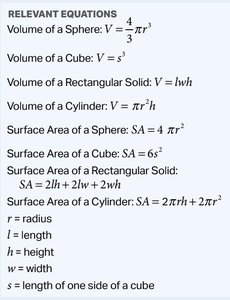
Surface Area and Volume Calculations
Shape | Volume | Surface Area |
|---|---|---|
Sphere | ||
Cube | ||
Rectangular Solid | ||
Cylinder |
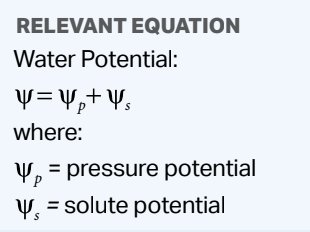
Water Potential and Solute Potential
Water Potential:
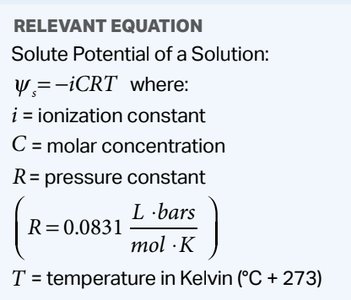
Solute Potential:
Where = ionization constant, = molar concentration, = pressure constant (), = temperature in Kelvin ()
Additional info: These equations are essential for understanding how cell size, shape, and membrane properties influence physiological processes such as diffusion, osmosis, and metabolic rates.
