 Indietro
Cell Structure, Membrane Structure, and Cell Communication: Study Notes for Introductory Biology
Guida di studio - Note intelligenti
 Appunti personalizzati basati sui tuoi materiali, ampliati con definizioni chiave, esempi e contesto.
Cell Theory and Cell Structure
History and Principles of Cell Theory
The cell theory is a foundational concept in biology, describing the pattern and process by which all living things are composed of cells. It states that all organisms are made of cells, the cell is the basic unit of life, and new cells arise from existing cells.
Pattern: All organisms are made of cells.
Process: All cells come from preexisting cells.
Implications: Common ancestry among cells, structure determines function.
Types of Cells: Prokaryotes vs. Eukaryotes
Cells are classified into two main types based on structural features: prokaryotic and eukaryotic cells.
Prokaryotes: Lack a membrane-bound nucleus, small (~1.0 μm), simple structure, no internal membrane-bound organelles, DNA in nucleoid region, often form biofilms.
Eukaryotes: Have a membrane-bound nucleus, larger size, contain organelles, extensive internal membranes, dynamic cytoskeleton.
Cellular Reproduction: Prokaryotes replicate by binary fission; eukaryotes replicate by mitosis and cytokinesis.
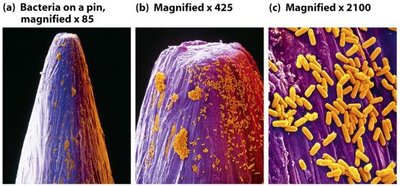
Cell Specialization and Organization
Cells can exist as single organisms, colonies, colonial organisms, or as part of tissues. Both prokaryotic and eukaryotic cells display specialization for diverse functions.
Unicellular: All life processes occur in one cell.
Colony: Cluster of single cells, can survive independently.
Colonial: Interdependent cells, cannot survive alone.
Tissues: Groups of similar cells functioning together.
Prokaryotic Cell Structure
Components of Prokaryotic Cells
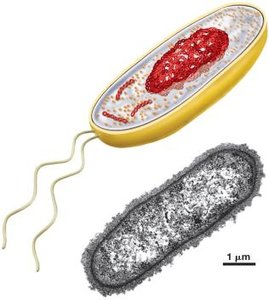
Prokaryotic cells are typically bacteria and can be Gram-positive or Gram-negative. They possess a tough cell wall (peptidoglycan), plasma membrane, cytoplasm, ribosomes, and sometimes flagella for movement.
Cell Wall: Provides shape and protection.
Plasma Membrane: Selectively permeable, encloses cytoplasm.
Chromosome: Usually one circular, double-stranded DNA molecule in the nucleoid region.
Ribosomes: Sites of protein synthesis, composed of RNA and protein.
Cytoskeleton: Protein filaments for shape and structure.
Eukaryotic Cell Structure
Compartmentalization and Organelles
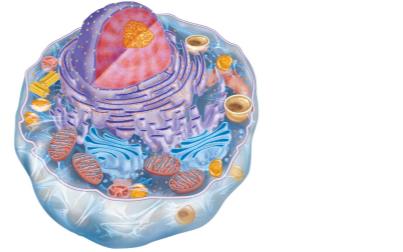
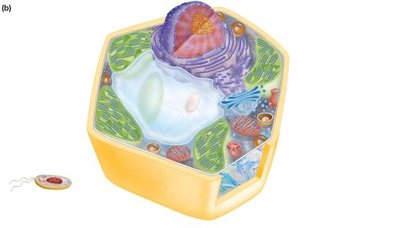
Eukaryotic cells are larger and contain membrane-bound organelles, which increase efficiency by compartmentalizing functions.
Nucleus: Information storage, DNA replication, RNA synthesis. Surrounded by nuclear envelope with nuclear pores.
Endoplasmic Reticulum (ER): Rough ER (RER) with ribosomes for protein synthesis; Smooth ER (SER) for lipid synthesis, detoxification, and calcium regulation.
Golgi Apparatus: Modifies, sorts, and packages proteins and lipids.
Lysosomes: Waste processing and storage, contain hydrolytic enzymes.
Mitochondria: ATP production, site of cellular respiration.
Chloroplasts (plants/algae): Photosynthesis, contain thylakoid membranes and stroma.
Peroxisomes: Oxidation/reduction reactions, detoxification.
Cytoskeleton: Microfilaments (actin), intermediate filaments, microtubules for shape, transport, and movement.
Flow of Genetic Information
In eukaryotic cells, DNA in the nucleus directs protein synthesis through transcription (DNA to RNA) and translation (RNA to protein).
Transcription: DNA → RNA (mRNA, tRNA, rRNA)
Translation: mRNA → Protein (at ribosomes)
Membrane Structure and Transport
Phospholipids and Membrane Structure
Phospholipids are amphipathic molecules with hydrophilic heads and hydrophobic tails, forming bilayers that make up cell membranes.
Bilayer Formation: Hydrophilic heads face water; hydrophobic tails face inward.
Selective Permeability: Small/nonpolar molecules cross easily; large/charged molecules cross slowly.
Fluid Mosaic Model: Membranes are dynamic mosaics of lipids and proteins.
Membrane Transport Mechanisms
Cells use various mechanisms to transport substances across membranes:
Diffusion: Passive movement down concentration gradient.
Osmosis: Diffusion of water across a selectively permeable membrane.
Facilitated Diffusion: Passive transport via channel/carrier proteins.
Active Transport: Requires energy (ATP) to move substances against gradients (e.g., Na+/K+ pump).
Bulk Transport: Endocytosis (import), exocytosis (export) via vesicles.
Cell-Cell Interaction and Communication
Extracellular Structures
Plant cells produce a cell wall; animal cells secrete an extracellular matrix (ECM) for structural support and cell attachment.
Plant Cell Wall: Cellulose microfibrils, pectin, shape, and turgor pressure resistance.
Animal ECM: Collagen, proteoglycans, integrins for attachment and signaling.
Cell Junctions
Tight Junctions: Watertight seals between cells (epithelial tissue).
Desmosomes: Strong attachments reinforced by intermediate filaments (skin, muscle).
Gap Junctions (animals): Protein channels for communication.
Plasmodesmata (plants): Channels for transport and communication.
Cell Signaling
Cells communicate via physical connections or distant signals (hormones). Signal transduction involves reception, processing, response, and deactivation.
Signal Reception: Receptors bind signaling molecules.
Signal Processing: Transduction via G-proteins or enzyme-linked receptors (phosphorylation cascades).
Signal Response: Changes in gene expression, metabolism, growth, or cell death.
Signal Deactivation: Phosphatases remove phosphate groups, ensuring sensitivity.
Quorum Sensing (prokaryotes): Bacterial communication via autoinducers, regulates gene expression based on cell density.
Summary Table: Prokaryotic vs. Eukaryotic Cell Features
Feature | Prokaryotic Cells | Eukaryotic Cells |
|---|---|---|
Nucleus | No | Yes |
Size | ~1 μm | 10–100 μm |
Organelles | No | Yes |
DNA | Circular, nucleoid | Linear, nucleus |
Cell Wall | Peptidoglycan | Cellulose (plants), none (animals) |
Reproduction | Binary fission | Mitosis/cytokinesis |
