 Indietro
Cells, Metabolism, Enzymes, Photosynthesis, and Cellular Respiration: Introductory Biology Study Notes
Guida di studio - Note intelligenti
 Appunti personalizzati basati sui tuoi materiali, ampliati con definizioni chiave, esempi e contesto.
Part 0. Living Organisms, Cells, and Organelles
Fundamental Characteristics of Life
All living organisms share five fundamental characteristics that define life:
Made of cells: The cell is the basic unit of structure and function in all living things.
Self-replication: Organisms reproduce via mitosis (eukaryotes) or binary fission (prokaryotes).
Process genetic information: Genetic material (DNA/RNA) is used to store and transmit information.
Acquire and use energy: Organisms obtain and utilize energy for cellular processes.
Undergo evolution: Populations of organisms change over generations through evolutionary processes.
The Cell Theory
The cell theory is a foundational principle in biology, stating:
All living organisms are composed of cells.
Cells are the basic units of structure and function.
All cells arise from pre-existing cells.
Prokaryotic vs. Eukaryotic Cells
Cells are classified as either prokaryotic or eukaryotic based on their structural features.
Prokaryotic cells are generally smaller, lack membrane-bound organelles, and have DNA in a single circular chromosome located in the nucleoid region. They reproduce by binary fission.
Eukaryotic cells are larger, contain a nucleus with linear chromosomes, and possess membrane-bound organelles such as mitochondria, chloroplasts, endoplasmic reticulum, and Golgi apparatus. They reproduce by mitosis and meiosis.
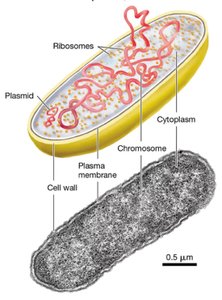
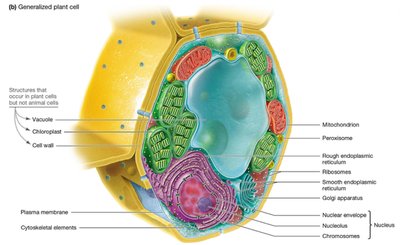
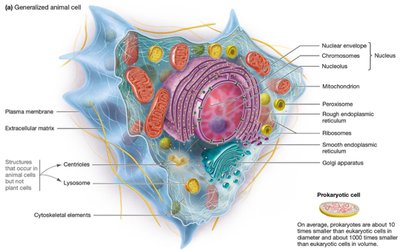
Major Organelles and Their Functions
Eukaryotic cells contain specialized structures called organelles, each with distinct functions:
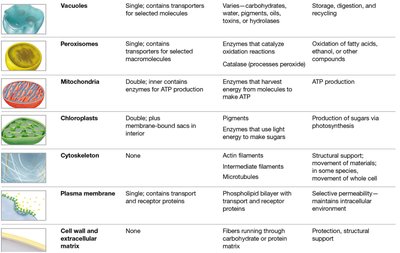
Organelle | Structure | Function |
|---|---|---|
Vacuole | Single; contains transporters for selected molecules | Storage, digestion, recycling |
Peroxisome | Single; contains transporters for selected macromolecules | Oxidation of fatty acids, catalase reactions |
Mitochondrion | Double; inner contains enzymes for ATP production | ATP production |
Chloroplast | Double; plus membrane-bound sacs in interior | Photosynthesis |
Cytoskeleton | None | Structural support, movement |
Plasma membrane | Phospholipid bilayer with proteins | Selective permeability, communication |
Cell wall/Extracellular matrix | Fibers running through carbohydrate or protein matrix | Protection, structural support |
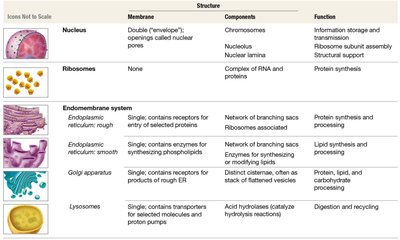
Structure | Membrane | Components | Function |
|---|---|---|---|
Nucleus | Double (envelope) | Chromosomes, nucleolus | Information storage, ribosome assembly |
Ribosomes | None | RNA and proteins | Protein synthesis |
Rough ER | Single; contains receptors for proteins | Network of branching sacs, ribosomes | Protein synthesis and processing |
Smooth ER | Single; contains enzymes for synthesizing phospholipids | Network of branching sacs, enzymes | Lipid synthesis and processing |
Golgi apparatus | Single; contains receptors for products of rough ER | Stack of flattened vesicles | Protein, lipid, and carbohydrate processing |
Lysosomes | Single; contains proton pumps | Acid hydrolases (catalyze hydrolysis reactions) | Digestion and recycling |
Part 1. Matter, Energy, and Thermodynamics in Biology
Distinguishing Matter and Energy
Matter is anything that occupies space and has mass, composed of atoms. Energy is the capacity to perform work or bring about change, but it does not have mass or occupy space. Organisms are open systems that exchange both matter and energy with their environment.
Potential energy: Stored energy (e.g., chemical energy in glucose).
Kinetic energy: Energy of motion (e.g., moving molecules, muscle contraction).
Laws of Thermodynamics and Conservation of Matter
First Law of Thermodynamics: Energy cannot be created or destroyed, only transformed or transferred.
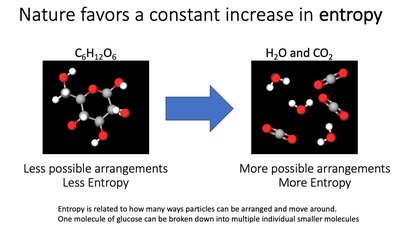
Second Law of Thermodynamics: Entropy (disorder) of the universe tends to increase.
Matter is also conserved in chemical reactions; atoms are rearranged but not created or destroyed.
Gibbs Free Energy and Reaction Types
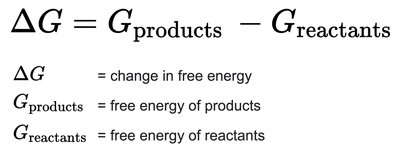
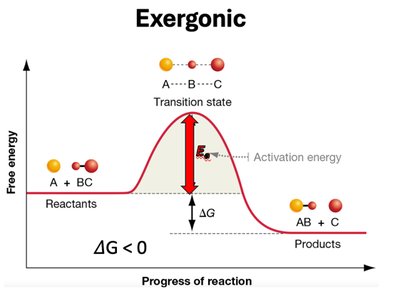
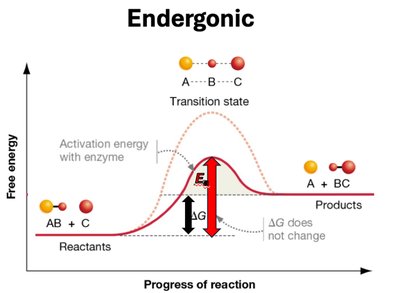
The change in Gibbs free energy () determines whether a reaction is spontaneous:
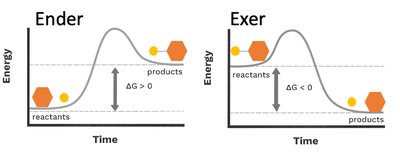
Exergonic reactions: , release energy, spontaneous (e.g., cellular respiration).
Endergonic reactions: , require energy input, non-spontaneous (e.g., photosynthesis).
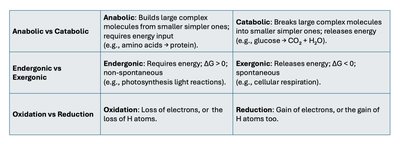
Anabolic vs Catabolic | Endergonic vs Exergonic | Oxidation vs Reduction |
|---|---|---|
Anabolic: Builds large molecules; requires energy input. Catabolic: Breaks down molecules; releases energy. | Endergonic: Requires energy; Exergonic: Releases energy; | Oxidation: Loss of electrons/H atoms. Reduction: Gain of electrons/H atoms. |
ATP and Energy Coupling
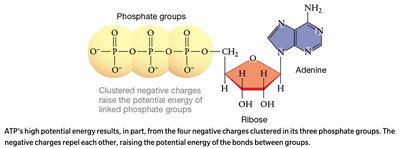
ATP (adenosine triphosphate) is the primary energy currency of the cell. Its high potential energy comes from the repulsion of clustered negative charges in its phosphate groups. ATP hydrolysis releases energy that can drive endergonic reactions via energy coupling.
Energy Coupling and Phosphorylation
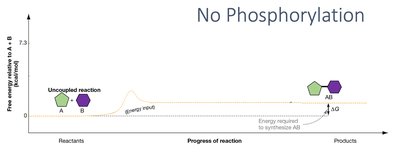
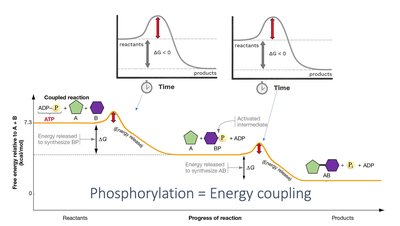
Energy coupling allows cells to drive endergonic reactions by pairing them with exergonic ATP hydrolysis. Phosphorylation (addition of a phosphate group) often activates substrates or enzymes, making reactions more favorable.
Part 2. Enzymes and Metabolism
Enzyme Structure and Function
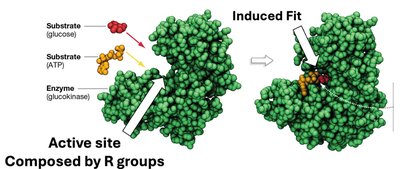
Enzymes are biological catalysts, usually proteins, that speed up chemical reactions by lowering activation energy. They are not consumed in the reaction. The reactants in enzyme-catalyzed reactions are called substrates, which bind to the enzyme's active site. The induced fit model describes how substrate binding induces a conformational change in the enzyme, enhancing catalysis.
Enzyme Reusability and Reaction Rate
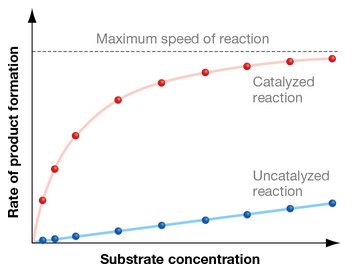
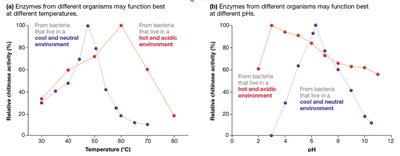
Enzymes are reusable and can catalyze many reactions. The rate of enzyme-catalyzed reactions depends on substrate concentration, temperature, and pH. Enzymes have optimal conditions for activity.
Enzyme Regulation
Enzyme activity can be regulated by:
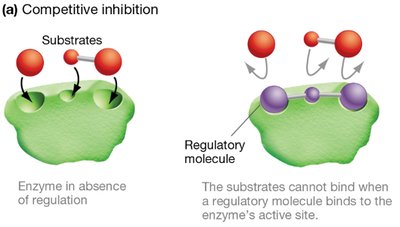
Competitive inhibition: Inhibitor binds to the active site, blocking substrate binding.
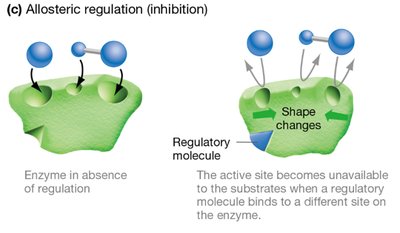
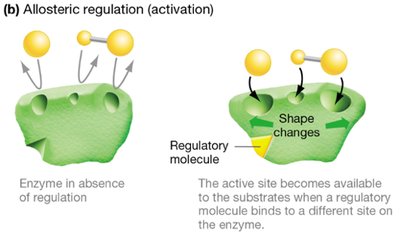
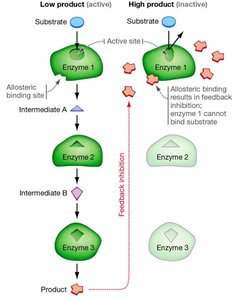
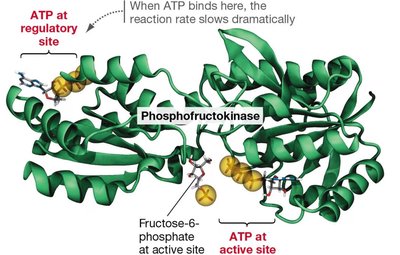
Allosteric regulation: Regulatory molecule binds elsewhere, changing enzyme shape and activity (can be inhibitory or activating).
Feedback inhibition: End product of a pathway inhibits an enzyme early in the pathway, preventing overproduction.
Cofactors and Coenzymes
Some enzymes require non-protein helpers:
Cofactors: Inorganic ions (e.g., Mg2+, Fe2+).
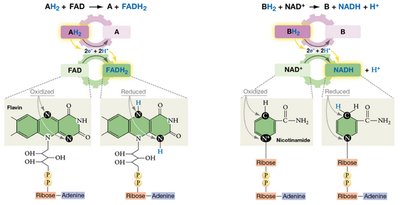
Coenzymes: Organic molecules (e.g., NAD+, FAD).
Part 3. Redox Reactions in Metabolism
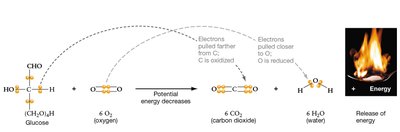
Oxidation and Reduction
Redox reactions involve the transfer of electrons:
Oxidation: Loss of electrons (or H atoms).
Reduction: Gain of electrons (or H atoms).
These reactions are coupled; one molecule is oxidized as another is reduced. Electron carriers like NAD+ and FAD are reduced to NADH and FADH2 during metabolism, storing energy for later use.
Part 4. Photosynthesis
Role and Importance of Photosynthesis
Photosynthesis converts inorganic carbon dioxide and water into organic compounds (carbohydrates) using sunlight energy. It is essential for carbon cycling and provides food for producers and consumers.
Inputs and Outputs of Photosynthesis and Cellular Respiration
Process | Inputs | Outputs |
|---|---|---|
Photosynthesis | Water, CO2, sunlight | G3P (carbohydrate), O2 |
Cellular Respiration | Glucose, O2 | CO2, H2O, ATP |
Carbon Fixation and Energy Transformation
Photosynthesis transforms low-energy CO2 into high-energy carbohydrates via carbon fixation, primarily in the Calvin cycle. This process requires energy input from sunlight, which is captured and converted to chemical energy in ATP and NADPH during the light-dependent reactions.
Light-Dependent Reactions
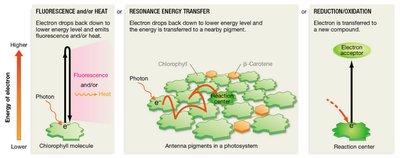
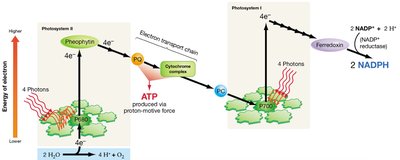
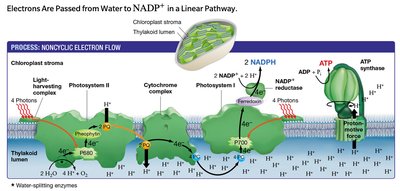
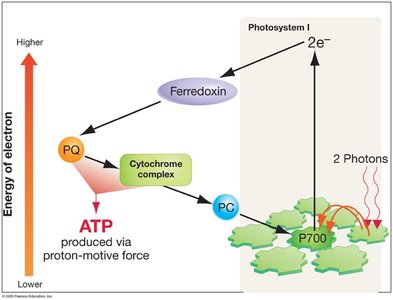
The light-dependent reactions occur in the thylakoid membranes and require sunlight, water, NADP+, and ADP. They produce ATP, NADPH, O2, and heat. The main function is to convert light energy into chemical energy for use in the Calvin cycle.
Linear vs. Cyclic Electron Flow
Both linear and cyclic pathways occur in the chloroplast:
Linear pathway: Produces ATP and NADPH.
Cyclic pathway: Produces additional ATP only.
Calvin Cycle (Light-Independent Reactions)
The Calvin cycle uses ATP and NADPH from the light-dependent reactions to fix CO2 into G3P, a three-carbon carbohydrate. This process is essential for synthesizing organic molecules in plants.
Photorespiration
Photorespiration occurs when RuBisCO incorporates O2 instead of CO2 into ribulose bisphosphate, reducing the efficiency of carbon fixation and thus photosynthesis. This is problematic for plants, especially under conditions of high O2 and low CO2 in the chloroplast.
Part 5. Cellular Respiration
Overview of Cellular Respiration
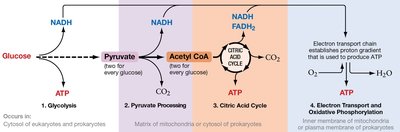
Cellular respiration is a series of metabolic pathways that extract energy from glucose and store it in ATP. It consists of four interconnected processes:
Glycolysis
Pyruvate Oxidation
Citric Acid Cycle (Krebs Cycle)
Oxidative Phosphorylation (Electron Transport Chain and Chemiosmosis)
Process | Inputs | Outputs |
|---|---|---|
Glycolysis | Glucose, NAD+, ADP | Pyruvate, NADH, ATP |
Pyruvate Oxidation | Pyruvate, NAD+, Coenzyme A | CO2, Acetyl CoA, NADH |
Citric Acid Cycle | Acetyl CoA, NAD+, FAD, ADP | CO2, NADH, FADH2, ATP |
Oxidative Phosphorylation | ADP, NADH, FADH2, O2 | ATP, NAD+, FAD, H2O |
Energy Flow in Cellular Respiration
Energy from glucose is transferred to ATP through a series of redox reactions. NADH and FADH2 act as electron carriers, transferring electrons to the electron transport chain, where the energy is used to produce ATP. Oxygen is the final electron acceptor, forming water.
Fermentation
When oxygen is unavailable, cells use fermentation to regenerate NAD+ so glycolysis can continue. Two common types are:
Lactic acid fermentation: Pyruvate is reduced to lactate.
Alcohol fermentation: Pyruvate is converted to ethanol and CO2.
Vocabulary
Key terms to know: activation energy, anabolic, catabolic, ATP, NADH, FADH2, glycolysis, Calvin cycle, photosynthesis, cellular respiration, redox, substrate, enzyme, feedback inhibition, photorespiration, carbon fixation, oxidative phosphorylation, chemiosmosis, electron transport chain, RuBisCO, G3P, pyruvate, acetyl CoA, thylakoid, stroma, matrix, etc.
