 Indietro
DNA, RNA, and Protein Synthesis: Gene Expression and Regulation
Guida di studio - Note intelligenti
 Appunti personalizzati basati sui tuoi materiali, ampliati con definizioni chiave, esempi e contesto.
DNA: The Molecule of Life
Transcription: Creating RNA from DNA
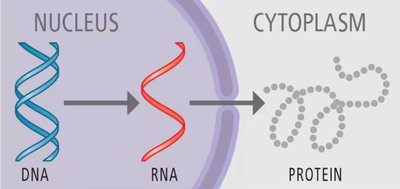
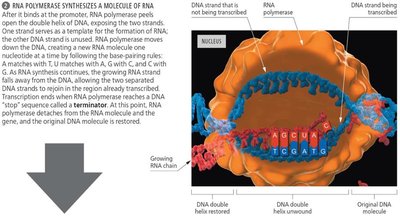
Transcription is the process by which genetic information encoded in DNA is transferred to a molecule of RNA. This process occurs in the nucleus of eukaryotic cells and is the first step in gene expression, ultimately leading to protein synthesis.
Transcription is the transfer of information from DNA to messenger RNA (mRNA).
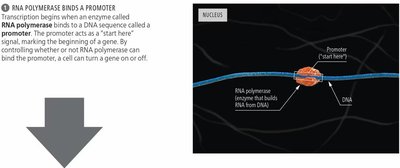
RNA polymerase binds to a specific region of DNA called the promoter, marking the beginning of a gene.
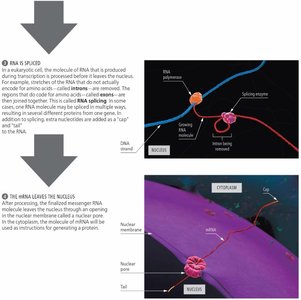
After RNA is synthesized, it undergoes several modifications before leaving the nucleus.
What is a Gene?
The definition of a gene has evolved as biologists have learned more about genetics. Originally, a gene was defined as a stretch of DNA responsible for producing one enzyme. This definition expanded to include any protein, and later, RNAs that influence traits without producing proteins. Today, a gene is best defined as a unit of hereditary information consisting of a specific nucleotide sequence in DNA.
Gene: A unit of hereditary information consisting of a specific nucleotide sequence in DNA.
Genes may encode proteins, polypeptides, or functional RNAs.
The definition remains a subject of active discussion among biologists.
Translation: RNA to Protein
Translation and the Role of RNA
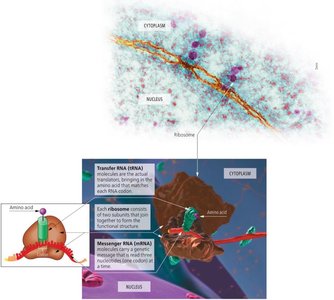
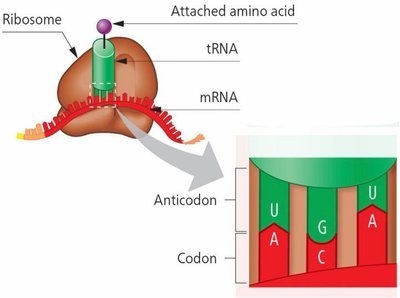
Translation is the process by which a molecule of mRNA is used to produce a protein. This occurs in the cytoplasm at ribosomes, which are composed of ribosomal RNA (rRNA) and proteins. Transfer RNA (tRNA) molecules interpret the genetic code and bring the correct amino acids to the ribosome.
Ribosomes are cellular structures that translate mRNA into polypeptides.
Ribosomes are made from proteins and rRNA.
tRNA molecules have an anticodon that binds to the mRNA codon and carry the corresponding amino acid.
The Genetic Code
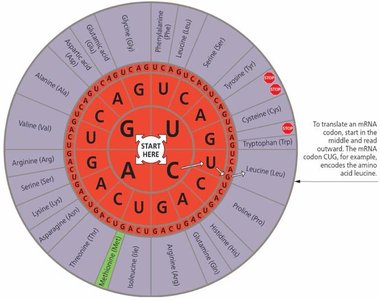
The genetic code is the correspondence between mRNA codons and amino acids. Each codon consists of three RNA bases and encodes one amino acid. The code is universal and redundant, with some amino acids encoded by multiple codons.
There is one start codon (AUG) that signals the beginning of translation and codes for methionine.
Three stop codons (UAA, UAG, UGA) signal the end of translation.
Each codon between start and stop encodes a specific amino acid.

Translation: Steps and Mechanism
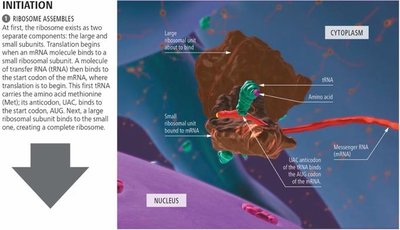
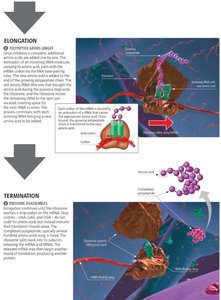
Translation begins when a ribosome assembles at the start codon of an mRNA. Elongation proceeds by adding one amino acid at a time, and termination occurs when a stop codon is reached, releasing the protein.
Initiation: Ribosome assembles at the start codon (AUG).
Elongation: Amino acids are added one by one to the growing polypeptide chain.
Termination: Ribosome disassembles at a stop codon, releasing the completed protein.
Gene Expression and Regulation
Gene Regulation in Action
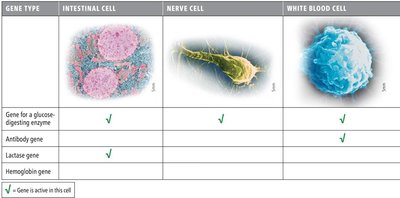
Gene regulation is the process of turning genes on or off, controlling the production of proteins. Different cell types express different genes, allowing for specialization.
Gene expression can be regulated at multiple points from DNA to protein.
Only certain genes are active in specific cell types.
Gene Type | Intestinal Cell | Nerve Cell | White Blood Cell |
|---|---|---|---|
Gene for a glucose-digesting enzyme | ✓ | ||
Antibody gene | ✓ | ||
Lactase gene | ✓ | ||
Hemoglobin gene |
X Chromosome Inactivation
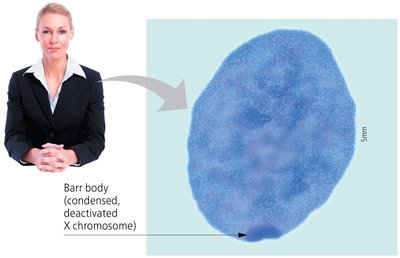
In female mammals, one X chromosome in each cell is highly compacted and almost entirely inactive. This ensures equal expression of X-linked genes in males and females. The inactive X forms a Barr body, visible under a microscope.
Control of Gene Expression
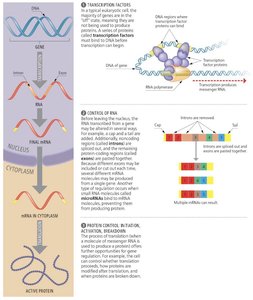
Gene expression can be regulated at many points, including transcription, RNA processing, and protein modification or breakdown.
Transcription factors can regulate which genes are transcribed.
RNA can be spliced and modified before translation.
Proteins can be activated, inactivated, or broken down after translation.
Signal Transduction and Gene Regulation
Signal Transduction Pathways
Cells communicate via molecules that trigger signal transduction pathways, resulting in gene regulation. This is especially important during development, where cell-to-cell signaling coordinates growth and differentiation.
Signal molecules bind to receptor proteins on target cells.
Relay molecules convey the signal to the nucleus, affecting gene expression.
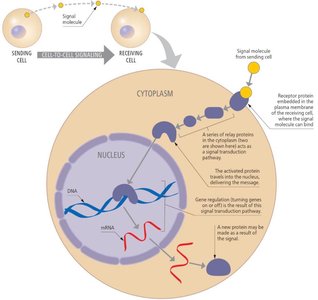
Cell-to-Cell Signaling in Development
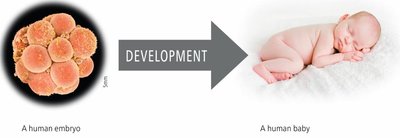
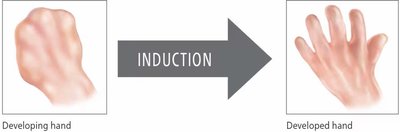
Development from embryo to adult involves frequent cell division and differentiation, coordinated by chemical signals passed between neighboring cells.
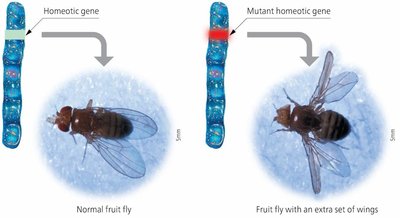
Signals control organ formation and body organization.
Proper development depends on precise signaling between cells.
Mutations and Their Effects
Mutations: Causes and Types
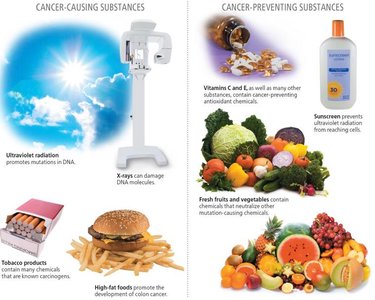
Mutations are changes to the nucleotide sequence of DNA. They can occur spontaneously or be caused by mutagens, which are physical or chemical agents that damage DNA. Some mutagens are carcinogens, increasing the risk of cancer.
Spontaneous mutations occur during DNA replication.
Mutagens include UV radiation, tobacco, and high-fat diets.
Preventing exposure to mutagens can reduce cancer risk.
Point Mutations
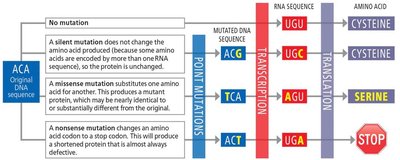
Point mutations affect a single nucleotide. They can be silent (no effect), missense (change one amino acid), or nonsense (create a stop codon, truncating the protein).
Silent mutation: No change in protein.
Missense mutation: Changes one amino acid.
Nonsense mutation: Produces a stop codon, shortening the protein.
Additional info: The notes above expand on brief points with academic context, definitions, and examples to ensure completeness and clarity for introductory biology students.
