 Indietro
Human Tissues, Body Systems, and Homeostasis: An Introductory Biology Study Guide
Guida di studio - Note intelligenti
 Appunti personalizzati basati sui tuoi materiali, ampliati con definizioni chiave, esempi e contesto.
Human Tissues, Body Systems, and Homeostasis
Overview of Human Tissue Groups
Human tissues are organized groups of cells with similar structure and function. These tissues form the foundation for organs and organ systems, enabling the body to perform complex biological functions.
Epithelial Tissue
Connective Tissue
Adipose Tissue
Muscle Tissue
Nervous Tissue
Epithelial Tissue
Structure and Function
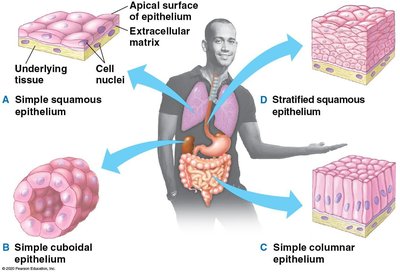
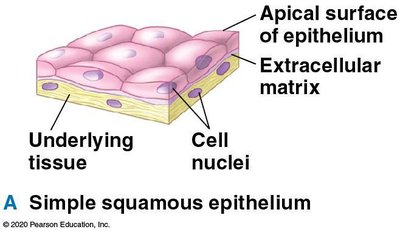
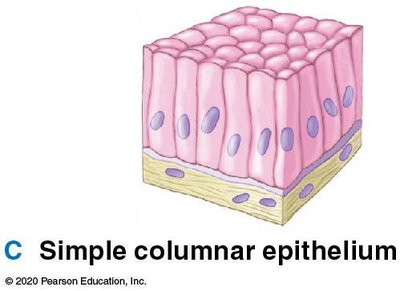
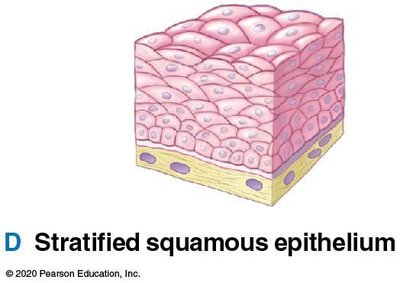
Epithelial tissue forms the covering of both external and internal body surfaces and lines organs. Its main functions include protection, secretion, absorption, and filtration. Some epithelial cells possess cilia to aid in movement of substances.
Location: Lining of vessels, body cavities, heart, kidneys, gall bladder, stomach, intestines, bronchioles, outer skin, mouth, ureters.
Types: Simple squamous, simple cuboidal, simple columnar, stratified squamous.
Connective Tissue
Structure and Types
Connective tissue consists of a sparse population of cells scattered throughout a non-living matrix. The matrix, produced and secreted by the cells, is typically a web of fibers embedded in a liquid, jelly, or solid. Connective tissue supports, binds, and protects other tissues and organs.
Loose connective tissue: Most common, found under the skin.
Fibrous connective tissue: Forms tendons and ligaments.
Adipose tissue: Stores fat droplets for energy and insulation.
Cartilage: Provides flexible support in joints, nose, ribs, trachea, ear, larynx, intervertebral discs, menisci.
Bone: Rigid support, mineral storage, and blood cell production.
Blood: Transports gases, nutrients, and wastes; classified as connective tissue due to its matrix (plasma).





Muscle Tissue
Types and Functions
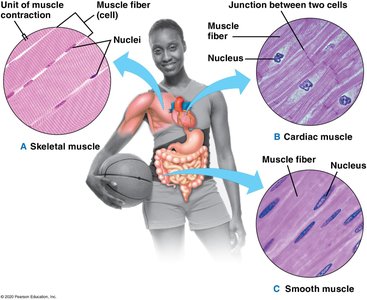
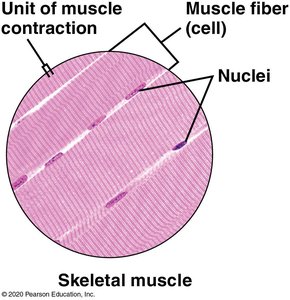
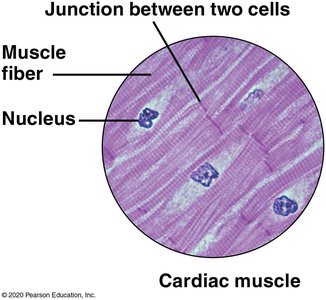
Muscle tissue is the most abundant tissue in most animals and is specialized for contraction, enabling movement. There are three types of vertebrate muscle tissue:
Skeletal muscle: Causes voluntary movements; attaches to bones by tendons.
Cardiac muscle: Found in the heart; pumps blood involuntarily; cells are branched and interconnected.
Smooth muscle: Moves walls of internal organs (e.g., intestines, uterus, blood vessels); involuntary control.

Nervous Tissue
Structure and Function
Nervous tissue forms a communication network that senses stimuli and rapidly transmits information throughout the body. The main cell type is the neuron, which carries signals by conducting electrical impulses. Other supporting cells insulate axons, nourish neurons, and regulate the fluid around neurons.

Organs and Organ Systems
Integration of Tissues into Organs
Organs are made up of multiple tissue types, each performing specific functions. For example, the small intestine is lined by columnar epithelium, contains connective tissues with blood vessels, and has smooth muscle layers for propulsion of food. The inner surface has finger-like projections (villi) to increase surface area for absorption.
Major Organ Systems and Their Functions
Circulatory system: Delivers O2 and nutrients to cells, removes CO2 and wastes.
Respiratory system: Exchanges gases with the environment (O2 in, CO2 out).
Digestive system: Breaks down food, absorbs nutrients, eliminates wastes.
Nervous system: Senses stimuli, coordinates responses.
Muscular system: Moves bones, contracts heart, moves food through digestive tract.
Skeletal system: Supports and protects the body.
Excretory system: Eliminates wastes.
Immune system: Protects against disease.
Reproductive system: Produces gametes, supports embryo development.
Endocrine system: Maintains homeostasis via hormones.
Integumentary system: Provides a barrier (skin, dermis, epidermis).
Homeostasis and Feedback Mechanisms
Definition and Importance
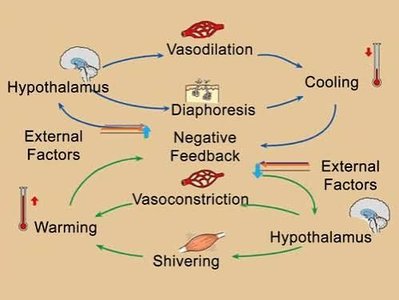
Homeostasis is the body's automatic process of maintaining a stable internal environment (e.g., temperature, blood sugar, water levels) despite external changes. This is achieved through feedback loops involving variables, receptors, control centers, and effectors.
Variables: Parameters monitored and controlled (e.g., temperature, glucose).
Receptors: Detect changes in variables.
Control centers: Compare variable to set point and signal effectors.
Effectors: Execute changes to adjust the variable.
Communication: Occurs via nerves or hormones.
Types of Feedback Loops
Negative feedback loops: A change in one direction causes a response in the opposite direction, stabilizing the system. Example: Blood sugar regulation, body temperature.
Positive feedback loops: A change in one direction causes further change in the same direction, amplifying the response until an endpoint is reached. Example: Childbirth, blood clotting.
Examples of Homeostatic Regulation
Osmoregulation: Animals control solute concentrations and water balance to prevent excessive uptake or loss of water.
Thyroid regulation: Thyroid hormones control metabolism, reproduction, and development. Imbalances can cause diseases such as hyperthyroidism, hypothyroidism, and goiter.
Blood glucose regulation: The pancreas secretes insulin and glucagon, antagonistic hormones that maintain blood glucose at a homeostatic set point. Diabetes mellitus results from the inability to produce or use insulin, leading to hyperglycemia.
Interacting Organ Systems
Organ systems do not work in isolation. For example, the digestive system breaks down food into nutrients, which are then transported by the circulatory system. The respiratory system brings in oxygen, which is delivered by the circulatory system to cells for cellular respiration.
Summary Table: Major Tissue Types and Functions
Tissue Type | Main Function | Example Location |
|---|---|---|
Epithelial | Protection, absorption, secretion, filtration | Skin, lining of gut, glands |
Connective | Support, binding, transport | Tendons, fat, bone, blood |
Muscle | Movement by contraction | Skeletal muscles, heart, digestive tract |
Nervous | Communication, control | Brain, spinal cord, nerves |
Additional info: This guide integrates content from chapters on animal structure and function, homeostasis, and the endocrine system, as outlined in introductory biology syllabi.
