 Indietro
Introduction to Biology: The Study of Life and Its Organization
Guida di studio - Note intelligenti
 Appunti personalizzati basati sui tuoi materiali, ampliati con definizioni chiave, esempi e contesto.
Biology: The Study of Scientific Life
What is Biology?
Biology is the scientific study of life, encompassing a wide range of living organisms from single-celled bacteria to multicellular animals and plants. Biologists use systematic and logical processes to investigate the properties and behaviors of living things. Although there is no single definition of life, biologists identify life based on a set of shared properties.
Biology: The science that studies living organisms and their interactions with the environment.
Organisms vary greatly in form and complexity, from unicellular to multicellular.
Properties of Life
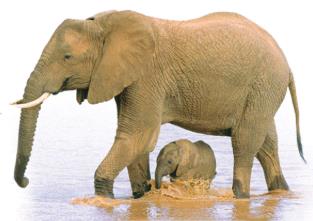
Living things are defined by several key properties that distinguish them from non-living matter. These properties are used to identify and classify life forms.
Order: Organisms exhibit complex organization and structure.
Reproduction: Living things produce offspring, ensuring the continuation of their species.
Growth and Development: Organisms grow and develop according to specific instructions coded in their DNA.
Response to Environment: Organisms respond to environmental stimuli.
Energy Processing: Living things obtain and use energy to power their activities.
Regulation: Organisms regulate their internal environment to maintain stability (homeostasis).
Evolutionary Adaptation: Populations evolve over generations through adaptations that enhance survival.
Defining Life
Life is defined by the parts and processes of living things. All living organisms are composed of cells, which regulate their internal environment, take in and use energy, and respond to their surroundings. Cells give rise to new cells, and life can be unicellular or multicellular.
Cell: The fundamental unit of life.
Cells perform essential functions such as energy processing, regulation, and reproduction.
Nomenclature and Taxonomy
Nomenclature
Nomenclature is the system of naming organisms. Each organism is given a two-part Latin name, consisting of the genus and species. The genus is capitalized, the species is lowercase, and both are italicized or underlined.
Genus: The first part of the name, indicating a group of closely related species.
Species: The second part, identifying the specific organism.
Example: Homo sapiens (humans)
Taxonomy
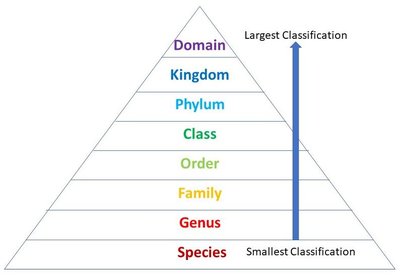
Taxonomy is the classification of organisms into hierarchical groups based on shared characteristics and evolutionary relationships. Scientists have named about 1.8 million organisms, but estimates suggest there may be 10–100 million species on Earth.
Organisms are organized into broader groups for easier study and understanding.
Classification Hierarchy
The classification system organizes life into increasingly specific categories:
Domain: Highest and most general taxonomic rank.
Kingdom: Groups organisms with fundamental structural, cellular, and nutritional characteristics.
Phylum: Organisms sharing major evolutionary lineage.
Class: Organisms with a more recent common ancestor.
Order: Groups together multiple families.
Family: Groups together multiple genera.
Genus: Multiple closely related species.
Species: Most specific, only one particular species.
The Three Domains of Life
Domain Bacteria
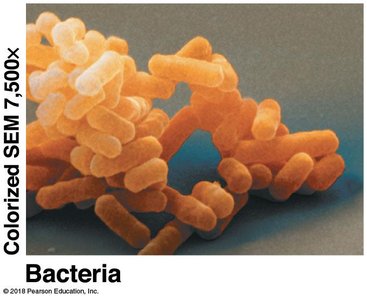
Bacteria are microscopic, single-celled organisms with simple cell organization. They are found in diverse environments, including soil, air, water, and the human gut. Bacteria are responsible for many infections in humans and have three basic shapes: coccus (spherical), bacillus (rod-shaped), and spiral.
Most bacteria measure between 0.5 to 5 microns.
Different bacteria cause different infections.
Domain Archaea
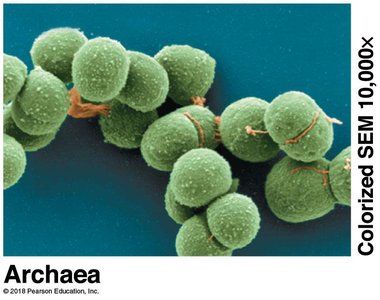
Archaea are microscopic, single-celled organisms that appear similar to bacteria but are genetically distinct. They often live in extreme environments such as salty lakes and hot springs. No archaea have been shown to cause infections in humans.
Simple cell organization.
DNA sequencing reveals significant differences from bacteria.
Adapted to extreme conditions.
Domain Eukarya
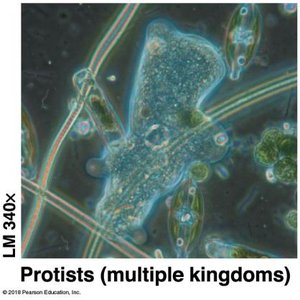
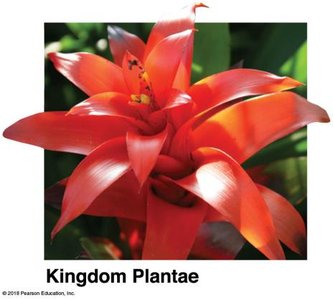
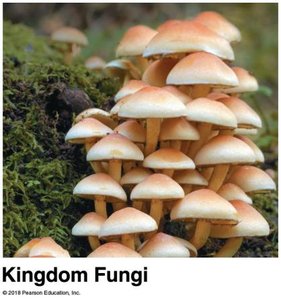
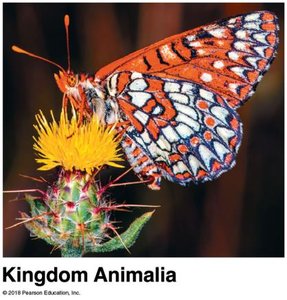
All organisms with complex cells belong to the domain Eukarya. This domain is divided into four major kingdoms:
Protists: Mostly single-celled organisms, such as Amoeba.
Plantae: Plants that produce food using photosynthesis.
Fungi: Organisms that decompose organic wastes and absorb nutrients.
Animalia: Organisms that obtain food by eating other organisms.
Hierarchy of Biological Organization
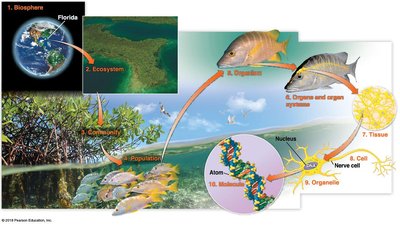
Levels of Organization
Biological organization is structured in a hierarchy, from the largest to the smallest units:
Biosphere: All life on Earth.
Ecosystem: All living organisms in a particular area and their non-living environment.
Community: All living organisms in an ecosystem.
Population: All individuals of a single species in a community.
Organism: An individual living thing.
Organs and Organ Systems: Body parts that perform specific functions.
Tissue: Groups of similar cells performing a specific function.
Cell: The fundamental unit of life.
Organelle: Functional structures within cells.
Molecule: Chemical structures consisting of two or more atoms.
Summary Table: Classification Hierarchy
The following table summarizes the main taxonomic ranks in biological classification:
Rank | Description |
|---|---|
Domain | Highest, most general rank |
Kingdom | Groups organisms by fundamental characteristics |
Phylum | Major evolutionary lineage |
Class | More recent common ancestor |
Order | Groups multiple families |
Family | Groups multiple genera |
Genus | Closely related species |
Species | Most specific, single species |
Additional info:
Biology is foundational for understanding health, ecology, genetics, and evolution.
Taxonomic classification helps scientists communicate about organisms and study their relationships.
