 Indietro
Atoms and Elements: Foundations of Atomic Theory and the Periodic Table
Guida di studio - Note intelligenti
 Appunti personalizzati basati sui tuoi materiali, ampliati con definizioni chiave, esempi e contesto.
Atoms and Elements
Introduction to Atoms and Elements
Atoms are the fundamental building blocks of matter, and their properties determine the characteristics of all substances. An atom is the smallest identifiable unit of an element, and an element is a substance that cannot be broken down into simpler substances. There are about 91 naturally occurring elements, each with unique atoms, and scientists have created about 20 synthetic elements.
Atom: Smallest unit of an element, retains chemical properties.
Element: Pure substance composed of only one type of atom.
Synthetic elements: Created in laboratories, not found in nature.
Experiencing Atoms in Nature
Atoms are present everywhere, from seaside rocks (silicates) to air (nitrogen and oxygen molecules). Amines, such as triethylamine, are emitted by decaying fish and contribute to the characteristic smell of the seaside.
Small Size and Large Number of Atoms
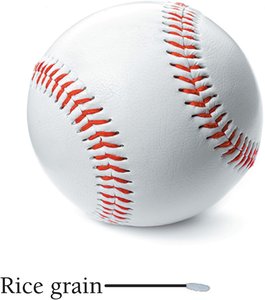
Atoms are extremely small and numerous. If every atom in a pebble were the size of the pebble itself, the pebble would be larger than Mount Everest. 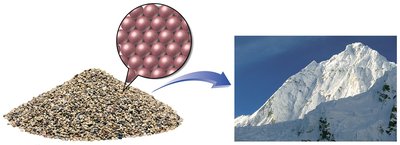
Historical Development of Atomic Theory
Democritus and Leucippus: Early Atomic Theory
Democritus and Leucippus theorized that matter was made of tiny, indestructible particles called atomos (atoms), meaning "indivisible." They suggested that dividing matter repeatedly would eventually yield these fundamental particles.
John Dalton's Atomic Theory
Dalton formalized atomic theory in 1808, which gained broad acceptance. His theory consists of:
Each element is composed of tiny, indestructible particles called atoms.
All atoms of a given element have the same mass and properties, distinguishing them from other elements.
Atoms combine in simple, whole-number ratios to form compounds.
Modern Evidence for Atomic Theory
Scientists have used scanning tunneling microscopes (STM) to manipulate individual atoms, creating images and even movies at the atomic scale, such as "A Boy and His Atom." 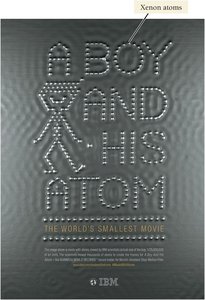
Structure of the Atom
Discovery of Electrons: J. J. Thomson
J. J. Thomson discovered the electron, a negatively charged, much smaller and lighter particle than the atom. Electrons are present in many substances, and Thomson proposed that atoms must also contain positive charge to balance the negative electrons.
Thomson’s Plum-Pudding Model
Thomson suggested that electrons are embedded in a sphere of positive charge, like plums in a pudding. 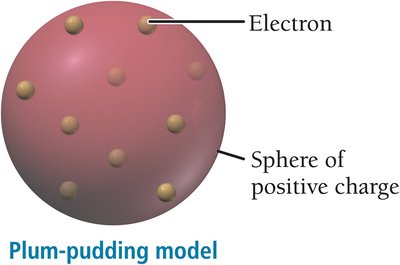
Rutherford’s Gold Foil Experiment
Rutherford directed alpha particles at a thin sheet of gold foil. Most particles passed through, but some were deflected sharply, contradicting the plum-pudding model. 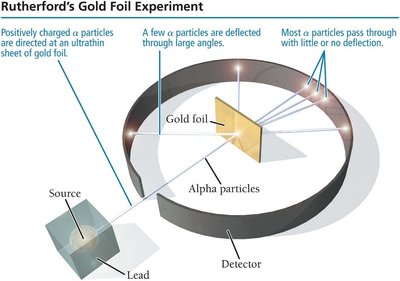

Rutherford’s Nuclear Theory of the Atom
Rutherford concluded:
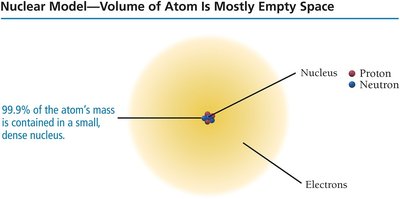
Most of the atom’s mass and all its positive charge are in a small nucleus.
Most of the atom’s volume is empty space, with electrons dispersed throughout.
The number of electrons equals the number of protons, making the atom electrically neutral.
Subatomic Particles
Protons, Neutrons, and Electrons: Mass and Charge
Proton: Nearly 2000 times as massive as an electron; positive charge.
Neutron: Similar mass to proton; no charge.
Electron: Negligible mass; negative charge.
Electrical Charge
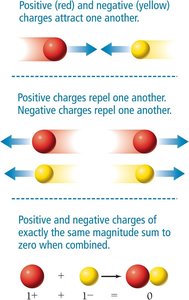
Positive and negative charges attract; like charges repel.
Pairing a proton and an electron results in charge neutrality.
Summary Table: Subatomic Particles
Particle | Mass (kg) | Mass (amu) | Charge |
|---|---|---|---|
Proton | 1.67262 × 10⁻²⁷ | 1.0073 | +1 |
Neutron | 1.67493 × 10⁻²⁷ | 1.0087 | 0 |
Electron | 0.00091 × 10⁻²⁷ | 0.00055 | -1 |
Charge in Matter: Electrical Storms
Matter is usually charge-neutral, but electrical storms disturb this balance, leading to dramatic rebalancing events like lightning. 
Elements and the Periodic Table
Elements Defined by Number of Protons
The number of protons in the nucleus (atomic number, Z) defines the element. Changing the number of protons changes the element.
Periodic Table Organization
The periodic table lists elements by atomic number. Each element’s name, symbol, and atomic number are included. 
Names and Symbols
Most symbols are based on English names (e.g., C for carbon).
Some are based on Latin or Greek names (e.g., K for potassium from kalium).
Origins of Element Names
Some elements are named for properties (e.g., Argon means "inactive").
Others are named for countries (e.g., Polonium for Poland).
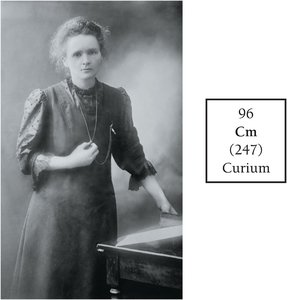
Some are named after scientists (e.g., Curium for Marie Curie).

Periodic Law and Mendeleev
Dmitri Mendeleev observed recurring properties when elements are listed by increasing mass, leading to the periodic law. The law summarizes observed patterns but does not explain them; theories provide explanations. 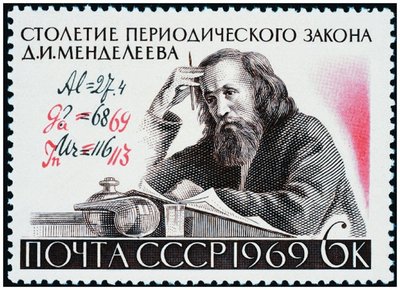
Classification of Elements
Metals, Nonmetals, and Metalloids
The periodic table is divided into metals, nonmetals, and metalloids.
Metals: Left side; good conductors, malleable, ductile, lustrous, tend to lose electrons.
Nonmetals: Upper right; varied properties, poor conductors, tend to gain electrons.
Metalloids: Along zigzag line; mixed properties, semiconductors, useful in electronics.

Main Group and Transition Elements
Main group elements: Properties predictable by position.
Transition elements: Properties less predictable.
Groups in the Periodic Table
Each column is a group (family), and main-group elements in a family display similar properties.
Alkali Metals
Very reactive metals: lithium, sodium, potassium, rubidium, cesium (hydrogen is not an alkali metal).
Alkaline Earth Metals
Fairly reactive: beryllium, magnesium, calcium, strontium, barium.
Halogens
Very reactive nonmetals: chlorine, fluorine, bromine, iodine, astatine.
Noble Gases
Chemically inert: helium, neon, argon, krypton, xenon.
Ions and Isotopes
Ions: Gaining and Losing Electrons
Atoms can lose or gain electrons to form ions. Positive ions are cations, negative ions are anions. The charge is shown in the upper right corner of the symbol.
Ion charge formula:
Example: Lithium ion (3 protons, 2 electrons):
Example: Fluoride ion (9 protons, 10 electrons):
Ions and the Periodic Table
Main-group elements tend to form ions with the same number of valence electrons as the nearest noble gas. The group number predicts the charge.
Isotopes
Atoms of the same element can have different numbers of neutrons, forming isotopes. Each element has unique percent natural abundance of isotopes.
Example: Neon has three isotopes: Ne-20, Ne-21, Ne-22 (all with 10 protons, differing neutrons).
Mass Number and Isotope Symbols
Mass number (A):
Example: Carbon-13: , , neutrons =
Isotope notation: , ,
Alternative notation: Ne-20, Ne-21, Ne-22
Calculating Atomic Mass
The atomic mass listed in the periodic table is the weighted average of the masses of the isotopes, calculated as:
Fraction abundance = percentage natural abundance / 100
Example: Chlorine atomic mass:
Radioactive Isotopes
Some isotopes have unstable nuclei and emit energetic subatomic particles (nuclear radiation), converting into different isotopes or elements. These are called radioactive isotopes.
Radioactive isotopes can be harmful due to their interaction with biological molecules.
Some isotopes emit radiation for short periods; others remain radioactive for millions of years.
Beneficial uses include medical imaging (e.g., technetium-99 for diagnosing disease).
