 Indietro
Atoms and Elements: Foundations of Matter
Guida di studio - Note intelligenti
 Appunti personalizzati basati sui tuoi materiali, ampliati con definizioni chiave, esempi e contesto.
Atoms and Elements
Introduction to Atoms and Elements
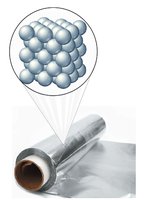
Atoms and elements are fundamental concepts in chemistry, forming the basis for understanding the structure and properties of all matter. Elements are pure substances that cannot be broken down into simpler substances by chemical means. Each element is composed of atoms, which are the smallest units retaining the chemical identity of the element.
Career Application: Chemistry in Agriculture
Chemistry plays a vital role in agriculture, where farmers utilize chemical tests to analyze soil and water quality. They apply fertilizers, pesticides, and herbicides to enhance crop yield, nutritional value, and taste. Pesticides are chemicals used to eliminate harmful insects, while herbicides target weeds that compete with crops for resources.

Elements and Their Symbols
Each element is assigned a unique chemical symbol, which is a one- or two-letter abbreviation derived from its name. The first letter is always capitalized, and the second letter, if present, is lowercase. For example, Co represents cobalt, while CO indicates a compound containing carbon and oxygen.
Element: A pure substance from which all matter is built.
Chemical Symbol: One- or two-letter abbreviation for an element's name.
Symbols are standardized for clarity and universal understanding.
Sources of Element Names
Element names have diverse origins, including planets, mythological figures, minerals, geographic locations, and famous people. Learning the names and symbols of elements is essential for mastering chemistry.
Examples of Element Names and Symbols
Aluminum: Al
Silver: Ag
Gold: Au
Sulfur: S
Table: Selected Elements, Symbols, and Name Origins
Element | Symbol | Name Origin |
|---|---|---|
Aluminum | Al | Mineral alum |
Silver | Ag | Latin: argentum |
Gold | Au | Latin: aurum |
Sulfur | S | Latin: sulphur |
Additional info: Many elements are named after places or people, e.g., Californium (California), Curium (Marie Curie). |
Sample Problem: Names and Symbols of Chemical Elements
Given a list of element names or symbols, complete the table by matching each name to its correct symbol and vice versa. This exercise reinforces the importance of memorizing element names and symbols for effective communication in chemistry.
Atoms and Isotopes
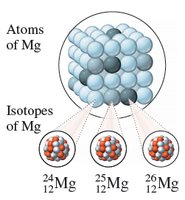
Atoms of a given element may differ in the number of neutrons, resulting in isotopes. Isotopes have the same number of protons but different mass numbers. For example, magnesium (Mg) has three common isotopes: 24Mg, 25Mg, and 26Mg.
Isotope: Atoms of the same element with different numbers of neutrons.
Mass Number: Sum of protons and neutrons in the nucleus.
Isotope Notation
Isotopes are represented using the following notation:
A: Mass number (protons + neutrons)
Z: Atomic number (number of protons)
For magnesium:
Review: Elements and Symbols
Understanding elements and their symbols is foundational for studying chemistry. Elements are the primary substances of matter, and their chemical symbols provide a universal language for scientists.
Elements are pure substances.
Chemical symbols are standardized abbreviations.
Isotopes illustrate atomic diversity within elements.
