 Indietro
Atoms and Elements: Structure, Properties, and the Periodic Table
Guida di studio - Note intelligenti
 Appunti personalizzati basati sui tuoi materiali, ampliati con definizioni chiave, esempi e contesto.
Atoms and Elements
Definition of Atoms and Elements
An atom is the smallest identifiable unit of an element, retaining the chemical properties of that element. An element is a pure substance that cannot be broken down into simpler substances by chemical means.
Atoms are the fundamental building blocks of matter.
Elements are defined by the number of protons in their atoms.
Dalton’s Atomic Theory (1808)
John Dalton proposed a foundational theory of atomic structure, which includes:
Each element is composed of tiny, indestructible particles called atoms.
All atoms of a given element have the same mass and properties that distinguish them from atoms of other elements.
Atoms combine in simple, whole-number ratios to form compounds.
Discovery of Atomic Structure
Rutherford’s Gold Foil Experiment
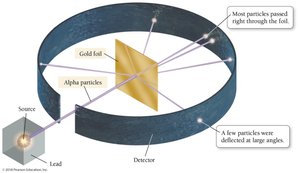
Ernest Rutherford’s gold foil experiment (1909) was crucial in understanding atomic structure. Alpha particles were directed at a thin sheet of gold foil. Most particles passed through, but some were deflected at sharp angles, indicating a dense core within the atom.
Rutherford’s Nuclear Model
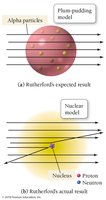
Rutherford’s experiment disproved the plum pudding model and led to the nuclear model of the atom. The results showed that:
Most of the atom’s mass and all positive charge are concentrated in a small nucleus.
Most of the atom’s volume is empty space, with electrons dispersed throughout.
The number of electrons equals the number of protons, making the atom electrically neutral.
Subatomic Particles
Protons, Neutrons, and Electrons
Atoms are composed of three main subatomic particles:
Protons: Positively charged particles found in the nucleus.
Neutrons: Neutral particles also located in the nucleus.
Electrons: Negatively charged particles found outside the nucleus, with negligible mass compared to protons and neutrons.
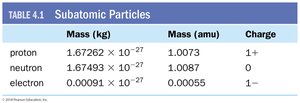
Particle | Mass (kg) | Mass (amu) | Charge |
|---|---|---|---|
Proton | 1.67262 × 10⁻²⁷ | 1.0073 | 1+ |
Neutron | 1.67493 × 10⁻²⁷ | 1.0087 | 0 |
Electron | 0.00091 × 10⁻²⁷ | 0.00055 | 1– |
Atomic Number, Mass Number, and Isotopes
Atomic Number (Z) and Mass Number (A)
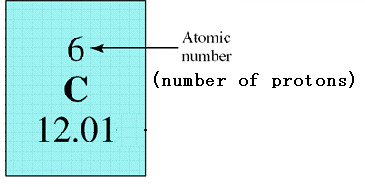
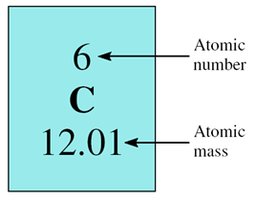
The atomic number (Z) is the number of protons in the nucleus and defines the element. The mass number (A) is the sum of protons and neutrons in the nucleus.
Atomic Number (Z): Number of protons
Mass Number (A): Number of protons + number of neutrons
Isotopes
Isotopes are atoms of the same element with different numbers of neutrons. They have the same atomic number but different mass numbers.
Example: Carbon-13 (13C) has 6 protons and 7 neutrons.
The Periodic Table
Organization and Classification
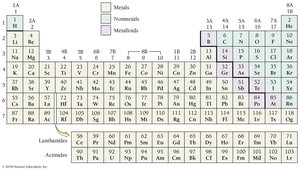
The periodic table arranges elements by increasing atomic number. Elements are classified as metals, nonmetals, or metalloids based on their properties.
Properties of Metals, Nonmetals, and Metalloids
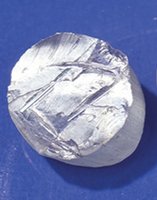
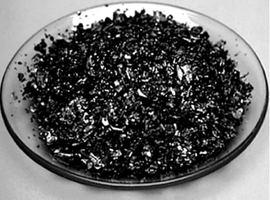
Metals: Lustrous, malleable, ductile, good conductors, high density, high melting point.
Nonmetals: Dull, brittle, poor conductors, variable density and melting point.
Metalloids: Intermediate properties between metals and nonmetals.
Groups and Families
Some important groups in the periodic table include:
Group 1A: Alkali metals
Group 2A: Alkaline earth metals
Group 7A: Halogens
Group 8A: Noble gases
Ions and Their Formation
Cations and Anions
Atoms can gain or lose electrons to form ions:
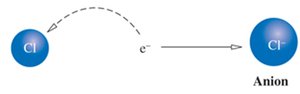
Cation: Positively charged ion (loss of electrons)
Anion: Negatively charged ion (gain of electrons)
Ions and the Periodic Table
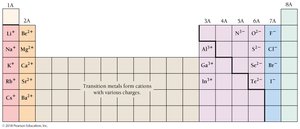
The charge of ions formed by elements can often be predicted by their group number in the periodic table. Metals tend to lose electrons (form cations), while nonmetals tend to gain electrons (form anions).
Atomic Mass and Isotopic Abundance
Atomic Mass Unit (amu)
One atomic mass unit (amu) is defined as exactly one-twelfth the mass of a carbon-12 atom.
Average Atomic Mass
The average atomic mass of an element is the weighted average of the masses of all its naturally occurring isotopes. It is calculated as:
Example: Gallium has two isotopes, Ga-69 (68.9256 amu, 60.11%) and Ga-71 (70.9247 amu, 39.89%).
Element Symbols and Names
Most element symbols are derived from their English names, but some are based on Latin or Greek names (e.g., K for potassium from kalium, Na for sodium from natrium).
Element | Symbol | Origin |
|---|---|---|
Lead | Pb | plumbum |
Mercury | Hg | hydrargyrum |
Iron | Fe | ferrum |
Silver | Ag | argentum |
Tin | Sn | stannum |
Copper | Cu | cuprum |
