 Indietro
Chapter 3: Matter and Energy – Structured Study Notes
Guida di studio - Note intelligenti
 Appunti personalizzati basati sui tuoi materiali, ampliati con definizioni chiave, esempi e contesto.
Matter and Energy
Defining Matter
Matter is defined as anything that occupies space and has mass. The study of matter is fundamental to chemistry, as it encompasses all substances and their transformations.
The Common States of Matter
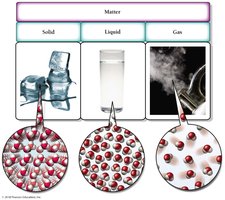
Matter exists primarily in three states: solid, liquid, and gas. Each state is characterized by distinct properties and particle arrangements.
Solid: Definite shape and volume; particles are closely packed in a fixed arrangement.
Liquid: Definite volume but indefinite shape; particles are close but can move past each other.
Gas: Indefinite shape and volume; particles are far apart and move freely.
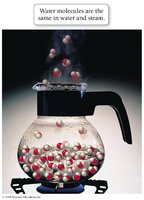
Example: Water exists as ice (solid), water (liquid), and steam (gas).
Properties of States of Matter
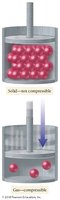
The physical properties of solids, liquids, and gases can be compared based on shape, volume, and compressibility.
Property | Solid | Liquid | Gas |
|---|---|---|---|
Shape | Definite | Indefinite | Indefinite |
Volume | Definite | Definite | Indefinite |
Compressibility | Very slight | Slight | High |
Classifying Matter According to Its Composition
Matter can be classified as pure substances or mixtures based on its composition.
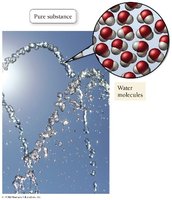
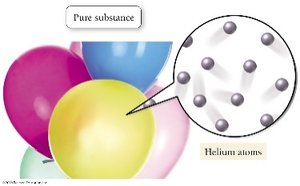
Pure Substance: Composed of only one type of atom or molecule. Examples include elements and compounds.
Mixture: Composed of two or more different substances combined in variable proportions.
Elements and Compounds
Element: A substance that cannot be broken down into other substances by chemical methods. Contains only one kind of atom. Examples: Iron (Fe), Diamond (C), Mercury (Hg), Bromine (Br2), Oxygen (O2), Hydrogen (H2).
Compound: A substance composed of a given combination of different elements that can be broken down into those elements by chemical methods. Examples: Table Salt (NaCl), Sugar (C6H12O6), Ethanol (C2H5OH), Water (H2O), Carbon Dioxide (CO2), Ammonia (NH3).
Mixtures: Homogeneous and Heterogeneous
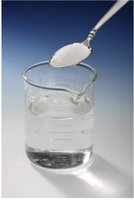
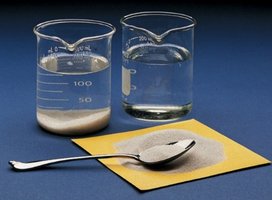
Homogeneous Mixture (Solution): Uniform composition throughout. Example: salt water.
Heterogeneous Mixture: Consists of visibly different substances. Example: sand water.
Separation Methods
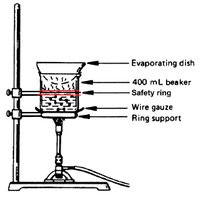
Physical Methods: Used to separate mixtures without changing their chemical composition. Examples include filtration and distillation.
Chemical Methods: Used to separate compounds into their constituent elements.
Physical and Chemical Properties
Substances display physical properties without changing their composition, and chemical properties only through changing their composition.
Physical Properties: Color, odor, taste, physical state, boiling point, freezing point, etc.
Chemical Properties: Flammability, corrodibility, reactivity, etc.
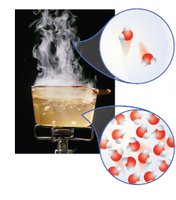
Example: Water's normal boiling point is 100°C; propane is flammable.
Physical and Chemical Changes of Matter
Changes in matter are classified as physical or chemical based on whether the composition changes.
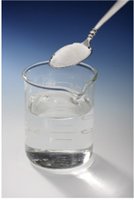
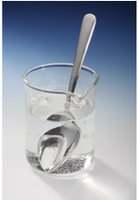
Physical Change: Changes in physical properties or state with no change in chemical composition. Example: dissolving salt in water.
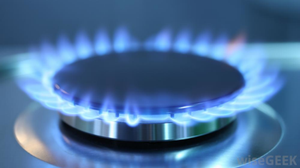
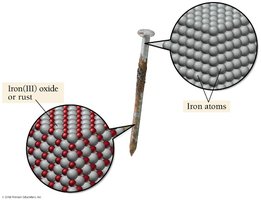
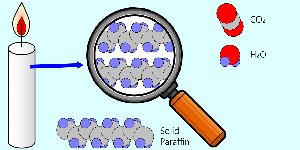
Chemical Change: Formation of new substances with new chemical and physical properties. Example: burning a candle.
Law of Conservation of Mass
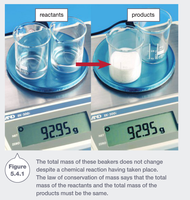
During physical and chemical changes, the total amount of matter remains constant. This is known as the Law of Conservation of Mass.
Energy in Chemistry
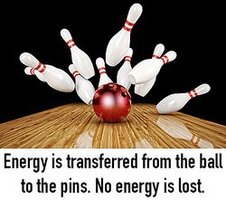
Energy is the capacity to do work and is a major component of the universe. The Law of Conservation of Energy states that energy is neither created nor destroyed; it can only be transferred or transformed.
Kinetic Energy: Energy associated with motion.
Potential Energy: Energy associated with position or composition.
Units of Energy
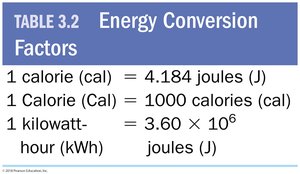
The SI unit of energy is the joule (J). Other units include the calorie (cal) and the Calorie (Cal) (nutritional calorie), where 1 Cal = 1000 cal. Energy conversion factors are important for calculations.
Unit | Equivalent |
|---|---|
1 calorie (cal) | 4.184 joules (J) |
1 Calorie (Cal) | 1000 calories (cal) |
1 kilowatt-hour (kWh) | 3.60 × 10⁶ joules (J) |
Exothermic and Endothermic Reactions
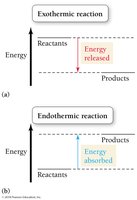
Chemical reactions can be classified based on energy exchange:
Exothermic Reaction: Energy is released to the surroundings.
Endothermic Reaction: Energy is absorbed from the surroundings.
Thermal Energy and Temperature
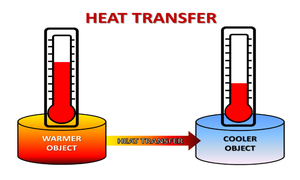
The temperature of a substance measures its thermal energy, which is the random motion of atoms and molecules. Heat is the transfer of thermal energy caused by a temperature difference.
Temperature Scales: Celsius, Fahrenheit, and Kelvin
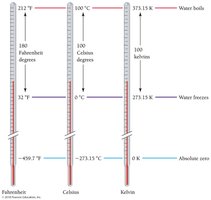
Three common temperature scales are used in chemistry:
Celsius (°C): Water freezes at 0°C and boils at 100°C.
Fahrenheit (°F): Water freezes at 32°F and boils at 212°F.
Kelvin (K): Absolute zero is 0 K; water freezes at 273 K and boils at 373 K.
Conversion formulas:
Specific Heat Capacity
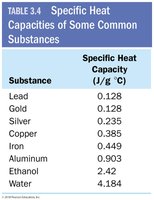
Specific heat capacity (C or sph) is the energy required to change the temperature of 1 g of a substance by 1°C. It is measured in J/(g·°C).
Substance | Specific Heat Capacity (J/g·°C) |
|---|---|
Lead | 0.128 |
Gold | 0.128 |
Silver | 0.235 |
Copper | 0.385 |
Iron | 0.449 |
Aluminum | 0.903 |
Ethanol | 2.42 |
Water | 4.184 |
Calculating Heat
The amount of heat (q) absorbed or released by a substance can be calculated using:
Where: q = heat (J), m = mass (g), C = specific heat capacity (J/g·°C), ΔT = change in temperature (°C).

Example: If 1638 J raises the temperature of 125 g of a solid from 25.0°C to 52.6°C, the specific heat capacity can be calculated as follows:
Example: Gallium melts at 29.9°C. To raise 2.5 g of gallium from 25.0°C to 29.9°C, with a specific heat capacity of 0.372 J/g·°C:
Additional info: These calculations are essential for understanding energy changes in physical and chemical processes.
