 Indietro
Introduction to Chemistry: The Chemical World and Its Relevance
Guida di studio - Note intelligenti
 Appunti personalizzati basati sui tuoi materiali, ampliati con definizioni chiave, esempi e contesto.
The Chemical World
What is Chemistry?
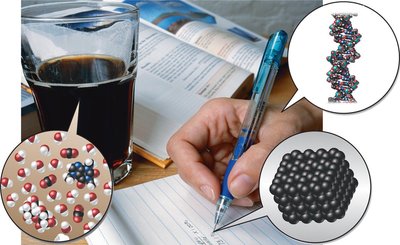
Chemistry is the study of matter and its changes. It is a central science that connects and overlaps with many other scientific disciplines, including biology, physics, medicine, and environmental science. Everything around us—air, water, food, and manufactured products—consists of chemicals, and understanding chemistry helps us comprehend the world at a molecular level.
Matter: Anything that has mass and occupies space.
Chemicals: Substances with a definite composition and properties, found everywhere in daily life.
Examples: The air we breathe, the water we drink, and products like toothpaste and medicines are all composed of chemicals.
Common Misconceptions About Chemicals
Many people mistakenly believe that chemicals are inherently dangerous or only found in laboratories. In reality, chemicals are present in all aspects of life, including food, household products, and the environment.
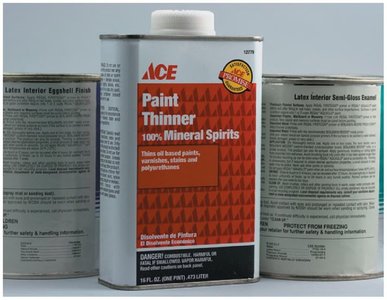
Paint thinners, cleaning agents, and even natural substances like water are chemicals.
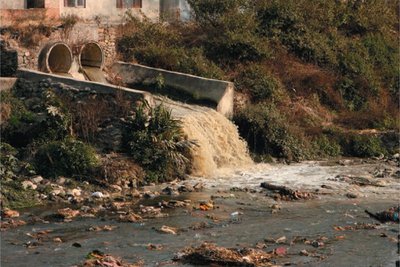
Pollutants and toxins are specific types of chemicals, but not all chemicals are harmful.
Chemistry in Everyday Life
Chemistry is not limited to laboratories; it is present in kitchens, industries, and nature. Cooking, cleaning, and even breathing involve chemical processes. Many substances in a kitchen, such as metal alloys, natural polymers, and chemically treated water, are products of chemical reactions.
Cooking involves chemical changes, such as the browning of meat or the rising of bread dough.
Fruits and vegetables may be grown with the help of fertilizers and pesticides, which are chemicals.
Chemicals in Consumer Products
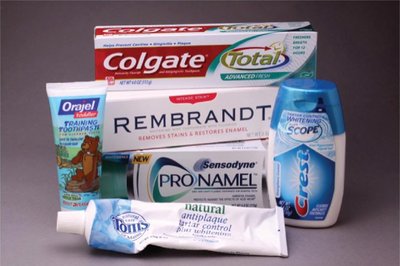
Everyday products like toothpaste are combinations of various chemicals, each serving a specific function. Understanding the composition of these products helps us appreciate the role of chemistry in health and hygiene.
Toothpaste contains abrasives, detergents, flavoring agents, and antibacterial compounds.
Chemical | Function |
|---|---|
Calcium carbonate | An abrasive used to remove plaque |
Sorbitol | Prevents loss of water and hardening of toothpaste |
Glycerin | Makes toothpaste foam in the mouth |
Sodium lauryl sulfate | A detergent used to loosen plaque |
Titanium dioxide | Makes toothpaste white and opaque |
Triclosan | Inhibits bacteria that cause plaque and gum disease |
Sodium fluorophosphate | Prevents formation of cavities by strengthening tooth enamel with fluoride |
Methyl salicylate | Gives toothpaste a pleasant wintergreen flavor |
The Importance of Chemistry in Society
Chemistry and Technology
Chemistry has led to significant advancements in technology, health, and the environment. Developments in biotechnology, medicine, and nutrition are deeply rooted in chemical research. Organic food, for example, is often perceived as chemical-free, but it contains many organic compounds essential for life.
Organic Compounds: Molecules containing carbon, found in all living organisms.
Organic farming avoids synthetic chemicals but still relies on natural chemical processes.
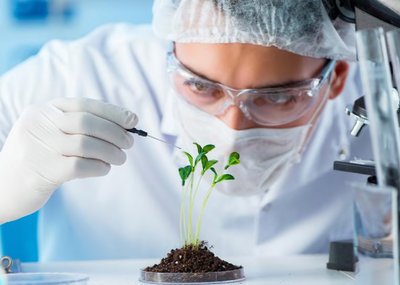
Green Chemistry and Sustainability
Green chemistry focuses on designing products and processes that minimize environmental impact and reduce pollution. Sustainable chemistry aims to meet current needs without compromising future generations.
Green chemistry prevents pollution at its source.
Sustainable chemistry balances present and future needs.
Key Concepts and Learning Objectives
Core Definitions and Concepts
Science: The systematic study of the natural world through observation and experimentation.
Chemistry: The branch of science concerned with the properties, composition, and behavior of matter.
Technology: The application of scientific knowledge for practical purposes.
Alchemy: A historical precursor to chemistry, focused on transforming substances, such as turning lead into gold.
Scientific Method and Critical Thinking
Hypothesis: A testable explanation for an observation.
Scientific Law: A statement that summarizes a pattern found in nature (e.g., law of conservation of mass).
Scientific Theory: A well-tested explanation for a broad set of observations.
Scientific Model: A representation used to explain and predict phenomena.
Risk and Benefit: Evaluating the positive and negative outcomes of scientific and technological advances.
Classification of Matter
States of Matter: Solid (definite shape and volume), liquid (definite volume, no definite shape), gas (no definite shape or volume).
Substances: Elements (one type of atom) and compounds (two or more elements chemically combined).
Mixtures: Homogeneous (uniform composition) and heterogeneous (non-uniform composition).
Physical and Chemical Properties and Changes
Physical Properties: Observed without changing the substance (e.g., color, mass, boiling point).
Chemical Properties: Observed only when a substance undergoes a chemical change (e.g., rusting, burning).
Physical Change: Does not alter the chemical identity (e.g., melting, freezing).
Chemical Change: Produces new substances (e.g., burning, rusting).
Measurement and Units
SI Units: Standard units for scientific measurement (e.g., meter for length, kilogram for mass, second for time).
Density: , where d is density, m is mass, and V is volume.
Temperature Scales: Celsius, Kelvin, and Fahrenheit. Conversion:
Energy: Heat and Temperature
Energy: The ability to do work or cause change; exists as potential (stored) or kinetic (motion).
Heat: Energy transferred due to temperature difference.
Temperature: Measure of average kinetic energy of particles.
Units: Joule (J) and calorie (cal);
Summary
Chemistry is a foundational science that explains the composition, structure, and changes of matter. It is essential for understanding the natural world, developing new technologies, and addressing societal challenges such as health, sustainability, and environmental protection. By studying chemistry, students gain critical thinking skills and a deeper appreciation for the materials and processes that shape our lives.
