 Indietro
Matter and Energy: States, Classification, and Properties
Guida di studio - Note intelligenti
 Appunti personalizzati basati sui tuoi materiali, ampliati con definizioni chiave, esempi e contesto.
Matter and Energy
Definition and States of Matter
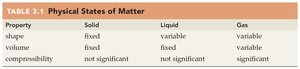
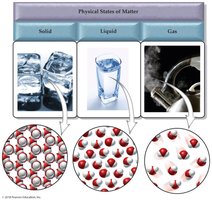
Matter is defined as any substance that has mass and occupies volume. It exists in three primary physical states: solid, liquid, and gas. The properties of these states are explained by the kinetic-molecular theory, which describes the motion and energy of particles in each state.
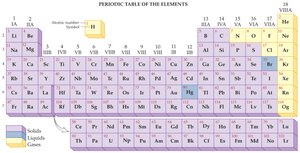
Solid: Definite shape and volume; particles are tightly packed and have the least energy.
Liquid: Indefinite shape (takes the shape of its container) but definite volume; particles are loosely packed and can move past one another.
Gas: Indefinite shape and volume; particles are far apart and have the most energy.
Changes in Physical States
Substances can transition between solid, liquid, and gas through phase changes, which are driven by temperature changes:
Melting: Solid to liquid (temperature increases)
Freezing: Liquid to solid (temperature decreases)
Vaporizing: Liquid to gas (temperature increases)
Condensing: Gas to liquid (temperature decreases)
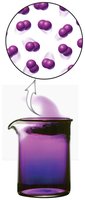
Sublimation: Solid to gas (temperature increases)
Deposition: Gas to solid (temperature decreases)
Classification of Matter
Mixtures and Pure Substances
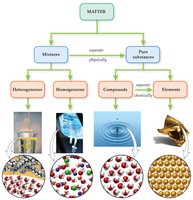
Matter is classified as either mixtures or pure substances:
Mixtures: Physical blends of two or more substances; can be separated physically.
Pure Substances: Composed of only one type of substance; cannot be separated physically.
Types of Mixtures
Heterogeneous Mixtures: Do not have uniform properties throughout (e.g., sand and water).
Homogeneous Mixtures (Solutions): Have uniform properties throughout (e.g., salt water).
Types of Pure Substances
Compounds: Can be chemically separated into elements (e.g., water into hydrogen and oxygen).
Elements: Cannot be broken down further by chemical reactions; listed in the periodic table.
Elements: Occurrence, Names, and Symbols
Occurrence of Elements
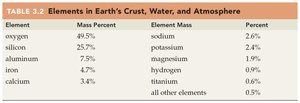
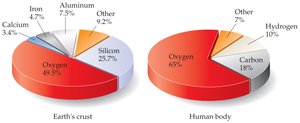
There are over 100 naturally occurring elements, with 81 being stable. Only 10 elements account for more than 95% of the mass of Earth's crust, water, and atmosphere.
Names and Symbols of Elements
Each element has a unique name, often derived from Greek, Latin, or named after scientists.
Element symbols are one or two letters; the first is always capitalized, the second (if present) is lowercase.
Some symbols are based on Latin names (e.g., Gold – Au, Silver – Ag).
Types and Properties of Elements
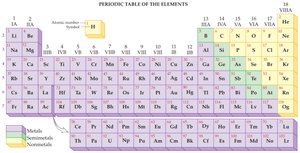
Metals, Nonmetals, and Semimetals (Metalloids)
Elements are classified into three main types based on their properties:
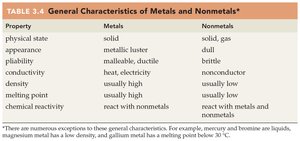
Metals: Usually solid, high melting points, metallic luster, good conductors, ductile, and malleable.
Nonmetals: Low melting points, dull appearance, poor conductors, brittle.
Semimetals (Metalloids): Exhibit properties of both metals and nonmetals (e.g., silicon is a semiconductor).
The Periodic Table
Structure and Organization
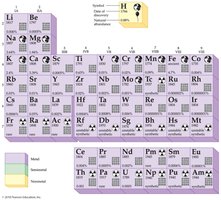
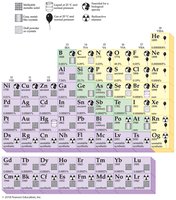
The periodic table arranges elements by increasing atomic number. Metals are on the left, nonmetals on the right, and semimetals/metalloids are in between. Each element's box contains its symbol, atomic number, and other information.
Law of Definite Composition
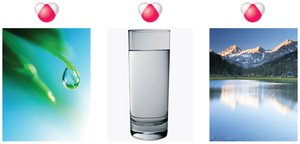
The law of definite composition states that compounds always contain the same elements in a constant proportion by mass. This is a fundamental principle in chemistry for understanding chemical formulas and reactions.
Chemical Formulas
Definition and Interpretation
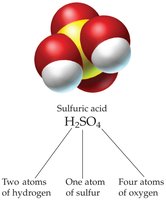
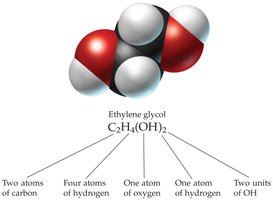
A chemical formula expresses the number and type of atoms in a molecule or compound. Subscripts indicate the number of each atom; if only one atom is present, no subscript is used. Parentheses may be used to clarify atomic composition in complex molecules.
Physical and Chemical Properties and Changes
Physical Properties and Changes
Physical properties can be observed without changing the substance's composition (e.g., appearance, melting/boiling points, density, conductivity, solubility, physical state). A physical change does not alter the chemical composition (e.g., changes in state or shape).
Chemical Properties and Changes
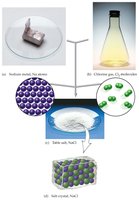
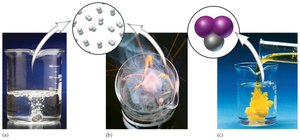
Chemical properties describe how a substance reacts with other substances. A chemical change (chemical reaction) alters the chemical composition of a substance. Evidence for chemical changes includes gas release, heat/light emission, and permanent color change.
Conservation Laws
Law of Conservation of Mass
The law of conservation of mass states that the mass of reactants before a chemical change equals the mass of products after the change. This principle was established by Antoine Lavoisier.
Energy: Forms, Conservation, and Chemical Changes
Potential and Kinetic Energy
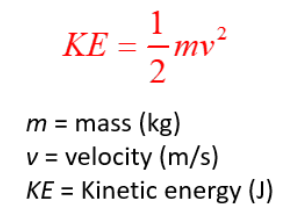
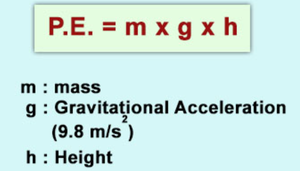
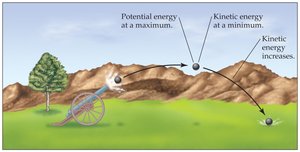
Potential energy (PE): Stored energy due to position or composition. Kinetic energy (KE): Energy of motion. All substances possess kinetic energy, which increases from solids to gases. Temperature measures the average kinetic energy of a system.
Law of Conservation of Energy
Energy cannot be created or destroyed, only converted from one form to another. This is the law of conservation of energy. There are six main forms of energy: heat, light, chemical, electrical, mechanical, and nuclear.
Energy and Chemical Changes
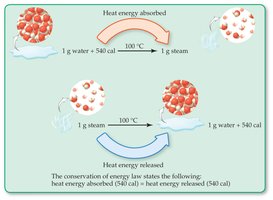
During chemical changes, energy is transformed from one form to another (e.g., heat released or absorbed in reactions).
Law of Conservation of Mass and Energy
Einstein's theory of relativity () shows that mass and energy are interconvertible. The total mass and energy of the universe is constant.
Chapter Summary
Matter exists in three physical states: solid, liquid, and gas.
Substances can transition between these states through phase changes.
Matter is classified as mixtures or pure substances; mixtures can be homogeneous or heterogeneous, and pure substances can be compounds or elements.
Elements are organized in the periodic table and classified as metals, nonmetals, or semimetals.
Physical changes do not alter chemical composition; chemical changes do.
Both mass and energy are conserved in chemical and physical changes.
