 Indietro
Measurement and Problem Solving: Key Concepts for Introductory Chemistry
Guida di studio - Note intelligenti
 Appunti personalizzati basati sui tuoi materiali, ampliati con definizioni chiave, esempi e contesto.
Measurement and Problem Solving
Scientific Notation
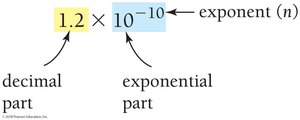
Scientific notation is a method used to express very large or very small numbers in a concise form. It consists of two parts: a decimal part and an exponential part. This notation is essential in chemistry for handling measurements and calculations efficiently.
Decimal Part: A number between 1 and 10.
Exponential Part: 10 raised to an exponent, n.
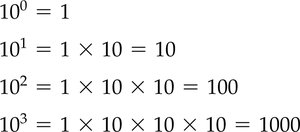
Positive Exponent: Indicates multiplication by 10 n times.
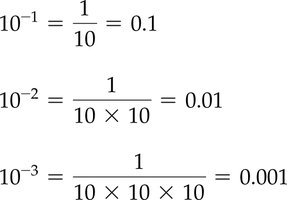
Negative Exponent: Indicates division by 10 n times.
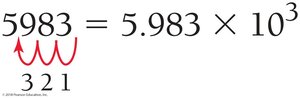
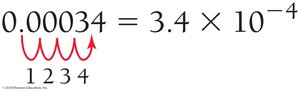
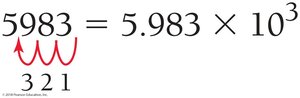
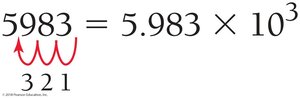
Conversion to Scientific Notation: Move the decimal point to create a number between 1 and 10, then multiply by 10 raised to the appropriate exponent.
Example:
Example:
Measurement and Uncertainty
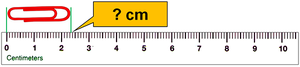
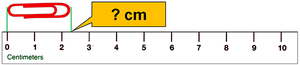
All measurements in chemistry include some degree of uncertainty, which is indicated by the last reported digit. The precision of a measurement depends on the measuring device used.
Measurement: Always consists of a number and a unit.
Uncertainty: The last digit is estimated and reflects the uncertainty.
Estimating: The more precise the instrument, the more decimal places can be estimated.
Significant Figures
Significant figures (sig figs) are the digits in a measurement that are known with certainty plus one digit that is estimated. Properly counting and using significant figures is crucial for accurate scientific calculations.
Counting Significant Figures: Start from the first nonzero digit.
Decimal Present: Count all digits from the first nonzero to the last digit.
Decimal Absent: Count from the first nonzero to the last nonzero digit.
Scientific Notation: Count all digits in the decimal part.
Examples:
1.205 cm: 4 sig. fig.
0.00480 kg: 3 sig. fig.
100. m: 3 sig. fig.
1505 cm: 4 sig. fig.
2030 ft: 3 sig. fig.
100 m: 1 sig. fig.
5.030 x 103 ft: 4 sig. fig.
Significant Figures in Calculations
Rules for using significant figures in calculations ensure that results reflect the precision of the measurements.
Multiplication and Division: The result has the same number of significant figures as the factor with the fewest sig figs.
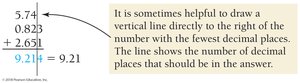
Addition and Subtraction: The result has the same number of decimal places as the quantity with the fewest decimal places.
Rounding: Round only the final answer, not intermediate steps. Round down if the last digit dropped is 4 or less; round up if it is 5 or more.
Units of Measurement
SI Base Units
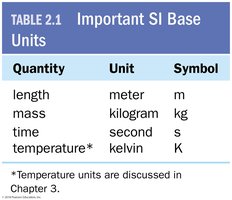
The International System of Units (SI) is the standard for scientific measurements. It is based on the metric system and includes base units for fundamental quantities.
Quantity | Unit | Symbol |
|---|---|---|
Length | meter | m |
Mass | kilogram | kg |
Time | second | s |
Temperature | kelvin | K |
SI Prefix Multipliers
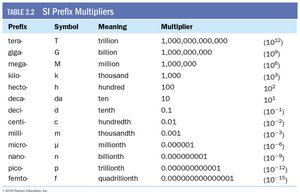
SI prefixes are used to indicate multiples or fractions of base units, making it easier to express very large or small quantities.
Prefix | Symbol | Meaning | Multiplier |
|---|---|---|---|
tera | T | trillion | 1012 |
giga | G | billion | 109 |
mega | M | million | 106 |
kilo | k | thousand | 103 |
deci | d | tenth | 10-1 |
centi | c | hundredth | 10-2 |
milli | m | thousandth | 10-3 |
micro | μ | millionth | 10-6 |
nano | n | billionth | 10-9 |
pico | p | trillionth | 10-12 |
femto | f | quadrillionth | 10-15 |
Weight vs. Mass
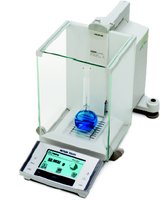
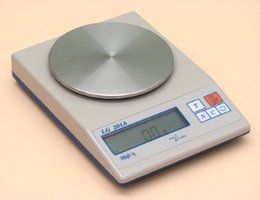
Mass and weight are distinct concepts in science. Mass is the amount of matter in an object, while weight is the force exerted by gravity on that mass.
Mass: Measured in kilograms (kg), does not depend on gravity.
Weight: Depends on gravitational pull.
Conversion:
Volume as a Derived Unit
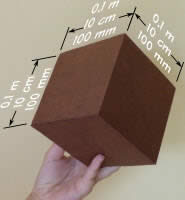
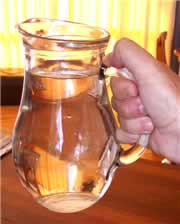
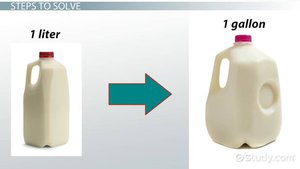
Volume is a derived unit, calculated from units of length. Common units include cubic meters (m3), cubic centimeters (cm3), and milliliters (mL).
1 L = 1000 mL = 1000 cm3
1 mL = 1 cm3
SI derived unit: cubic meter (m3)
Milliliter and Small Volumes
A milliliter is a very small unit of volume, commonly used in laboratory measurements.
Example: A milliliter of milk fills only the bottom of a teaspoon.
20 drops of water make about 1 milliliter.


Dimensional Analysis and Unit Conversion
Dimensional Analysis
Dimensional analysis is a systematic method for converting between units using conversion factors. Units are treated as algebraic quantities and must be included throughout calculations.
Always write numbers with units.
Units must flow logically from start to finish.
Conversion factors: Constructed from equivalent quantities.

Constructing Conversion Factors
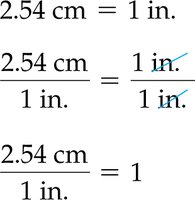
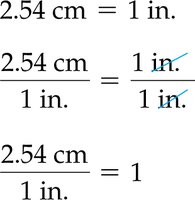
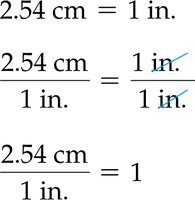
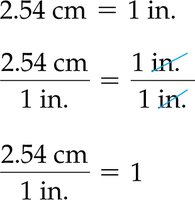
Conversion factors are ratios that relate two equivalent units. They are used to cancel units and convert measurements.
Example:
Conversion factor: or
Solution Maps for Unit Conversion
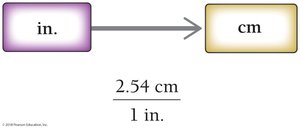
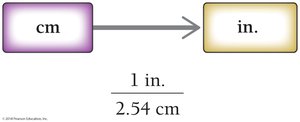
A solution map is a visual outline showing the steps required to convert from one unit to another. It helps organize the conversion process.
Example: Converting inches to centimeters or centimeters to inches.
Converting Units Raised to a Power
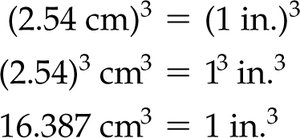
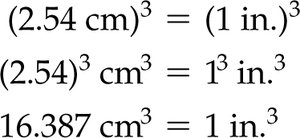
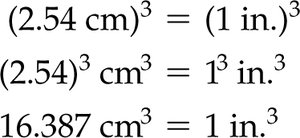
When converting units raised to a power, the conversion factor must also be raised to that power. This is important for volume conversions.
Example: , so
Density
Definition and Formula
Density is a physical property defined as the ratio of mass to volume. It is used to characterize substances and solve various chemistry problems.
Formula:
Rearranged: ,
Units: Commonly g/mL or g/cm3
Example: If 427 g of a mineral occupy 35.0 mL, the density is .
Example: Calculate the volume of 100 g of ethyl alcohol (density = 0.789 g/mL): .
Example: A medallion has a mass of 55.64 g and displaces water from 75.2 mL to 77.8 mL. The volume is , so density is .
