 Indietro
Step-by-Step Guidance for Key Introductory Chemistry Questions
Guida di studio - Note intelligenti
 Appunti personalizzati basati sui tuoi materiali, ampliati con definizioni chiave, esempi e contesto.
Q1. Order the four metric prefixes from smallest to largest.
Background
Topic: Metric System and Prefixes
This question tests your understanding of the metric prefixes used in the SI system, which are essential for expressing measurements at different scales in chemistry.
Key Terms and Concepts:
nano- (n):
milli- (m):
centi- (c):
kilo- (k):
Step-by-Step Guidance
Recall the value of each prefix in powers of ten.
Arrange the prefixes in order from the smallest (most negative exponent) to the largest (most positive exponent).
Compare the options given and match your order to the correct answer choice.
Try solving on your own before revealing the answer!
Final Answer: A) nano- < milli- < centi- < kilo-
nano- () is the smallest, followed by milli- (), centi- (), and kilo- () is the largest.
Q2. 409 Kelvin equals:
Background
Topic: Temperature Conversions (Kelvin, Celsius, Fahrenheit)
This question tests your ability to convert temperatures between the Kelvin, Celsius, and Fahrenheit scales, which is a fundamental skill in chemistry.
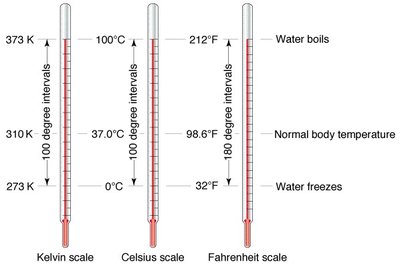
Key Formulas:
Step-by-Step Guidance
First, convert 409 K to Celsius using .
Next, use the Celsius value to convert to Fahrenheit with .
Compare your result to the answer choices to select the correct one.
Try solving on your own before revealing the answer!
Final Answer: B) 273°F
409 K = 135.85°C, which converts to approximately 273°F using the formulas above.
Q3. A piece of zinc with a mass of 12.14 g is submerged in 46.3 cm³ of water in a graduated cylinder. The water level increases to 48.0 cm³. The correct value for the density of zinc from these data is:
Background
Topic: Density Calculations
This question tests your ability to calculate density using mass and volume, and to determine the volume of an irregular object by water displacement.
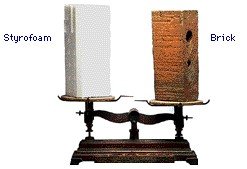
Key Formula:
Step-by-Step Guidance
Calculate the volume of zinc by subtracting the initial water volume from the final water volume: .
Use the mass of zinc and the calculated volume to set up the density formula: .
Perform the division to find the density, but do not round to the final answer yet.
Consider significant figures based on the measurements provided.
Try solving on your own before revealing the answer!
Final Answer: A) 7.141 g/cm³
The volume of zinc is cm³. Density = g/cm³ (rounded to correct sig figs).
Q4. Using the rules of significant figures, calculate the following: 4.0021 – 0.179
Background
Topic: Significant Figures in Calculations
This question tests your understanding of how to apply significant figure rules in subtraction, which is important for reporting measurements accurately in chemistry.
Key Rules:
For addition/subtraction, the result should have the same number of decimal places as the measurement with the least number of decimal places.
Step-by-Step Guidance
Subtract the numbers as usual: .
Determine the number of decimal places in each value: 4.0021 (4 decimal places), 0.179 (3 decimal places).
The answer should be rounded to the least number of decimal places (3 in this case).
Try solving on your own before revealing the answer!
Final Answer: D) 3.823
The answer is rounded to three decimal places, matching the least precise measurement.
Q5. A species with 12 protons and 10 electrons is:
Background
Topic: Ions and Atomic Structure
This question tests your understanding of how to determine the identity and charge of an ion based on the number of protons and electrons.
Key Concepts:
The number of protons determines the element (atomic number).
The charge is calculated as: .
Step-by-Step Guidance
Identify the element with 12 protons (atomic number 12).
Calculate the charge: .
Match the element and charge to the correct ion symbol in the answer choices.
Try solving on your own before revealing the answer!
Final Answer: C) Mg2+
Magnesium (Mg) has atomic number 12, and with 2 fewer electrons, it forms a 2+ ion.
Q6. The numbers of protons, neutrons, and electrons in 3919K+ are:
Background
Topic: Isotopes and Ions
This question tests your ability to interpret isotope notation and determine the number of subatomic particles in an ion.
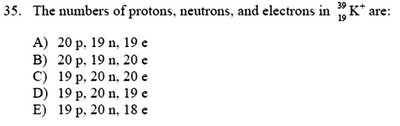
Key Concepts:
Atomic number (Z) = number of protons
Mass number (A) = protons + neutrons
For a positive ion, electrons = protons – charge
Step-by-Step Guidance
Find the number of protons (atomic number = 19).
Calculate the number of neutrons: .
Since the ion is K+, it has one less electron than protons: electrons.
Match these numbers to the answer choices.
Try solving on your own before revealing the answer!
Final Answer: E) 19 p, 20 n, 18 e
Potassium-39 ion (K+) has 19 protons, 20 neutrons, and 18 electrons.
