 Indietro
Demand, Supply, and Market Equilibrium: Core Concepts in Macroeconomics
Guida di studio - Note intelligenti
 Appunti personalizzati basati sui tuoi materiali, ampliati con definizioni chiave, esempi e contesto.
Markets and Price Measurement
Competitive Markets
A competitive market is characterized by many buyers and sellers trading identical products, ensuring that no single participant can influence the market price. Most introductory macroeconomics models focus on competitive markets, though real-world markets often deviate from this ideal.
Money Price: The price expressed in monetary units (e.g., dollars).
Relative Price: The price of a good in terms of another good, representing opportunity cost.
Formula: The relative price of good A in terms of good B is given by:
Example: If an orange costs \frac{4}{1} = 4\frac{1}{4} = 0.25$ oranges per apple.
Demand
Quantity Demanded and the Law of Demand
The quantity demanded (Qd) is the amount consumers plan to buy at a specific price during a given period. The law of demand states that, all else equal, as the price of a good increases, the quantity demanded decreases, and vice versa.
Substitution Effect: Higher prices make alternative goods more attractive.
Income Effect: Higher prices reduce consumers' purchasing power.
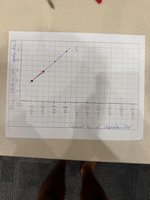
Demand Curve and Demand Schedule
The demand curve graphically represents the relationship between price and quantity demanded. The demand schedule is a table showing quantities demanded at various prices.
A change in price causes a movement along the demand curve (change in quantity demanded).
A change in factors other than price causes a shift of the demand curve (change in demand).
Factors Affecting Demand
Six main factors can shift the demand curve:
Price of Related Goods:
Substitutes: Goods used in place of each other (e.g., hamburgers and chicken sandwiches).
Complements: Goods used together (e.g., ketchup and mustard).
Expected Future Prices: If future prices are expected to rise, current demand increases.
Income:
Normal Goods: Demand increases as income rises.
Inferior Goods: Demand decreases as income rises.
Expected Future Income and Credit: Anticipated increases in income or credit boost current demand.
Population: Larger populations increase demand for most goods.
Preferences: Changes in tastes or preferences shift demand.
Supply
Quantity Supplied and the Law of Supply
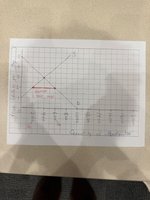
The quantity supplied (Qs) is the amount producers plan to sell at a specific price. The law of supply states that, all else equal, as the price of a good increases, the quantity supplied increases, and vice versa.
Supply is the entire relationship between price and quantity supplied.
A change in price causes a movement along the supply curve (change in quantity supplied).
A change in other factors causes a shift of the supply curve (change in supply).
Factors Affecting Supply
Six main factors can shift the supply curve:
Prices of Factors of Production: Higher input costs decrease supply.
Prices of Related Goods Produced:
Substitutes in Production: If the price of a substitute rises, supply of the original good falls.
Complements in Production: If the price of a complement rises, supply of the original good rises.
Expected Future Prices: Higher expected future prices decrease current supply.
Number of Suppliers: More suppliers increase supply.
Technology: Improved technology increases supply.
State of Nature: Weather and climate can affect supply, especially for agricultural goods.
Market Equilibrium
Equilibrium Price and Quantity
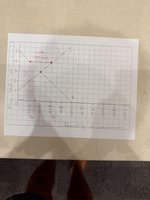
Market equilibrium occurs where quantity supplied equals quantity demanded (Qs = Qd). The equilibrium price is the price at which this occurs, and the equilibrium quantity is the amount bought and sold at that price.
If price is below equilibrium, shortage occurs (Qd > Qs).
If price is above equilibrium, surplus occurs (Qs > Qd).
Shortages and Surpluses
Shortages lead to upward pressure on prices, while surpluses lead to downward pressure. The market adjusts until equilibrium is restored.
Changes in Demand and Supply
Effects of Shifts
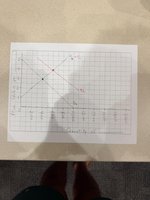
When demand or supply changes, the equilibrium price and quantity adjust:
Increase in Demand: Price and quantity rise.
Decrease in Demand: Price and quantity fall.
Increase in Supply: Price falls, quantity rises.
Decrease in Supply: Price rises, quantity falls.
Simultaneous Changes: If both demand and supply increase, quantity rises but price may rise, fall, or stay the same depending on the magnitude of shifts.
Summary Table: Factors Affecting Demand and Supply
Factor | Effect on Demand | Effect on Supply |
|---|---|---|
Price of Related Goods | Substitutes: Demand ↑ if price of substitute ↑ Complements: Demand ↓ if price of complement ↑ | Substitutes in Production: Supply ↓ if price of substitute ↑ Complements in Production: Supply ↑ if price of complement ↑ |
Expected Future Prices | Demand ↑ if expected price ↑ | Supply ↓ if expected price ↑ |
Income | Normal goods: Demand ↑ if income ↑ Inferior goods: Demand ↓ if income ↑ | — |
Population | Demand ↑ if population ↑ | — |
Preferences | Demand changes | — |
Number of Suppliers | — | Supply ↑ if number of suppliers ↑ |
Technology | — | Supply ↑ if technology improves |
State of Nature | — | Supply changes with weather/climate |
Application Examples
Substitutes and Equilibrium
If the price of a chicken sandwich (a substitute for hamburgers) falls, demand for hamburgers decreases, leading to a lower equilibrium price and quantity for hamburgers.
Population and Factor Prices
If population increases and the price of ground beef (a factor of production for hamburgers) rises simultaneously, demand for hamburgers increases while supply decreases. The effect on equilibrium quantity is uncertain without more information.
Mathematical Notes
If , then and .
Exam Preparation Tips
Bring a valid ID, a number 2 pencil with eraser, and a non-graphing calculator.
Expect multiple-choice questions covering these concepts.
Additional info: Academic context and examples were expanded for clarity and completeness. Images were included only when directly relevant to the explanation of demand, supply, equilibrium, and market adjustments.
