 Indietro
Gross Domestic Product (GDP): Measuring Total Production and Income
Guida di studio - Note intelligenti
 Appunti personalizzati basati sui tuoi materiali, ampliati con definizioni chiave, esempi e contesto.
Gross Domestic Product (GDP)
Definition and Importance
Gross Domestic Product (GDP) is the market value of all final goods and services produced within a country during a specific period, typically one year. It is a primary indicator used to gauge the health of a country's economy.
GDP = Total Production = Total Income
GDP measures the value of output produced and the income generated from that production.
All payments received from the sale of output are distributed as income to the owners of the factors of production: labor, capital, natural resources, and entrepreneurial ability.
Four Major Categories of Expenditures
GDP is calculated by summing four main types of expenditures:
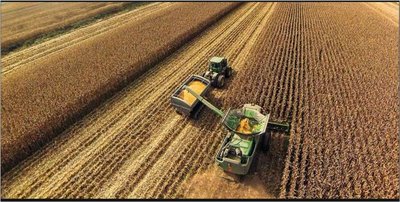
Consumption (C): Spending by households on goods and services. This includes services (e.g., education, healthcare), nondurable goods (e.g., food, clothing), and durable goods (e.g., automobiles, furniture).
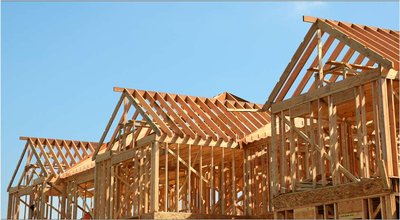
Investment (I): Spending by firms on new factories, office buildings, machinery, and additions to inventories, plus spending by households and firms on new houses.
Government Purchases (G): Spending by federal, state, and local governments on goods and services (e.g., salaries of teachers, highways, military equipment).
Net Exports (NX): Exports minus imports. Exports are goods and services produced domestically and purchased by foreigners; imports are goods and services produced abroad and purchased domestically.
The GDP expenditure formula is:

Limitations of GDP as a Measure of Production and Well-Being
Production Not Included in GDP
Household Production: Goods and services people produce for themselves (e.g., home-cooked meals, home repairs) are not included in GDP.
Underground Economy: Transactions that are concealed from the government to avoid taxes or because the goods and services are illegal are also excluded.
GDP and Economic Well-Being
GDP does not account for the value of leisure time.
It is not adjusted for pollution or other negative effects of production.
GDP does not reflect changes in crime or other social problems.
GDP measures the size of the economic 'pie' but not how it is divided among the population.

Real GDP vs. Nominal GDP
Definitions and Calculations
Nominal GDP: The value of final goods and services evaluated at current-year prices.
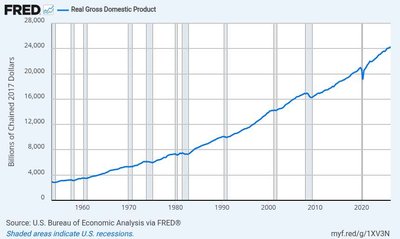
Real GDP: The value of final goods and services evaluated at base-year prices, which removes the effects of inflation.
Formulas:
Nominal GDP for year t:
Real GDP for year t (using base year b):
Comparing real GDP over time provides a better measure of changes in actual production.
Gross Domestic Income (GDI)
Measuring Output from the Income Side
Gross Domestic Income (GDI): Measures the economy’s output by summing income payments to households (wages, interest, rent, and profit).
Theoretically, GDP (production side) should equal GDI (income side), but measurement errors can cause differences.
Quarter-to-quarter percentage changes are usually similar, but significant discrepancies can occur during some periods.
Best Practice: Consider both GDP and GDI for a comprehensive view of economic activity.
GDP and Income Distribution
The Gini Index
The Gini index measures the degree of inequality in the distribution of family income within a country.
A lower Gini index indicates more equal income distribution; a higher index indicates greater inequality.
If income were distributed with perfect equality, the index would be 0; with perfect inequality, it would be 100.
GDP per capita and the Gini index together provide insight into both the average income and its distribution among the population.
Practice Questions and Applications
Example: Calculating Real and Nominal GDP
Suppose Country A produces only two products: guns and butter. Given prices and quantities for two years, you can calculate:
Nominal GDP: Multiply current year prices by current year quantities for all goods and sum the results.
Real GDP: Multiply base year prices by current year quantities for all goods and sum the results.
These calculations help distinguish between changes in output and changes in prices (inflation).
Discussion Questions
Which is a better measure of the output (production) of an economy over time: real GDP or nominal GDP? Why?
If the quantity of final goods and services produced decreases, could nominal GDP increase? Could real GDP increase?
Summary
GDP is a key measure of economic activity, but it has limitations as a measure of well-being.
Understanding the components and calculation methods of GDP is essential for analyzing economic performance.
Real GDP is preferred for comparing output over time, as it adjusts for inflation.
Income distribution and non-market activities are important considerations not captured by GDP alone.
