 Indietro
Macroeconomics Study Guide: Economic Growth, Unemployment, Inflation, and Aggregate Expenditure
Guida di studio - Note intelligenti
 Appunti personalizzati basati sui tuoi materiali, ampliati con definizioni chiave, esempi e contesto.
Economic Growth, the Financial System, and Business Cycles
Understanding Economic Growth
Economic growth refers to the sustained increase in a country’s production of goods and services, typically measured by real GDP per capita. This growth is a key indicator of improvements in the standard of living over time.
Real GDP per capita: The best (though not perfect) measure of the standard of living. It is calculated as real GDP divided by the population.
Rule of 70: Estimates the number of years required for a variable (such as GDP) to double, given its annual growth rate.
Labor Productivity: The quantity of goods and services produced by one worker or by one hour of work. Increases in labor productivity depend on the quantity of capital per worker and the level of technology, with technology being the most important factor.
Historical Example: The replacement of outhouses with indoor flush toilets illustrates improvements in living standards due to economic growth.

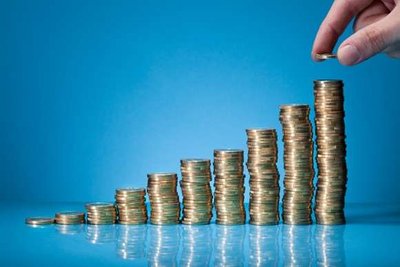
Labor Productivity and Capital
Labor productivity is central to economic growth. It increases when workers have more capital (such as machinery) and when technological advancements occur.
Capital: Physical assets like machinery, factories, and tools that aid production.
Technology: Innovations and improvements in production processes.
Example: Modern farming equipment increases productivity compared to manual labor.


Potential GDP
Potential GDP is the level of real GDP achieved when all firms are producing at capacity, using normal hours and a normal workforce. It increases over time as the labor force grows, new factories are built, and technological progress occurs.
The Financial System
The financial system consists of financial markets and intermediaries. It channels funds from savers to borrowers, enabling investment in capital, training, and technology, which are crucial for economic growth.
Financial Markets: Platforms where securities are bought and sold (e.g., stock market).
Financial Intermediaries: Institutions like banks that facilitate the flow of funds.
Importance: Provides funds for investment projects, training workers, and research & development.

The Business Cycle
The business cycle describes alternating periods of economic expansion and recession around the long-run growth trend.
Phases: Expansion and recession.
Turning Points: Peak and trough.
Sequence: Expansion → Peak → Recession → Trough.
Inflation: Usually increases during expansion and decreases during recession.
Unemployment: Increases during recession and decreases during expansion, except at the start of expansion.

Unemployment and Inflation
Measuring Unemployment
Unemployment is a key indicator of economic health. The unemployment rate is calculated as:
Unemployment Rate:
Labor Force: Sum of employed and unemployed individuals actively seeking work.
Measurement Issues: The official rate may understate or overstate true unemployment due to discouraged workers, involuntary part-time workers, and those falsely claiming to seek work.


Types of Unemployment
Frictional Unemployment: Short-term, due to the process of matching workers with jobs.
Structural Unemployment: Caused by persistent mismatch between workers’ skills and job requirements, often due to technological change or international competition.
Cyclical Unemployment: Caused by downturns in the business cycle (recession).
Natural Rate of Unemployment
The natural rate of unemployment is the sum of frictional and structural unemployment, occurring when the economy is at full employment (no cyclical unemployment).
Measuring Inflation
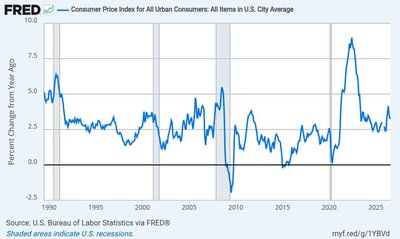
Inflation is the rate at which the general level of prices for goods and services rises, eroding purchasing power.
Consumer Price Index (CPI): Measures the cost of a fixed market basket of goods and services over time.
Inflation Rate:
Substitution Bias: CPI may overstate inflation because it assumes consumers do not substitute cheaper goods for more expensive ones.
Real Variables: To track changes over time, use real variables (e.g., real wage = nominal wage / CPI × 100).
Interest Rates
Nominal Interest Rate: Stated rate on a loan.
Real Interest Rate:
Effects of Inflation: Unanticipated inflation redistributes income between lenders and borrowers.
GDP: Measuring Total Production and Income
Definition and Components
Gross Domestic Product (GDP) is the market value of all final goods and services produced within a country in a given year. It is a central measure of economic activity.
GDP = Total Production = Total Income
Expenditure Approach: GDP is calculated as the sum of consumption (C), investment (I), government purchases (G), and net exports (NX):
Nominal GDP: Valued at current-year prices.
Real GDP: Valued at base-year prices, adjusted for inflation.
GDP Limitations: Does not include household production, underground economy, value of leisure, pollution, or income distribution.
Global Comparisons
GDP and per capita GDP are used to compare economic output and living standards across countries. The Gini index measures income inequality.
Aggregate Expenditure and Output in the Short Run
Aggregate Expenditure (AE) Model
The AE model focuses on the short-run relationship between total spending and total production (real GDP). It explains fluctuations in real GDP and employment due to changes in aggregate expenditure.
Macroeconomic Equilibrium: Occurs where planned aggregate expenditure equals real GDP.
Inventory Adjustments: If total spending < total production, inventories rise, leading to decreased production and employment. If total spending > total production, inventories fall, leading to increased production and employment.
Key Determinants: Consumption, investment, government purchases, and net exports.

Factors Affecting Aggregate Expenditure
Consumption: Depends on disposable income, household wealth, expected future income, and interest rate.
Investment: Depends on expected profitability, interest rate, and business taxes.
Government Purchases: Spending by federal, state, and local governments.
Net Exports: Depends on foreign real GDP and exchange rates.
The Multiplier Effect
The multiplier effect describes how a change in autonomous expenditure leads to a larger change in real GDP. The size of the multiplier depends on the marginal propensity to consume (MPC).
Multiplier Formula:
Change in Real GDP:
Example: If MPC = 0.8 and net exports rise by $100 billion, the change in equilibrium real GDP is $100 \times \frac{1}{1-0.8} = $500 billion.
Summary Table: Types of Unemployment
Type | Cause | Duration | Example |
|---|---|---|---|
Frictional | Matching workers with jobs | Short-term | Recent graduates seeking jobs |
Structural | Mismatch of skills and jobs | Long-term | Technological change |
Cyclical | Business cycle recession | Variable | Layoffs during economic downturn |
Summary Table: GDP Components
Component | Description | Example |
|---|---|---|
Consumption (C) | Spending by households on goods and services | Food, clothing, medical care |
Investment (I) | Spending by firms on capital goods and inventories | Factories, machinery, new houses |
Government Purchases (G) | Spending by government on goods and services | Highways, teacher salaries |
Net Exports (NX) | Exports minus imports | Cars sold abroad, goods imported |
