 Indietro
Measuring Total Production and Income: Understanding GDP and National Income Accounting
Guida di studio - Note intelligenti
 Appunti personalizzati basati sui tuoi materiali, ampliati con definizioni chiave, esempi e contesto.
Measuring Total Production and Income
Introduction to GDP
The Gross Domestic Product (GDP) is the most widely used measure of overall economic activity in an economy. It represents the market value of all final goods and services produced within a country during a specific period, typically one year. Understanding GDP is essential for analyzing economic performance and making international comparisons.
GDP Definition: The market value of all final goods and services produced in a country during a period of time.
Purpose: Provides a standardized way to measure and compare economic output.
The Market Value of Final Goods and Services
GDP includes only the value of final goods and services to avoid double counting. Intermediate goods—those used in the production of final goods—are excluded from the calculation.
Final Goods: Goods and services purchased by the final user.
Intermediate Goods: Goods and services used as inputs in the production of other goods and services.
Reason for Exclusion: Counting intermediate goods would result in double counting the value added at each stage of production.
GDP and Geographic Boundaries
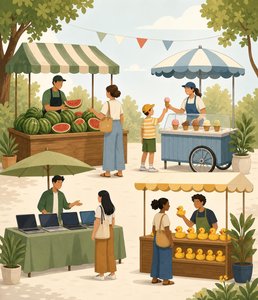
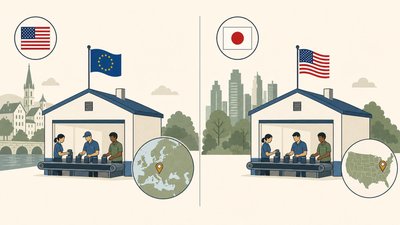
GDP measures output produced within a country's borders, regardless of the nationality of the producer. This means foreign firms operating domestically are included, while domestic firms producing abroad are not.
GDP and Time Periods
GDP is measured over a specific period, such as a year or a quarter. Only goods and services produced during that period are counted, ensuring that output is not counted more than once.
Production, Income, and the Circular Flow
Production and Income Approaches
There are two main ways to measure total economic activity:
Total Production Approach: Measures the value of all goods and services produced.
Total Income Approach: Measures the income earned by households and firms from the production of goods and services.
Every dollar spent on output becomes income for someone else, establishing a direct connection between production and income.
The Circular Flow Model
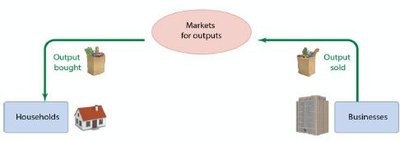
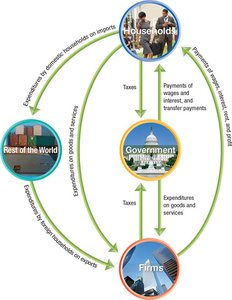
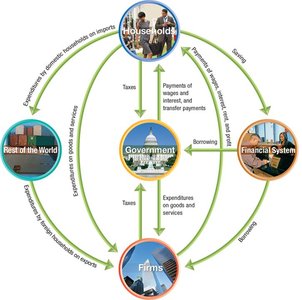
The circular flow model illustrates the movement of goods, services, and money in an economy. In its simplest form, it shows households and firms interacting in markets for outputs and inputs.
Adding Government
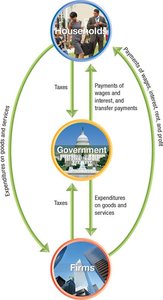
The government collects taxes, makes transfer payments, and purchases goods and services, influencing the flow of money and resources.
Adding the Rest of the World
International trade introduces imports and exports, further complicating the flow of goods, services, and money.
Adding the Financial System
The financial system facilitates saving and borrowing, connecting households, firms, and the government.
Measuring GDP: Three Approaches
Expenditure Approach
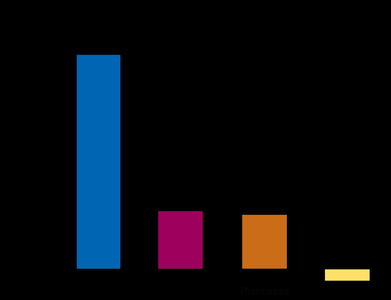
The expenditure approach sums total spending on final goods and services in four categories:
Consumption (C): Personal consumption expenditures on services, nondurable goods, and durable goods.
Investment (I): Spending on capital goods, residential investment, and changes in inventories.
Government Purchases (G): Government spending on goods and services.
Net Exports (NX): Exports minus imports.
The GDP formula is:
Value Added Approach
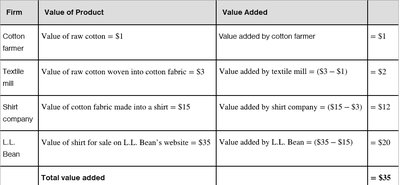
This approach sums the value added at each stage of production across all firms. Value added is the difference between the value of a firm's output and the value of the intermediate goods it purchases.
Income Approach
The income approach sums all incomes earned in the production of goods and services: wages, interest, rent, and profit.
The formula is:
w: Wages
i: Interest
r: Rent
p: Profit
GDP in Practice: Example of a Couch
Expenditure Approach Example
Consider the production and sale of a couch:
Bennett Lumber sells lumber to McCreary Modern for $400.
McCreary Modern assembles the couch and sells it to Crate & Barrel for $1,000.
Crate & Barrel sells the couch to the final consumer for $1,500.
Only the final sale ($1,500) is counted in GDP.
Value Added Approach Example
Bennett Lumber: Value added = $400
McCreary Modern: Value added = $600 ($1,000 - $400)
Crate & Barrel: Value added = $500 ($1,500 - $1,000)
Total value added = $1,500
Income Approach Example
Bennett Lumber: Wages = $300, Profit = $100
McCreary Modern: Wages = $500, Profit = $100
Crate & Barrel: Wages = $200, Profit = $300
Total income = $1,500
Limitations of GDP
GDP as a Measure of Total Production
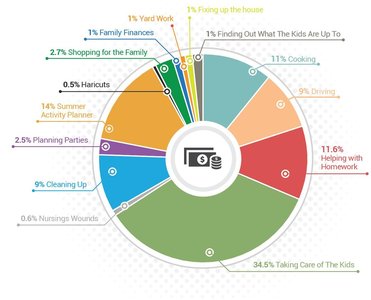
GDP does not include household production (e.g., childcare, cleaning, cooking) or the underground economy (unreported transactions).
GDP as a Measure of Economic Well-Being
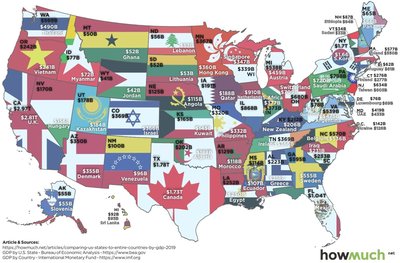
GDP per capita is often used to compare living standards, but it does not account for:
The value of leisure
Environmental degradation
Crime and social problems
Income distribution
Nominal vs. Real GDP and the GDP Deflator
Nominal vs. Real GDP
Nominal GDP: Value of final goods and services at current-year prices.
Real GDP: Value of final goods and services at base-year prices.
The GDP Deflator
The GDP deflator is a measure of the price level, calculated as:
It is an index, not a percentage, and helps distinguish between changes in output and changes in prices.
Alternatives to GDP
Other Measures of National Income
Measure | Description |
|---|---|
Gross Domestic Product (GDP) | Total value of goods and services produced within a country's borders |
Gross National Product (GNP) | Total value of goods and services produced by a country's residents, regardless of location |
National Income | GDP minus depreciation |
Personal Income | Income received by households |
Disposable Personal Income | Personal income minus taxes |
Key Points:
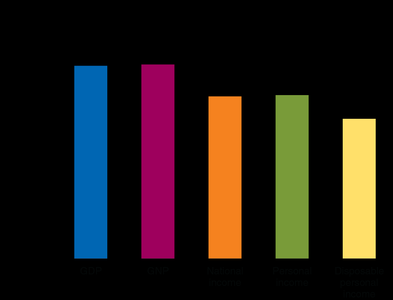
National income is less than GDP due to depreciation.
Disposable personal income is less than personal income due to taxes.
