 Indietro
Principles and Practice of Economics: Introduction and Key Concepts
Guida di studio - Note intelligenti
 Appunti personalizzati basati sui tuoi materiali, ampliati con definizioni chiave, esempi e contesto.
Introduction to Economics
Scarcity, Trade-offs, and Opportunity Cost
Economics is the study of how individuals, institutions, and society make choices under conditions of scarcity. Scarcity refers to the fundamental problem that resources are limited while human wants are unlimited. This leads to trade-offs, where choosing one option means giving up another, and opportunity costs, which represent the value of the next-best alternative forgone.
Scarcity: Limited resources versus unlimited wants.
Trade-offs: Choosing one thing means giving up something else.
Opportunity Cost: The value of the next-best alternative to a choice.
Economics: A social science focused on decision-making under scarcity.
Example: The opportunity cost of attending a baseball game includes not only the money spent but also the value of time and other activities forgone.
Microeconomics vs. Macroeconomics
Economics is divided into two main branches: microeconomics and macroeconomics. Microeconomics studies the choices of individuals and businesses, while macroeconomics examines the economy as a whole, including national and global phenomena.
Microeconomics: Individual and business decision-making.
Macroeconomics: Aggregate economic phenomena such as inflation, unemployment, and economic growth.
Economic Systems
Types of Economic Systems
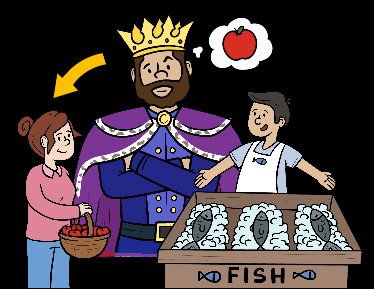
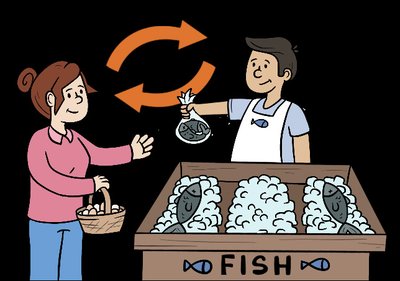
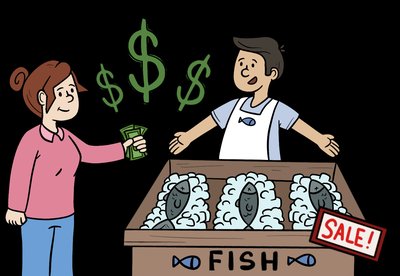
An economic system determines how limited resources are used and distributed in a society. The main types are traditional, command, and market economies, each with distinct decision-making processes.
Traditional Economy: Decisions are based on culture, tradition, and customs.
Command Economy: Decisions are made by the government or ruling class.
Market Economy: Decisions are made by buyers, sellers, and free-market interactions.
Economic System | Decision Makers |
|---|---|
Traditional | Culture, tradition, customs |
Command | Government or ruling class |
Market | Buyers, sellers, free-market |
Example: In a market economy, prices are determined by supply and demand, while in a command economy, the government sets prices and production levels.
Three Key Economic Ideas
Rationality, Incentives, and Marginal Analysis
Economics assumes that people are rational and respond to incentives. Individuals weigh benefits and costs to act in ways that maximize their own self-interest. Marginal analysis is used to make optimal decisions by comparing the additional benefit and additional cost of an action.
Rationality: People act to maximize their self-interest.
Incentives: Economic incentives influence behavior.
Marginal Analysis: Decision-making based on extra or additional benefits and costs.
Key Formula:
Allocative Efficiency: Resources are allocated where they are most valued.
Optimum Consumption: Consuming up to the point where marginal benefit equals marginal cost.
Profit Maximizing Point: Firms produce up to the point where marginal revenue equals marginal cost.
Example: Choosing how many slices of pizza to eat based on the additional happiness (marginal benefit) versus the additional cost.
Positive and Normative Statements
Distinguishing Positive and Normative Economics
Economists differentiate between positive statements, which describe how the world is, and normative statements, which prescribe how the world ought to be. Positive statements are objective and testable, while normative statements are subjective and value-based.
Positive Statement: Makes a claim about what is (e.g., "Rising gas prices cause people to buy less gas.")
Normative Statement: Makes a claim about what ought to be (e.g., "The government should provide healthcare to all citizens.")
Example: "Minimum wage laws cause unemployment" is a positive statement; "Minimum wage laws are a bad idea because they cause unemployment" is a normative statement.
