 Indietro
Production, Scarcity, and the Production Possibilities Frontier (PPF)
Guida di studio - Note intelligenti
 Appunti personalizzati basati sui tuoi materiali, ampliati con definizioni chiave, esempi e contesto.
Production and Scarcity
Scarcity and the Economic Problem
Scarcity is a fundamental concept in economics, referring to the limited nature of resources available to meet unlimited wants. Because resources are finite, societies must make choices about what goods and services to produce.
Scarcity: The condition where resources are insufficient to satisfy all human wants.
Production: The process of creating goods and services using limited resources.
Example: Choosing between producing bikes and scooters, given limited resources.
Production Possibilities Frontier (PPF)
Definition and Assumptions
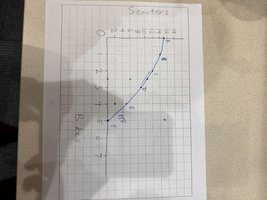
The Production Possibilities Frontier (PPF) is a graphical representation of the maximum combinations of two goods that can be produced with available resources and technology. It illustrates the concept of scarcity, tradeoffs, and opportunity cost.
PPF: The boundary between attainable and unattainable production combinations.
Assumptions: Only two goods are considered (e.g., bikes and scooters), and all other goods remain constant.
Production Efficiency: Achieved when goods are produced at the lowest possible cost, with no waste or misallocation of resources.
PPF and Efficiency
Points on the PPF: Production efficient (no waste).
Points inside the PPF: Production inefficient (resources are underutilized).
Points outside the PPF: Impossible given current resources.
Tradeoffs and Opportunity Cost
Moving along the PPF involves a tradeoff: increasing production of one good requires decreasing production of the other. The opportunity cost is the amount of one good that must be given up to produce more of the other.
Opportunity Cost Formula:
Opportunity Cost: Increases as more of a good is produced, causing the PPF to bow outward.
Marginal Cost and Marginal Benefit
Marginal Cost
Marginal cost is the additional cost incurred from producing one more unit of a good. It is determined by the physical constraints of production.
Marginal Cost Curve: Shows how the cost of producing additional units changes as output increases.
Marginal Benefit
Marginal benefit is the additional benefit received from consuming one more unit of a good. It reflects people's preferences and willingness to pay.
Principle of Decreasing Marginal Benefit: The more people have of something, the less they are willing to pay for an additional unit.
Marginal Benefit Curve: Typically slopes downward, indicating decreasing benefit with increased quantity.
Allocative Efficiency
Allocative efficiency is achieved when goods and services are produced at the lowest cost and in the quantities that provide the greatest possible benefit. This occurs when:
Production is on the PPF (production efficiency).
Marginal benefit equals marginal cost ().
Absolute and Comparative Advantage
Absolute Advantage
A person has an absolute advantage if they can produce more of a good in a given time than others.
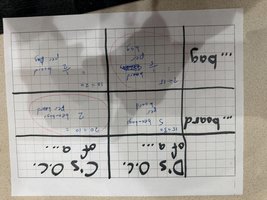
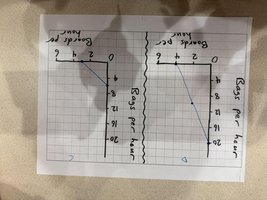
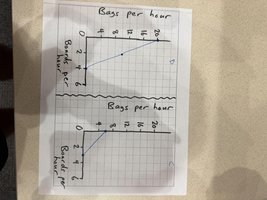
Example: Deangelo can produce 20 beanbags or 4 boards per hour; Christine can produce 6 beanbags or 3 boards per hour.
Absolute Advantage: Deangelo has an absolute advantage in both beanbags and boards.
Comparative Advantage
Comparative advantage exists when a person can produce a good at a lower opportunity cost than others.
Opportunity Cost Calculation: For each person, compare the opportunity cost of producing beanbags and boards.
Gains from Trade: By specializing in goods where they have a comparative advantage, both parties can achieve greater overall production.
Economic Growth
Expansion of Production Possibilities
Economic growth occurs when the production possibilities expand over time, allowing more goods and services to be produced.
Causes of Economic Growth:
Technological Change: Development of new goods and improved production methods.
Capital Accumulation: Growth of capital resources, including human capital.
Effect: The PPF shifts outward, increasing potential output.
Downside of Economic Growth
Changes in labor demand: Some jobs become less needed, others more needed.
Adjustment costs: Workers may need to retrain or switch jobs, which can take time.
Overall, most people benefit, but some may be harmed by the transition.
Economic Coordination
Central Economic Planning
Economic coordination can be achieved through central planning, where a planner decides what, how, and for whom to produce. However, perfect central planning is impossible due to information and fairness constraints.
Central Planning: Government or planner allocates resources and production.
Challenges: Requires complete information and fairness, which are difficult to achieve.
Historical Attempts: Some societies have tried central planning with varying success.
