 Indietro
Supply and Demand: Foundations of Market Economics
Guida di studio - Note intelligenti
 Appunti personalizzati basati sui tuoi materiali, ampliati con definizioni chiave, esempi e contesto.
Supply and Demand
Introduction
Supply and demand are the fundamental concepts that explain how prices and quantities of goods and services are determined in competitive markets. Understanding these concepts is essential for analyzing how markets function and how various factors influence market outcomes.
Demand
Concept of Demand
Demand refers to the consumer's willingness and ability to purchase a good or service at various prices, given their income and other relevant factors. Consumers face the problem of unlimited wants but limited resources, so they must make choices to maximize satisfaction within their budget constraints.
Definition: Demand is the entire relationship between the price of a good and the quantity demanded.
Consumer Problem: Choosing what to buy to best satisfy wants within a budget.
Solution: Consumer demand, which depends on income, prices, and other factors.
The Law of Demand
The law of demand states that, other things equal, as the price of a good increases, the quantity demanded decreases, and vice versa. This relationship is typically represented by a downward-sloping demand curve.
Substitution Effect: As the price of a good rises, consumers switch to substitutes, reducing quantity demanded.
Income Effect: A higher price reduces purchasing power, so consumers buy less.
Exceptions to the Law of Demand
Giffen Goods: Inferior goods for which higher prices may lead to higher quantity demanded due to strong income effects (e.g., potatoes during a famine).
Conspicuous Consumption: Some goods are bought to display wealth; higher prices may increase demand (e.g., luxury cars).
Perceived Quality: Higher prices may signal higher quality, increasing demand.
Momentum in Finance: Investors may buy assets simply because their prices have recently risen.
Demand Schedule and Demand Curve
A demand schedule is a table showing the quantity demanded at different prices. The demand curve is a graphical representation of this relationship.
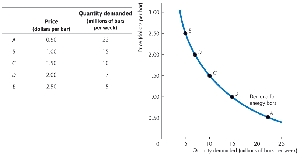
Movement Along vs. Shift of the Demand Curve
Movement Along: Caused by a change in the price of the good itself (e.g., a price drop increases quantity demanded).
Shift of the Curve: Caused by changes in other factors (income, preferences, prices of related goods, etc.).
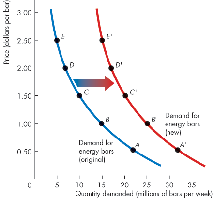
Factors That Shift the Demand Curve
Prices of Related Goods: Substitutes and complements affect demand.
Expected Future Prices: Anticipation of higher prices increases current demand.
Income: Higher income increases demand for normal goods, decreases for inferior goods.
Expected Future Income and Credit: Similar effect as current income.
Population: More people, more demand.
Preferences: Changes in tastes affect demand.
Supply
Concept of Supply
Supply refers to the relationship between the price of a good and the quantity that producers are willing and able to sell, given their resources and technology. Supply focuses on newly-produced goods and services.
Definition: Supply is the entire relationship between price and quantity supplied.
Firm's Decision: Firms supply goods if they can cover marginal costs and make a profit.
The Law of Supply
The law of supply states that, other things equal, as the price of a good increases, the quantity supplied increases. The supply curve is typically upward sloping due to rising marginal costs.
Marginal Cost: Increases with output due to factors like overtime pay and fixed resources in the short run.
Supply Schedule and Supply Curve
A supply schedule is a table showing the quantity supplied at different prices. The supply curve is a graphical representation of this relationship.
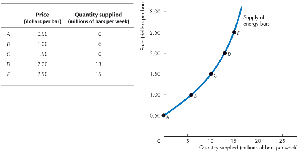
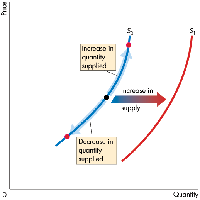
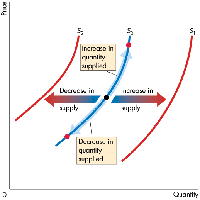
Movement Along vs. Shift of the Supply Curve
Movement Along: Caused by a change in the price of the good itself (e.g., a price increase raises quantity supplied).
Shift of the Curve: Caused by changes in other factors (input prices, technology, etc.).
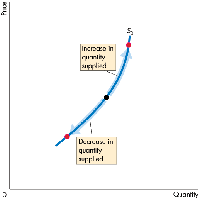
Change in Supply: Shifting the Curve
When a relevant factor other than the price changes, the supply curve shifts. An increase in supply shifts the curve rightward; a decrease shifts it leftward.
Factors That Shift the Supply Curve
Prices of Factors of Production: Higher input costs decrease supply.
Prices of Related Goods Produced: If the price of a substitute in production rises, supply of the good decreases.
Expected Future Prices: Higher expected prices reduce current supply.
Number of Suppliers: More suppliers increase market supply.
Technological Advances: Lower marginal costs, increase supply.
State of Nature: Disasters reduce supply.
Market Equilibrium
Definition and Determination
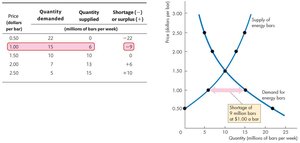
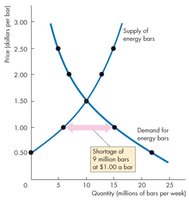
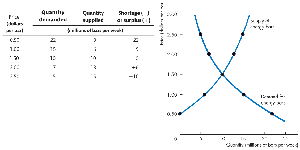
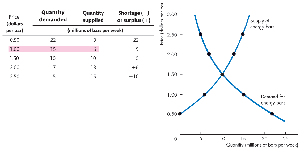
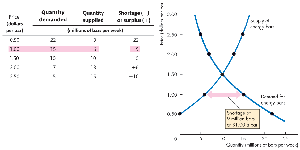
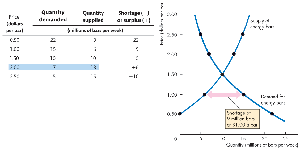
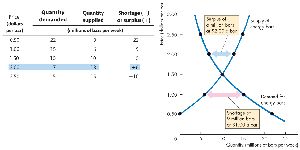
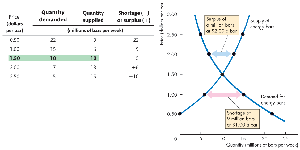
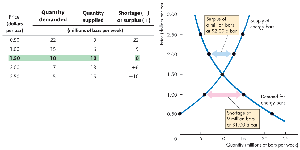
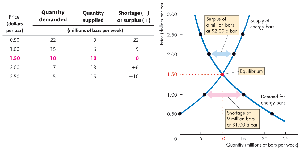
Market equilibrium occurs when the quantity demanded equals the quantity supplied at a particular price. The equilibrium price balances the plans of buyers and sellers, and the equilibrium quantity is the amount bought and sold at this price.
Price Adjustment: If the market is not in equilibrium, price will adjust to eliminate shortages or surpluses.
Shortage and Surplus
Shortage: If price is below equilibrium, quantity demanded exceeds quantity supplied, creating upward pressure on price.
Surplus: If price is above equilibrium, quantity supplied exceeds quantity demanded, creating downward pressure on price.
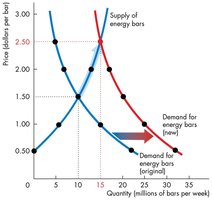
Equilibrium Effect of Changes in Demand
An increase in demand shifts the demand curve rightward, creating a shortage at the original price. Price and quantity rise to restore equilibrium. A decrease in demand shifts the curve leftward, lowering price and quantity.
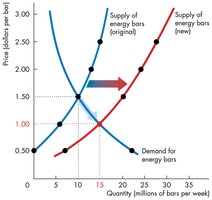
Equilibrium Effect of Changes in Supply
An increase in supply shifts the supply curve rightward, creating a surplus at the original price. Price falls and quantity increases to restore equilibrium. A decrease in supply shifts the curve leftward, raising price and lowering quantity.
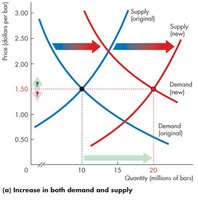
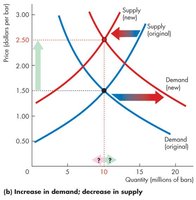
Changes in Both Supply and Demand
Same Direction: If both increase, equilibrium quantity rises, but the effect on price is ambiguous. If both decrease, equilibrium quantity falls, but price effect is ambiguous.
Opposite Directions: If demand increases and supply decreases, price rises but quantity effect is ambiguous. If demand decreases and supply increases, price falls but quantity effect is ambiguous.
Supply and Demand as a Theory of Value
Discussion
Supply and demand explain why some goods are more valuable than others. Scarcity and desirability determine value. For example, water is essential but cheap due to abundance, while caviar is expensive due to scarcity. Economists generally advise against price controls, as they can create shortages or surpluses and reduce market efficiency. Examples include rent controls, minimum wage laws, and fixed exchange rates. The effects of minimum wage laws are debated, with some studies finding positive employment effects and others finding negative or mixed results.
