 Indietro
Chapter 9 Study Guide- Part A
Guida di studio - Note intelligenti
 Appunti personalizzati basati sui tuoi materiali, ampliati con definizioni chiave, esempi e contesto.
Unemployment and Inflation
Introduction
This section explores the measurement, types, and implications of unemployment and inflation in the macroeconomy. Understanding these concepts is crucial for analyzing labor market health and the overall economic environment.
Major Points: Unemployment
Definition and Measurement
Unemployment refers to individuals who do not have a job, are available for work, and have actively searched for work in the past four weeks.
The Unemployment Rate is calculated as:
The Labor Force includes both employed and unemployed individuals.
To be counted as unemployed, a person must meet three conditions: not have a job, be available for work, and have actively looked for work in the last four weeks.
Limitations of the Official Unemployment Rate
Understates true unemployment by excluding discouraged workers (those who have stopped looking for work) and involuntary part-time workers (those who want full-time work but can only find part-time jobs).
Overstates true unemployment due to individuals falsely claiming to be seeking work to receive benefits and jobs in the underground economy.
Broader Measures of Unemployment
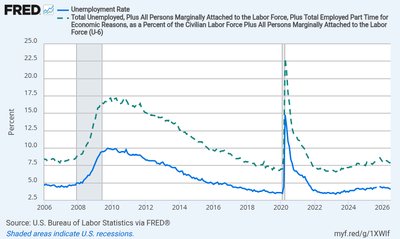
Broader measures (such as U-6) include discouraged workers and involuntary part-time workers, resulting in higher reported rates than the official measure.
Types of Unemployment
Frictional Unemployment
Frictional unemployment arises from the normal process of matching workers with jobs. It is typically short-term and results from labor market turnover, such as people entering or leaving the workforce or switching jobs.
Example: Recent graduates searching for their first job or workers voluntarily changing jobs.


Structural Unemployment
Structural unemployment occurs when there is a persistent mismatch between workers' skills and the requirements of available jobs. This can be caused by technological changes or shifts in the economy that make certain skills obsolete.
Example: Factory workers displaced by automation who need retraining for new types of jobs.
Cyclical Unemployment
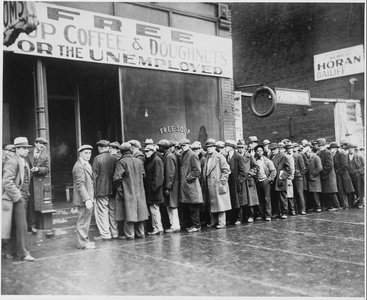
Cyclical unemployment is caused by downturns in the business cycle, such as recessions, when overall demand for goods and services falls and businesses reduce their workforce.
Example: Workers laid off during a recession due to decreased consumer spending.
Natural Rate of Unemployment
Definition and Determinants
The Natural Rate of Unemployment is the rate that exists when the economy is at full employment, consisting only of frictional and structural unemployment (cyclical unemployment is zero).
This rate is not fixed and can be influenced by public policies, such as unemployment compensation and labor laws, as well as economic and social factors.
It is called "natural" because it reflects the normal churn in the labor market, not because it is a physical law.

Policy Implications
Generous unemployment benefits and restrictive labor laws can increase the natural rate by reducing incentives to quickly find new employment.
At the natural rate, not everyone who wants a job has one, due to ongoing frictional and structural factors.
Measuring Labor Market Health
Employment-Population Ratio
Measures the percentage of the working-age population (age 16 and over) that is employed.
Formula:
This is considered a strong indicator of labor market health because it is not affected by people dropping out of the labor force.
Labor Force Participation Rate
Measures the percentage of the working-age population that is in the labor force (either employed or actively seeking work).
Formula:
Unemployment by Demographic Groups
Unemployment rates can vary significantly by demographic group (e.g., race, gender, age).
For example, in July 2026, the unemployment rate for teenagers and Black teenagers was much higher than for other groups.
Job Creation and Destruction
The U.S. economy creates and destroys millions of jobs each year due to changes in consumer preferences, technological advances, and entrepreneurial activity.
Net job changes reported each month understate the gross number of jobs created and destroyed.
Government Policies and Unemployment
Unemployment Insurance provides income support to the unemployed, allowing time to search for a good job match and maintaining consumer spending during downturns.
If benefits are too generous or last too long, they can increase the natural rate of unemployment by reducing the urgency to find new work.

Summary Table: Types of Unemployment
Type | Cause | Duration | Example |
|---|---|---|---|
Frictional | Normal job search and labor market turnover | Short-term | Recent graduates seeking jobs |
Structural | Mismatch between skills and job requirements | Long-term | Workers displaced by automation |
Cyclical | Business cycle downturns | Varies (linked to recessions) | Layoffs during a recession |
Advice for Job Seekers by Unemployment Type
Frictional: Keep applying and searching; your skills are in demand.
Structural: Consider retraining, learning new skills, or relocating to areas with better job matches.
Cyclical: Recognize that job loss is due to economic downturns; unemployment compensation may help until the economy recovers.
Practice Question
If cyclical unemployment is eliminated in the economy, then the economy is considered to be at full employment (the unemployment rate equals the natural rate).
Additional info: Inflation is referenced in the misery index but not elaborated in detail in these notes. For a full understanding, see the corresponding chapter on inflation.
