 Indietro
Chapter 9 Study Guide- Part B
Guida di studio - Note intelligenti
 Appunti personalizzati basati sui tuoi materiali, ampliati con definizioni chiave, esempi e contesto.
Inflation: Concepts and Measurement
Definition and Importance
Inflation is defined as the percentage increase in the overall level of prices from one year to the next. It is a key macroeconomic indicator, reflecting changes in the cost of living and the purchasing power of money.
Inflation Rate: The annual percentage change in the price level, typically measured by a price index.
Consumer Price Index (CPI): The most widely used measure of inflation, comparing the cost of a fixed basket of goods and services over time.
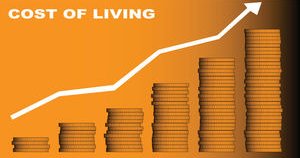
Cost of Living: Inflation directly affects the cost of living, as rising prices mean consumers need more money to purchase the same goods and services.
Historical Context: Hyperinflation
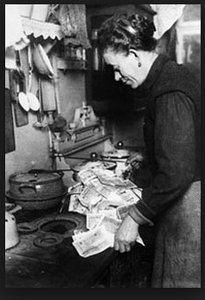
Hyperinflation is an extremely high and typically accelerating inflation rate, often exceeding 50% per month. It erodes the real value of local currency, causing people to lose confidence in money as a store of value.
Example: The German hyperinflation of the early 1920s, where prices soared and currency became nearly worthless.
Measuring Inflation
Consumer Price Index (CPI)
The CPI measures the average change over time in the prices paid by urban consumers for a market basket of consumer goods and services. It is calculated as follows:
Market Basket: A representative group of goods and services (e.g., 211 types) purchased by a typical urban family of four.
CPI Formula:
A CPI of 125 means the cost of the market basket has increased by 25% since the base period.
Other Price Indices
GDP Deflator: Measures the price level by dividing nominal GDP by real GDP. It includes all final goods and services in GDP, not just consumer goods.
Producer Price Index (PPI): Measures the average change in selling prices received by domestic producers for their output at all stages of production.
Personal Consumption Expenditure Price Index (PCE): Similar to the GDP deflator but includes only the prices of goods and services in the consumption category of GDP. The Federal Reserve often uses the PCE for its inflation target.
Calculating the Inflation Rate
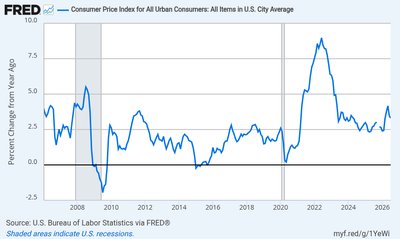
The inflation rate is the percentage change in the CPI from one year to the next:
Example: If CPI in 2025 is 322.0 and in 2024 is 313.7, then:
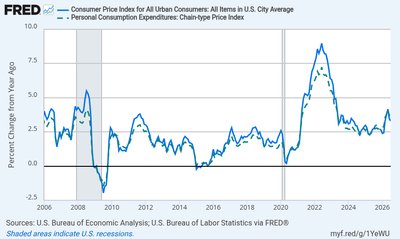
Comparing CPI and PCE Inflation
The CPI and PCE inflation rates often differ slightly due to differences in their calculation methods and coverage. The PCE inflation rate is typically lower than the CPI.
Example: In July, CPI inflation was 3.7% while PCE inflation was 3.3%.
Limitations of the CPI
Substitution Bias
The CPI uses a fixed market basket, which assumes consumers buy the same goods and services regardless of price changes. In reality, consumers substitute away from goods that become relatively more expensive, causing the CPI to overstate the cost of living and the inflation rate.
Substitution Bias: Overstates inflation because it does not account for consumers buying less of goods whose prices rise and more of goods whose prices fall.

Real vs. Nominal Variables
Definitions
Nominal Variables: Measured in current-year prices (not adjusted for inflation).
Real Variables: Adjusted for inflation, measured in base-year (constant) dollars.
Converting Nominal to Real Variables
To compare values over time, convert nominal variables to real variables using a price index:
Example: Real wage = (Nominal Wage / CPI) x 100
Interest Rates and Inflation
Nominal vs. Real Interest Rate
Nominal Interest Rate: The stated interest rate on a loan, not adjusted for inflation.
Real Interest Rate: The nominal interest rate minus the inflation rate; measures the true cost of borrowing and the true return to lending.
Example Calculation
If you borrow $1,000 for one year at a nominal interest rate of 10% and the inflation rate is 7%:
Problems Caused by Inflation and Deflation
Effects of Inflation
Inflation raises both the cost of living and nominal incomes.
Unanticipated inflation redistributes income between lenders and borrowers, and between workers and employers.
People on fixed incomes experience a decline in real purchasing power.
Menu costs: Firms must update prices more frequently, increasing costs.

Unanticipated Inflation
If actual inflation is less than expected, lenders gain and borrowers lose.
If actual inflation is greater than expected, borrowers gain and lenders lose.

Deflation
Deflation is a negative inflation rate (falling prices).
Consumers may delay purchases, expecting even lower prices, which reduces spending and economic growth.
Unexpected deflation increases the real burden on borrowers, as the real interest rate rises above the nominal rate.
Summary Table: Key Price Indices
Index | What It Measures | Coverage | Used By |
|---|---|---|---|
Consumer Price Index (CPI) | Cost of living for consumers | Urban consumers, fixed basket | General public, government |
GDP Deflator | Price level of all final goods/services | Entire economy | Economists, policymakers |
Producer Price Index (PPI) | Prices received by producers | All stages of production | Businesses, analysts |
Personal Consumption Expenditure (PCE) Price Index | Consumer goods/services in GDP | Consumption category of GDP | Federal Reserve |
Practice Questions
Explain why the CPI may overstate the true cost of living.
Calculate the inflation rate given two years of CPI data.
Discuss the effects of unanticipated inflation on lenders and borrowers.
Describe the problems caused by deflation in an economy.
