 Indietro
Chapter 1: Introduction to Medical Terminology – Foundations and Applications
Guida di studio - Note intelligenti
 Appunti personalizzati basati sui tuoi materiali, ampliati con definizioni chiave, esempi e contesto.
Medical Language and Health Care Today
Introduction to Medical Language
Medical language is the specialized vocabulary used by healthcare professionals to describe the human body, its functions, diseases, and treatments. Understanding medical terminology is essential for effective communication in healthcare settings.
Medical words are constructed from word parts, much like assembling puzzle pieces.
Mastery of medical language enables accurate reading, writing, speaking, and comprehension of medical information.
The Five Skills of Medical Language Communication
Reading medical words
Hearing and understanding spoken medical terms
Thinking, analyzing, and understanding medical words
Writing (or typing) and spelling medical words
Speaking and pronouncing medical words
The Origins of Medical Language
Etymology is the study of word origins. Most medical terms are derived from Greek and Latin, reflecting the historical development of medicine.
Some words are identical to their original forms (e.g., nucleus from Latin).
Others are adapted or similar to their roots (e.g., artery from Latin arteria).
A minority come from other languages (e.g., bladder from Old English).
Singular and Plural Forms in Medical Terminology
Medical nouns follow specific rules for forming plurals, depending on their language of origin.
Language | Singular Ending | Plural Rule | Example |
|---|---|---|---|
English | -s | Add -s | gland → glands |
Greek | -is | -is to -ides | iris → irides |
Greek | -nx | -nx to -nges | phalanx → phalanges |
Latin | -a | -a to -ae | vertebra → vertebrae |
Latin | -us | -us to -i | bronchus → bronchi |
Medical Word Parts
Types of Word Parts
Medical words are built from three main types of word parts:
Prefix: Optional beginning of a word, modifies meaning.
Combining form: Foundation/root of the word, provides the main meaning.
Suffix: Ending of the word, modifies or clarifies meaning.

Combining Forms
The combining form consists of a root, a forward slash, a combining vowel (usually 'o'), and a hyphen. It is the core meaning of the word.
Examples: cardi/o- (heart), muscul/o- (muscle), ven/o- (vein)
Some combining forms are nearly identical to their meanings, while others differ significantly.
Suffixes
A suffix is attached to the end of a combining form and modifies its meaning. Suffixes can indicate adjectives, processes, diseases, procedures, or medical specialties.

Adjective suffixes: -ac (pertaining to), -al (pertaining to)
Process suffixes: -ation (process), -ion (action/condition)
Disease suffixes: -itis (inflammation), -megaly (enlargement)
Procedure suffixes: -ectomy (surgical removal), -scopy (examination)
Specialty suffixes: -logy (study of), -ist (specialist)
Prefixes
Prefixes are added to the beginning of words to modify their meaning, often indicating location, number, or quality.

Location: epi- (upon), inter- (between), intra- (within)
Number/Amount: bi- (two), poly- (many), tri- (three)
Degree/Quality: an- (without), anti- (against), dys- (difficult)
Defining and Building Medical Words
Defining Medical Words
To define a medical word, analyze its parts in the following order: suffix, prefix (if present), then combining form. Add connecting words as needed for clarity.
Example: cardiology = study of the heart


Example: pericardial = pertaining to around the heart


Building Medical Words
To build a medical word, assemble the appropriate word parts in the correct order, considering whether the suffix begins with a vowel or consonant and whether a prefix is present.
If the suffix begins with a consonant, use the combining vowel.
If the suffix begins with a vowel, do not use the combining vowel.
Prefixes are always placed at the beginning.









Spelling and Pronunciation
Correct spelling and pronunciation are essential for clear communication in healthcare. Practice and attention to pronunciation guides are recommended.
The Body in Health and Disease
Health and Disease
Health is defined as a state of complete physical, mental, and social well-being. Disease is any change in the normal structure or function of the body, while a disorder is a disturbance of action or function.
Anatomical Position
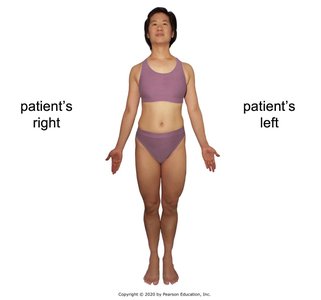
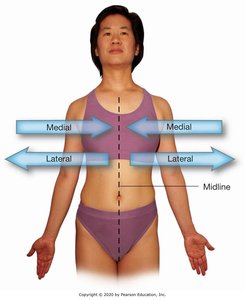
The anatomical position is the standard reference for describing the body: standing erect, head forward, arms at sides with palms forward, and legs straight with toes forward.
Body Planes and Directions
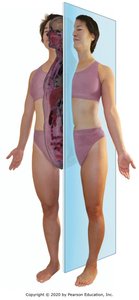
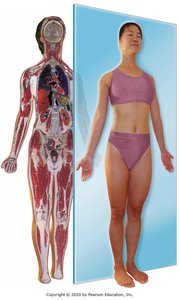
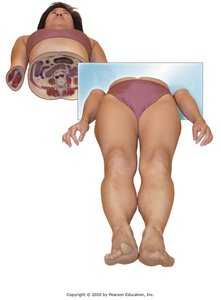
Body planes are imaginary lines dividing the body for anatomical study:
Sagittal plane: Divides body into right and left sections.
Coronal (frontal) plane: Divides body into anterior (front) and posterior (back) sections.
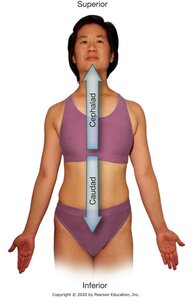
Transverse plane: Divides body into superior (upper) and inferior (lower) sections.
Body Directions
Medial: Toward the midline
Lateral: Away from the midline
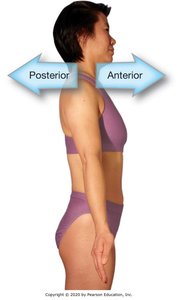
Anterior: Toward the front
Posterior: Toward the back
Cephalad: Toward the head
Caudad: Toward the tailbone
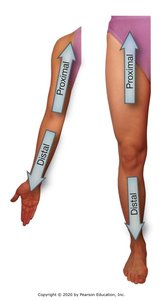
Proximal: Toward the trunk
Distal: Away from the trunk
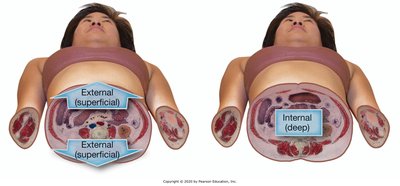
External: Superficial or outer part
Internal: Deep inside
Body Cavities
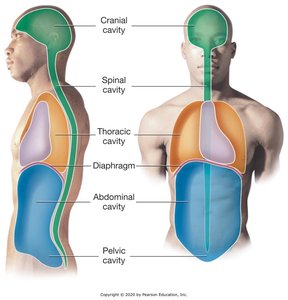
The body contains five main cavities that house and protect organs:
Cranial cavity: Inside the head
Spinal cavity: Runs down the back
Thoracic cavity: Within the chest
Abdominal cavity: Upper abdomen
Pelvic cavity: Lower abdomen
Body Quadrants and Regions
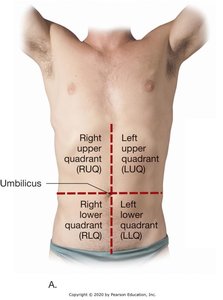
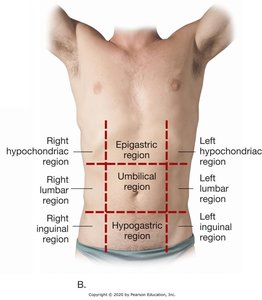
The abdominopelvic cavity is divided for reference:
Quadrants: Right upper (RUQ), left upper (LUQ), right lower (RLQ), left lower (LLQ)
Regions: Nine regions including hypochondriac, lumbar, inguinal, epigastric, umbilical, and hypogastric
Anatomy, Physiology, and Medical Specialties
Definitions
Anatomy: Study of body structures
Physiology: Study of body functions
Cells → Tissues → Organs → Body systems
Body Systems and Medical Specialties
Medical specialties are organized by body systems. For example:
Specialty | Body System/Structure | Specialist |
|---|---|---|
Dermatology | Integumentary system | Dermatologist |
Cardiology | Cardiovascular system | Cardiologist |
Neurology | Nervous system | Neurologist |
Gynecology | Female reproductive system | Gynecologist |
Diseases and Disorders
Definitions and Categories
Disease: Change in normal structure or function
Disorder: Disturbance of action or function
Etiology: Cause or origin of disease
Preventive medicine: Focuses on maintaining health and preventing disease
Disease Type | Etiology | Example |
|---|---|---|
Congenital | Fetal abnormality | Cleft lip |
Degenerative | Cell destruction/aging | Arthritis |
Genetic | Gene mutation | Down syndrome |
Hereditary | Inherited gene | Cystic fibrosis |
Infectious | Pathogen | Tuberculosis |
Neoplastic | Mass growth | Cancer |
Nutritional | Poor nutrition | Malnutrition |
Onset and Course of Disease
Symptom: Felt by patient
Sign: Observed by others
Acute: Sudden, severe
Chronic: Lasts 3+ months
Exacerbation: Worsening
Remission: Temporary improvement
Relapse: Return of symptoms
Sequela: Complication after disease
Symptomatology and Syndromes
Symptomatology: Clinical picture of all symptoms/signs
Asymptomatic: Disease without symptoms
Syndrome: Set of symptoms/signs characteristic of a disease
Healthcare Professionals and Settings
Physicians and Allied Health Professionals
Physicians: Hold MD or DO degrees, diagnose and treat diseases
Surgeons: Physicians with surgical training
Physician extenders: PAs, NPs, CNMs, CRNAs
Allied health professionals: Nurses, technologists, therapists, dietitians, etc.
Healthcare Settings
Hospitals: For acutely ill patients, divided into units and departments
Physicians' offices: Outpatient diagnosis and treatment
Clinics: Specialized outpatient care
Ambulatory surgery centers: Minor surgeries
Long-term care facilities: Residential care for chronic needs
Home health agencies: In-home care
Hospices: End-of-life care
Medical Records and Abbreviations
Medical Records
Document all care provided to a patient
Now primarily electronic (EHRs)
Include history, physical exams, operative reports, discharge summaries, and legal documents
Common Abbreviations
Abbreviation | Definition |
|---|---|
ASC | Ambulatory Surgery Center |
CC | Chief Complaint |
Dx | Diagnosis |
ED/ER | Emergency Department/Room |
EHR | Electronic Health Record |
H&P | History and Physical |
ICU | Intensive Care Unit |
MD/DO | Doctor of Medicine/Osteopathy |
NP/PA | Nurse Practitioner/Physician's Assistant |
RN/LPN/LVN | Registered/Licensed Practical/Vocational Nurse |
RUQ/LUQ/RLQ/LLQ | Right/Left Upper/Lower Quadrant |
