 Indietro
Integumentary System: Structure, Function, and Medical Terminology
Guida di studio - Note intelligenti
 Appunti personalizzati basati sui tuoi materiali, ampliati con definizioni chiave, esempi e contesto.
Ch.3 Integumentary System
Overview of the Integumentary System
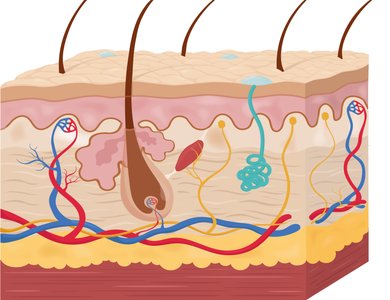
The integumentary system is a complex set of organs that includes the skin and its accessory structures such as hair, nails, sweat glands, and sebaceous glands. The skin is the largest organ of the human body and serves as a protective barrier between the internal environment and the external world.
Skin Layers:
Epidermis: The outermost layer, composed of stratified squamous epithelial cells. It is avascular (lacks its own blood supply) and is primarily responsible for protection.
Dermis: The inner layer, made of connective tissue. It contains blood vessels, nerve endings, hair follicles, sweat glands, and sebaceous glands. The dermis binds the epidermis to deeper tissues.
Subcutaneous Layer (Hypodermis): A fatty layer that separates the dermis from deeper tissues, providing insulation and cushioning.
Cutaneous Membrane: The collective term for the epidermis and dermis.
Functions of the Integumentary System
The integumentary system performs several vital functions essential for maintaining homeostasis and protecting the body.
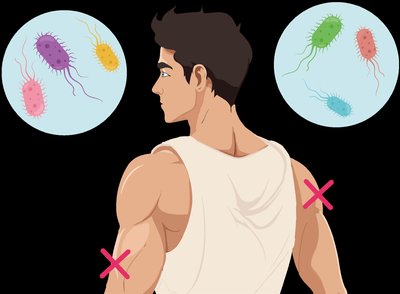
Protection: Acts as a barrier against chemicals, pathogens, and prevents loss of critical body fluids.
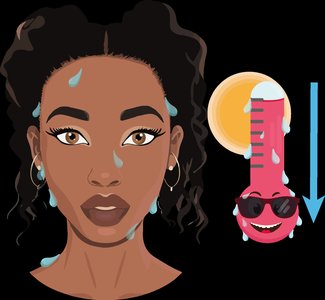
Regulation: Controls body temperature through evaporation (sweating), vasoconstriction, and vasodilation.
Secretion: Sebaceous glands secrete sebum to lubricate hair and skin; sweat glands aid in excretion of waste products.
Sensation: Contains nerve endings that sense temperature, pain, touch, and pressure.
Accessory Structures of the Integumentary System
Hair
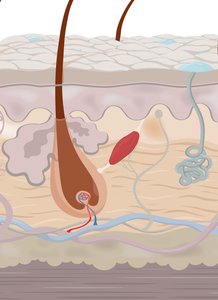
Hair is composed of dead, keratinized cells and serves protective and sensory functions. Each hair consists of a shaft (visible part) and a root (embedded in the follicle). The root receives nourishment from a loop of capillaries called the papilla. The arrector pili muscle, a small smooth muscle, contracts to cause goosebumps.
Sweat and Sebaceous Glands
Sebaceous Glands: Secrete sebum, an oily substance that lubricates skin and hair. Sebum production increases during adolescence and decreases with age.
Sweat Glands: Secrete sweat through ducts onto the skin surface, aiding in temperature regulation and excretion of metabolic waste. Both sweat and sebaceous glands are classified as exocrine glands.

Nails
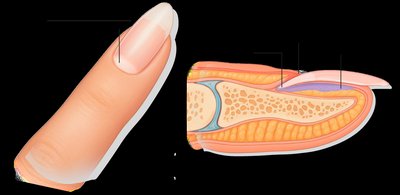
Nails are flat plates of hard keratin that cover the ends of fingers and toes. They are connected to deeper tissue by the nail bed. The cuticle is a soft tissue at the base of the nail, protecting the nail root. The lunula is the light-colored, half-moon-shaped area at the base of the nail.
Medical Terminology: Word Building in the Integumentary System
Common Combining Forms
Combining Form | Definition | Memory Tool |
|---|---|---|
integument/o | covering | Integumentary system |
cutane/o, derm/o, dermat/o | skin | Cutaneous, dermatologist |
aden/o | gland | Glands add-in secretions |
sudor/o, hidr/o | sweat | Suit causes hydration |
seb/o | sebum, oil | Sebum |
adip/o, lip/o | fat | Lip/o/suction |
sarc/o | flesh, connective tissue | Sarc/oma |
bas/o | base | Basement |
kerat/o | hard, horny tissue | Crunchy carrot |
cellul/o | little cell | Cell |
follicul/o | little follicle | Hair follicle holds the hair |
angi/o | vessel | Angiogenesis |
trich/o, pil/o | hair | Tricky pillow fight |
onych/o, ungu/o | nail | Onyx nails come unglued |
Skin Characteristics and Colors
Combining Form | Definition | Memory Tool |
|---|---|---|
ichthy/o | dry, scaly | Itchy dry skin |
xer/o | dry | Xero moisture |
pachy/o | thick | Pack it on |
scler/o | hard | Squirrel cracks hard nuts |
rhytid/o | winkle | Get rid of wrinkles |
cyan/o | blue | Cyan blue |
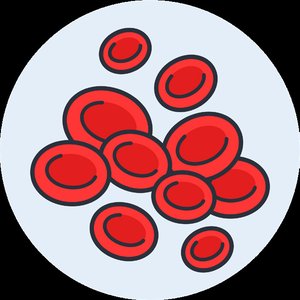
erythr/o | red | Erythrocyte |
albin/o | white | Albinism |
melan/o | black | Melanin |
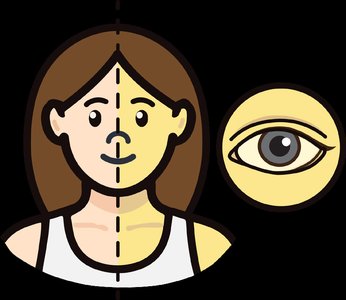
jaund/o | yellow | Jaundice |


Pathological Conditions and Related Terms
Combining Form | Definition | Memory Tool |
|---|---|---|
caus/o | burn, burning | Cause of fire |
prurit/o | itching | Itchy cat purrs |
py/o | pus | Pyo |
septic/o | infection | Septic water |
necr/o | death | Necromancer |
pedicul/o | body louse | Pedicure |
myc/o | fungus | Mic drop |
actin/o | ray | Action rays |
kel/o | tumor | Keloid scar |
Descriptive and Transplantation Terms
Combining Form | Definition | Memory Tool |
|---|---|---|
aut/o | self | Autograph |
xen/o | foreign | Xtra-Enigma |
cauter/o | to burn | Cauterize |
cry/o | cold | Cryotherapy |
Integumentary System Vocabulary: Pathology and Procedures
Common Pathological Conditions
Medical Term | Description | Memory Tool |
|---|---|---|
Varicella | Viral skin infection (chicken pox) | Chicken pox |
Monkeypox | Flu-like viral infection with severe blisters | Monkeypox |
Furuncle | Bacterial infection of hair follicle (boil) | Furry Uncle |
Scabies | Skin infection by mites | Itch Mite |
Tinea | Fungal skin disease (ringworm) | Tiny Rings |
Ecchymosis | Bruise | Eek, a bruise! |
Vitiligo | Skin depigmentation | Vanilla Skin |
Eczema | Superficial dermatitis marked by loss of moisture | Moisture Exit-ma |
Hirsutism | Excessive hair growth | Suit of hair |
Psoriasis | Buildup of silver scale patches | Layers of Earth |
Urticaria | Hives | Ur tie carries hives |
Diagnostic and Therapeutic Procedures
Medical Term | Description |
|---|---|
Culture & Sensitivity | Growing, collecting, and testing pathogens for antibiotic sensitivity |
Biopsy | Removal of tissue for examination and diagnosis |
Frozen section | Biopsy taken during surgery and later frozen for analysis |
Fungal scrapings | Sampling of skin, hair, or nail from an infected area for fungal testing |
Debridement | Removal of dead or infected tissue |
Curettage | Specific form of debridement using a scraper |
Pharmacology Related to the Integumentary System
Medical Term | Description | Memory Tool |
|---|---|---|
Anticoagulant | Prevents blood from clotting | Anti Clog |
Antineoplastic | Slows growth of malignant tumors | Against new growth |
Agonist | Binds to a cell and triggers a response | Agent turns cell ON |
Antagonist | Binds to a cell and blocks a response | Anti-agent turns cell OFF |
Bioavailability | Amount of medication that enters bloodstream and causes a desired effect | Biologically Available |
Corticosteroids | Synthetic anti-inflammatory medication | Cortex, stressed needs ointment |
Summary Table: Key Terms and Their Functions
Structure/Term | Function/Definition |
|---|---|
Epidermis | Outermost, avascular layer of skin; protection |
Dermis | Connective tissue layer with vessels, nerves, glands |
Hypodermis | Fatty layer for insulation and cushioning |
Hair | Protection, sensation; made of keratin |
Nails | Protects finger/toe tips; made of keratin |
Sebaceous glands | Secrete sebum for lubrication |
Sweat glands | Secrete sweat for temperature regulation and excretion |
