 Indietro
Understanding Prefixes in Medical Terminology
Guida di studio - Note intelligenti
 Appunti personalizzati basati sui tuoi materiali, ampliati con definizioni chiave, esempi e contesto.
Chapter 3: Understanding Prefixes
Introduction to Prefixes in Medical Terminology
Prefixes are essential components of medical terms, providing additional meaning related to number, quantity, location, timing, or specific qualities. Understanding prefixes helps in accurately interpreting and constructing medical vocabulary. Not all medical terms contain prefixes, but when present, they precede the root or combining form and modify its meaning.
Prefix: A word part added to the beginning of a root or combining form to alter its meaning.
Root/Combining Form: The main part of the word that provides the core meaning.
Suffix: A word part added to the end of a root or combining form.
Some terms may have more than one prefix, root, or suffix.
Common Prefixes and Their Meanings
Below are some commonly used prefixes in medical terminology, along with their meanings and examples:
a-: without, not (e.g., asymptomatic – without symptoms)
ab-: away from (e.g., abduction – movement away from the midline)
bi-: two (e.g., bicuspid – having two points or cusps)
endo-: within, inside (e.g., endoscope – instrument for viewing inside the body)
hyper-: above normal (e.g., hyperglycemia – high blood sugar)
hypo-: below normal (e.g., hypotension – low blood pressure)
intra-: within (e.g., intravenous – within a vein)
post-: after (e.g., postoperative – after surgery)
pre-: before (e.g., prenatal – before birth)
sub-: under, below (e.g., subcutaneous – under the skin)
anti-: against (e.g., antibiotic – against life, referring to agents that kill bacteria)
con-: with, together (e.g., congenital – present at birth)
contra-: against, opposite (e.g., contraceptive – preventing conception)
meta-: change, beyond (e.g., metastasis – spread of disease beyond its origin)
Prefixes Indicating Number or Quantity
Prefixes can specify the number or quantity involved in a medical term. Understanding these helps in identifying the scope or extent of a condition or structure.
ambi-: both (e.g., ambidextrous – able to use both hands equally)
bi-, di-: two (e.g., bicuspid, diplopia – double vision)
dipl-: double
hemi-: half (e.g., hemiplegia – paralysis of one side of the body)
mono-: one (e.g., monocyte – a type of white blood cell)
multi-: many (e.g., multigravida – a woman who has been pregnant more than once)
nulli-: none (e.g., nullipara – a woman who has never given birth)
pan-: all (e.g., pandemic – affecting all people)
poly-: many (e.g., polyarteritis – inflammation of many arteries)
primi-: first (e.g., primigravida – a woman pregnant for the first time)
quadri-: four (e.g., quadriplegia – paralysis of all four limbs)
semi-: half, partial (e.g., semilunar – shaped like a half-moon)
tetra-: four (e.g., tetralogy – a group of four)
tri-: three (e.g., tricuspid – having three points or cusps)
uni-: one (e.g., unilateral – one-sided)
Example:
polyarteritis: poly- (many) + arter/o (artery) + -itis (inflammation) = inflammation of many arteries.
Prefixes Indicating Location or Timing
These prefixes describe where or when something occurs in relation to another structure or event.
ab-: away from
ad-: toward
ana-: up, apart
ante-: before, forward
pre-: before
dia-: through, complete
dis-: apart, away
ec-, ecto-: out, outside
endo-: within
ep-, epi-: upon, over
eso-: inward
ex-, exo-: out, outside
extra-: outside, beyond
infer-: below
inter-: between
intra-: within
para-: beside, near
peri-: around
post-: after
sub-: under, below
super-, supra-: above, over
sym-, syn-: together, with
Example:
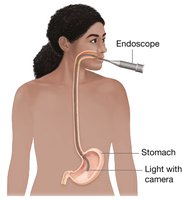
endogastric: endo- (within) + gastr/o (stomach) + -ic (pertaining to) = pertaining to within the stomach.
Example:
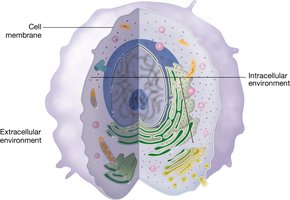
intracellular: intra- (within) + cellular (cell) = within the cell.
extracellular: extra- (outside) + cellular (cell) = outside the cell.
Example:
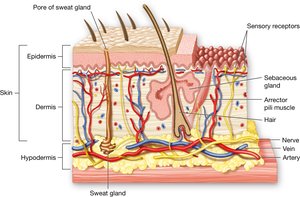
epidermis: epi- (upon) + dermis (skin) = the outermost layer of the skin.
hypodermis: hypo- (under) + dermis (skin) = the layer beneath the dermis.
Prefixes Indicating Specific Qualities
Some prefixes describe a specific quality or characteristic of a medical term, such as speed, size, or condition.
a-, an-: without, not
brady-: slow (e.g., bradycardia – slow heart rate)
circum-: around (e.g., circumoral – around the mouth)
dys-: bad, difficult, painful (e.g., dysfunction – abnormal function)
eu-: good, normal (e.g., eupnea – normal breathing)
heter-, hetero-: different
macro-: large (e.g., macrocyte – large cell)
mal-: bad (e.g., malnutrition – poor nutrition)
mega-, megalo-: large, great
micro-: small (e.g., microorganism – small organism)
neo-: new (e.g., neoplasm – new growth, tumor)
pseudo-: false (e.g., pseudocyesis – false pregnancy)
tachy-: rapid (e.g., tachycardia – rapid heart rate)
trans-: across, through (e.g., transdermal – through the skin)
ultra-: beyond, excess (e.g., ultrasound – sound waves beyond human hearing)
Example:
tachycardia: tachy- (rapid) + cardi/o (heart) + -ia (condition) = condition of rapid heart rate.
ultrasound: ultra- (beyond) + sound = imaging using sound waves beyond the range of human hearing.

Building and Analyzing Medical Terms
Medical terms are constructed by combining prefixes, roots, and suffixes. Recognizing and understanding each part allows for accurate interpretation and communication in healthcare settings.
Not all terms have all three parts; some may lack a prefix or suffix.
Some terms may have more than one prefix, root, or suffix.
Prefixes often indicate number, location, time, or quality.
Table: Common Medical Prefixes and Their Meanings
Prefix | Meaning | Example |
|---|---|---|
hyper- | above normal | hyperglycemia |
hypo- | below normal | hypotension |
intra- | within | intracellular |
sub- | under, below | subcutaneous |
epi- | upon, over | epidermis |
ultra- | beyond, excess | ultrasound |
anti- | against | antibiotic |
pre- | before | prenatal |
post- | after | postoperative |
poly- | many | polyarteritis |
Summary
Mastering medical prefixes is fundamental for understanding and constructing medical terms. Prefixes provide critical information about number, location, timing, and specific qualities, enabling precise communication in healthcare. Practice identifying and using prefixes to enhance your medical vocabulary and comprehension.
