 Indietro
A Brief History of Microbiology: Foundations and Key Discoveries
Guida di studio - Note intelligenti
 Appunti personalizzati basati sui tuoi materiali, ampliati con definizioni chiave, esempi e contesto.
Chapter 1: A Brief History of Microbiology
The Early Years of Microbiology
Microbiology began with the discovery and observation of microscopic life forms, leading to the development of the field as a scientific discipline. Early pioneers laid the groundwork for understanding the diversity and classification of microorganisms.
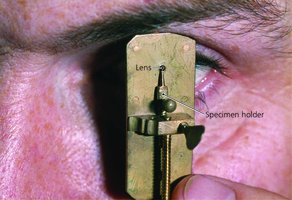
Antoni van Leeuwenhoek: Developed simple microscopes and was the first to observe and describe microorganisms, which he called "animalcules." His work revealed the existence of a previously unseen microbial world.
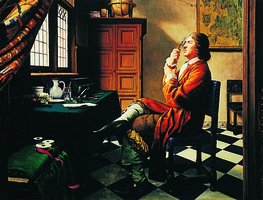
Development of Microscopy: Leeuwenhoek's microscopes allowed for the visualization of bacteria, fungi, algae, and protozoa.
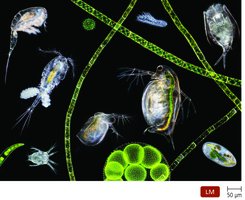
Microbial Diversity: By the late 19th century, these organisms were collectively termed microorganisms.
Classification of Microbes
Carolus Linnaeus established a taxonomic system for naming and grouping organisms. Microorganisms are classified into six major categories:
Bacteria
Archaea
Fungi
Protozoa
Algae
Small multicellular animals
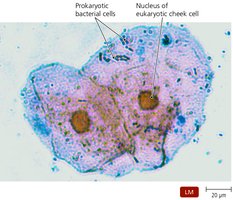
Bacteria and Archaea
Unicellular, lack nuclei (prokaryotic)
Smaller than eukaryotes
Found in diverse environments, including extreme conditions
Reproduce asexually
Bacterial cell walls contain peptidoglycan; archaeal cell walls do not
Fungi
Eukaryotic (contain membrane-bound nucleus)
Obtain nutrients from other organisms
Possess cell walls
Types:
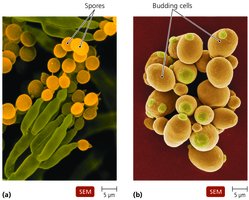
Molds: Multicellular, filamentous, reproduce by spores
Yeasts: Unicellular, reproduce by budding or spores
Protozoa
Single-celled eukaryotes
Similar to animals in nutrient needs and structure
Live in water or as parasites in hosts
Reproduce asexually (mostly) and sexually
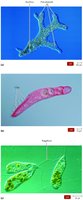
Motility structures:
Pseudopods: Extensions of the cell for movement
Cilia: Short, numerous projections
Flagella: Long, whip-like extensions
Algae
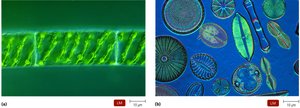
Unicellular or multicellular
Photosynthetic
Simple reproductive structures
Categorized by pigmentation and cell wall composition
Other Microorganisms
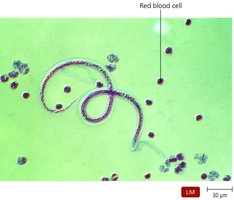
Parasites: Multicellular organisms, often with complex life cycles, some cause disease in hosts
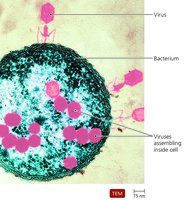
Viruses: Acellular entities, require host cells for replication
The Golden Age of Microbiology
This era was marked by major discoveries that shaped the field, including the refutation of spontaneous generation, the understanding of fermentation, the germ theory of disease, and the development of methods to prevent infection.
Spontaneous Generation Debate
Early belief: Life could arise from nonliving matter (Aristotle's theory)
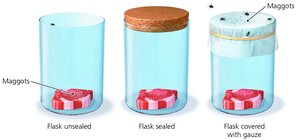
Redi's experiments: Showed that maggots do not arise from meat unless flies can access it, challenging spontaneous generation
Needham's experiments: Suggested microbes could arise spontaneously in broth
Spallanzani's experiments: Demonstrated that sealed and heated broths did not produce microbes, supporting biogenesis
Pasteur's experiments: Used swan-necked flasks to show that microbes come from the air, not spontaneous generation
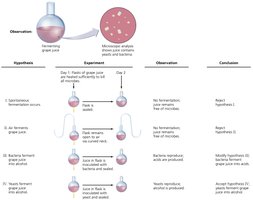
The Scientific Method
Observation leads to a question
Formulation of a hypothesis
Testing through experiments
Results lead to acceptance, rejection, or modification of the hypothesis

Fermentation and Industrial Microbiology
Pasteur's experiments: Demonstrated that specific microbes cause fermentation, leading to pasteurization (heating to kill microbes)
Buchner's experiments: Showed that enzymes, not just living cells, can cause fermentation, founding biochemistry
Industrial microbiology: Use of microbes to manufacture products (e.g., foods, beverages, pharmaceuticals)
The Germ Theory of Disease
Pasteur proposed that specific diseases are caused by specific germs (pathogens)
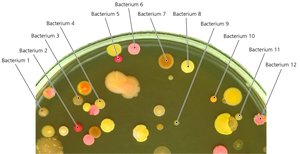
Koch's experiments: Identified causative agents of diseases, developed laboratory techniques (e.g., staining, Petri dishes, pure cultures)
Koch's postulates: Criteria to establish a causative relationship between a microbe and a disease
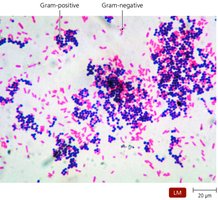
Gram Staining
Developed by Hans Christian Gram
Differentiates bacteria into Gram-positive (purple) and Gram-negative (pink) based on cell wall structure
Essential for bacterial identification
Prevention of Infection and Disease
Semmelweis: Advocated handwashing to prevent puerperal fever
Lister: Developed antiseptic surgical techniques
Nightingale: Improved nursing and hospital sanitation
Snow: Pioneered infection control and epidemiology
Jenner: Developed the first vaccine (smallpox), founding immunology
Ehrlich: Searched for "magic bullets" (chemotherapeutic agents)
The Modern Age of Microbiology
Modern microbiology explores the chemical, genetic, and ecological roles of microbes, as well as their applications in medicine and industry.
Biochemistry
Study of chemical reactions in living organisms
Applications: Herbicide/pesticide design, disease diagnosis, drug development
Microbial Genetics and Molecular Biology
Genes are composed of DNA (Avery, MacLeod, McCarty)
Gene function relates to protein synthesis (Beadle and Tatum)
Gene expression, mutation, and regulation are central topics
Woese and Fox: Classified life into Bacteria, Archaea, and Eukaryotes based on genetic analysis
Recombinant DNA Technology and Gene Therapy
Manipulation of genes for practical applications (e.g., production of human proteins in bacteria)
Gene therapy: Inserting or repairing genes in humans to treat disease
Environmental Microbiology
Bioremediation: Use of microbes to detoxify pollutants
Microbes recycle essential elements (carbon, nitrogen, sulfur)
Defending Against Disease
Serology: Study of blood serum and immune responses
Immunology: Study of the body's defenses against pathogens
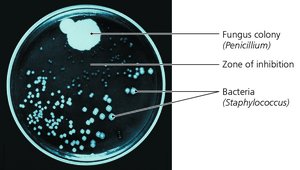
Chemotherapy: Use of chemicals to treat infections (e.g., penicillin, sulfa drugs)
Summary Table: Major Groups of Microorganisms
Group | Cell Type | Key Features | Example |
|---|---|---|---|
Bacteria | Prokaryotic | Peptidoglycan cell wall, asexual reproduction | Streptococcus |
Archaea | Prokaryotic | Cell wall without peptidoglycan, extremophiles | Halobacterium |
Fungi | Eukaryotic | Chitin cell wall, absorb nutrients | Aspergillus (mold), Saccharomyces (yeast) |
Protozoa | Eukaryotic | Motile, no cell wall | Amoeba |
Algae | Eukaryotic | Photosynthetic, cellulose cell wall | Chlorella |
Viruses | Acellular | Obligate intracellular parasites | Influenza virus |
Additional info: This summary integrates foundational concepts from the history of microbiology, including the development of microscopy, classification, and the scientific method, as well as the emergence of modern fields such as genetics, immunology, and biotechnology.
