 Indietro
Adaptive Immunity: Structure, Function, and Mechanisms
Guida di studio - Note intelligenti
 Appunti personalizzati basati sui tuoi materiali, ampliati con definizioni chiave, esempi e contesto.
Specific Immunity (Adaptive Immunity)
Overview of Adaptive Immunity
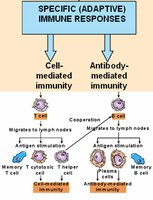
Adaptive immunity, also known as specific immunity, is a highly specialized system of defense that targets specific pathogens. It is characterized by its ability to recognize, remember, and mount stronger attacks upon subsequent exposures to the same pathogen. Adaptive immunity is divided into two main branches: humoral immunity and cell-mediated immunity.
Humoral immunity: Mediated by B cells and antibodies, effective against extracellular pathogens.
Cell-mediated immunity: Mediated by T cells, effective against intracellular pathogens and abnormal cells.
Blood Components for Specific Immunity
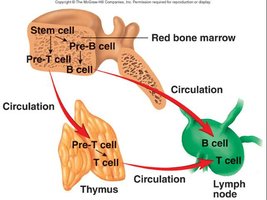
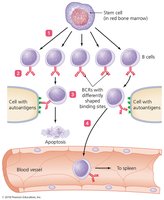
The cellular components of blood involved in adaptive immunity include B cells and T lymphocytes. These cells originate from stem cells in the bone marrow and undergo differentiation and maturation before participating in immune responses.
B cells: Mature in the bone marrow and are responsible for antibody production.
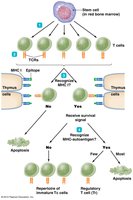
T cells: Mature in the thymus and are involved in cell-mediated responses.
Antigen Presentation and Processing
Antigen Presentation
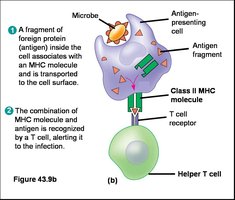
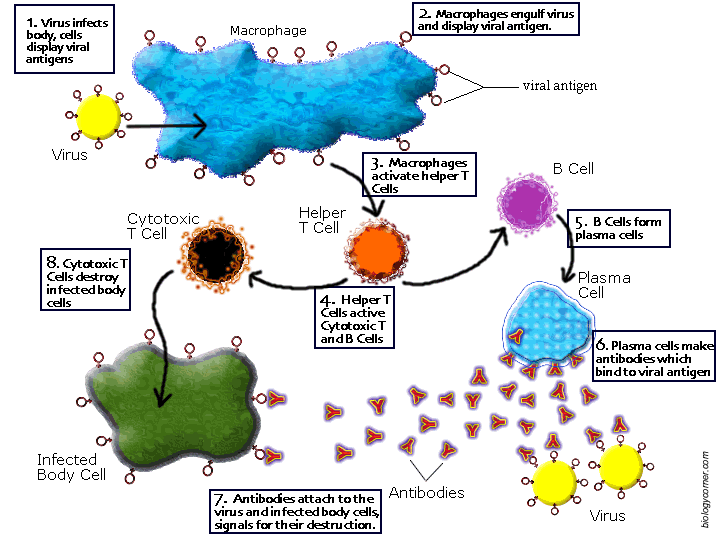
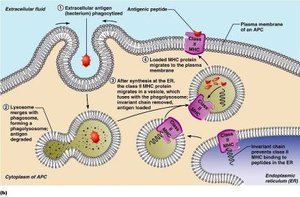
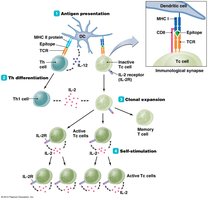
Antigen presentation is a critical step in activating adaptive immunity. Dendritic cells and other antigen-presenting cells (APCs) phagocytose pathogens, process them, and display antigen fragments on their surface using major histocompatibility complex (MHC) molecules. This process is essential for T cell activation.
APCs: Include dendritic cells, macrophages, and B cells.
MHC molecules: Class I MHC is found on all nucleated cells; Class II MHC is found on APCs.
Antigen Processing Pathways
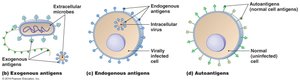
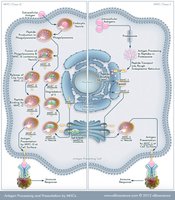
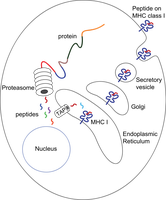
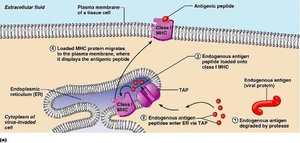
Antigen processing involves breaking down proteins from pathogens and loading them onto MHC molecules for presentation to T cells. There are two main pathways:
Exogenous pathway: Processes extracellular antigens for presentation on MHC II to CD4+ T cells.
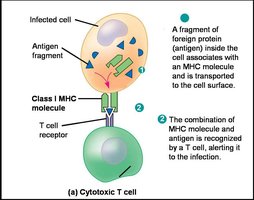
Endogenous pathway: Processes intracellular antigens for presentation on MHC I to CD8+ T cells.
Major Histocompatibility Complex (MHC)
Structure and Function
MHC proteins are cell surface molecules that help the immune system distinguish self from non-self. They are essential for antigen presentation and T cell activation.
MHC Class I: Present on all nucleated cells; present endogenous antigens to CD8+ cytotoxic T cells.
MHC Class II: Present on APCs; present exogenous antigens to CD4+ helper T cells.
Cytokines
Role of Cytokines in Immunity
Cytokines are chemical messengers secreted by immune cells that regulate the intensity and duration of immune responses. They include interleukins, interferons, growth factors, tumor necrosis factor, and chemokines.
Interleukins: Promote communication between white blood cells.
Interferons: Inhibit viral replication and activate immune cells.
Tumor necrosis factor: Induces inflammation and apoptosis.
Chemokines: Attract immune cells to sites of infection.
Humoral Immunity
B Cells and Antibody Production
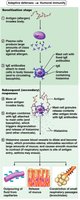
Humoral immunity is mediated by B cells, which produce antibodies that bind to pathogens and facilitate their destruction. This response is crucial for combating extracellular pathogens.
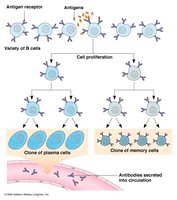
B cells: Differentiate into plasma cells (antibody-secreting) and memory B cells after activation.
Antibodies: Bind to antigens and neutralize, agglutinate, or opsonize pathogens.
Antibody Structure and Diversity
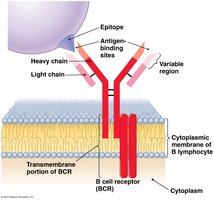
Antibodies, also known as immunoglobulins, are proteins produced by B cells that specifically bind antigens. Each antibody has a variable region (Fab) for antigen binding and a constant region (Fc) for effector functions.
Antigen binding site: Highly variable, allows recognition of millions of antigens.
Immunoglobulin classes: IgM, IgG, IgA, IgD, IgE.
Functions of Antibodies
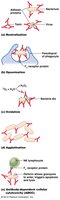
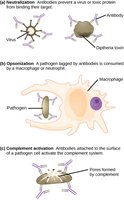
Antibodies perform several functions to eliminate pathogens:
Neutralization: Block harmful effects of toxins and prevent viral attachment.
Immobilization: Inhibit motility of bacteria.
Agglutination: Clump pathogens together for easier phagocytosis.
Activation of complement: Trigger complement cascade for pathogen lysis.
Opsonization: Enhance phagocytosis by coating pathogens.
Classes of Antibodies (Immunoglobulins)
Class | Structure | Location | Function | Half-life |
|---|---|---|---|---|
IgM | Pentamer | Blood, lymph, B cell surface | First produced, agglutination, complement fixation | 5 days |
IgG | Monomer | Blood, CSF, peritoneal fluid | Phagocytosis, neutralization, crosses placenta | 23 days |
IgA | Dimer | Secretions, mucosa | Mucosal protection | 6 days |
IgD | Monomer | B cell surface, blood | Initiates immune response | 3 days |
IgE | Monomer | Mast cells, basophils, blood | Allergic reactions, parasite defense | 2 days |
Cell-Mediated Immunity
T Cell Functions
Cell-mediated immunity is carried out by T lymphocytes and does not involve antibodies. It is essential for defense against intracellular pathogens and abnormal cells.
T-helper cells (TH): Recognize antigens presented by MHC II, activate B cells and cytotoxic T cells.
Cytotoxic T cells (TC): Recognize antigens presented by MHC I, induce apoptosis in infected cells.
T-memory cells: Provide long-term immunity by remembering past infections.
Activation and Function of Cytotoxic T Cells
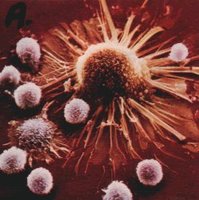
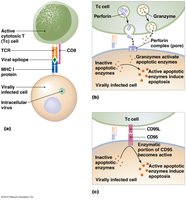
Cytotoxic T cells (CD8+) are activated by recognizing endogenous antigens presented by MHC I molecules. Once activated, they release perforin and granzymes to induce apoptosis in infected or abnormal cells.
Perforin: Creates pores in target cell membrane.
Granzymes: Enter target cell and trigger apoptosis.
Immunologic Dysfunction
Hypersensitivities (Allergies)
Hypersensitivity reactions occur when the immune system responds to harmless substances as if they were threats. Allergens are antigens that trigger allergic responses.
Type I hypersensitivity: Immediate, mediated by IgE.
Type II-IV hypersensitivity: Vary in mechanism and timing.
Take Home Points
Understand the structure and classes of antibodies, mechanisms of diversity, and clonal selection.
Recognize the interactions and processes in humoral and cell-mediated immunity.
Appreciate the role of memory B and T cells in secondary immune responses.
Know the differences between passive and active immunization.
