 Indietro
Chapter 16
Guida di studio - Note intelligenti
 Appunti personalizzati basati sui tuoi materiali, ampliati con definizioni chiave, esempi e contesto.
Overview of Adaptive Immunity
Attributes of Adaptive Immunity
Adaptive immunity is the body's highly specialized defense mechanism against specific pathogens and their products. It is characterized by five key attributes:
Specificity: Ability to target distinct antigens.
Inducibility: Activation only upon exposure to antigens.
Clonality: Proliferation of specific immune cells.
Unresponsiveness to self: Avoidance of attacking the body's own cells.
Memory: Rapid and robust response upon re-exposure to the same antigen.
Lymphocytes and Types of Adaptive Immune Responses
Adaptive immunity involves the activity of lymphocytes, which are divided into two main types:
B lymphocytes (B cells): Mature in the bone marrow and are central to humoral immunity.
T lymphocytes (T cells): Mature in the thymus and are essential for cell-mediated immunity.
There are two types of adaptive immune responses:
Humoral immune responses: Mediated by B cells and antibodies, targeting extracellular pathogens.
Cell-mediated immune responses: Mediated by T cells, targeting intracellular pathogens and abnormal cells.
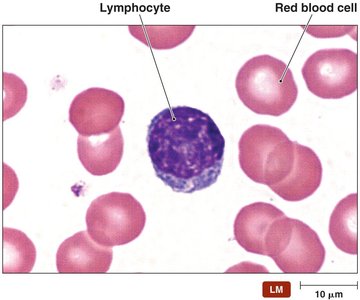
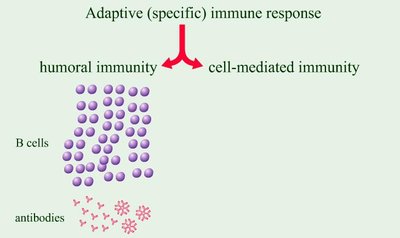
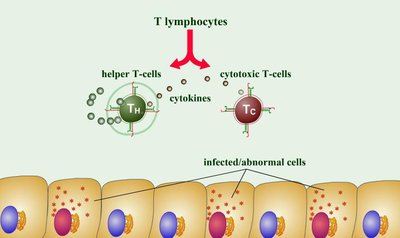
Elements of Adaptive Immunity
The Lymphatic System
The lymphatic system screens body tissues for foreign antigens and is composed of lymphatic vessels, cells, tissues, and organs.
Lymphatic vessels: Conduct lymph in a one-way system, returning it to the circulatory system.
Lymph: Fluid similar to blood plasma, arising from leaked blood vessel fluid.
Lymphoid organs:
Primary: Red bone marrow, thymus
Secondary: Lymph nodes, spleen, tonsils, MALT (mucosa-associated lymphatic tissue)
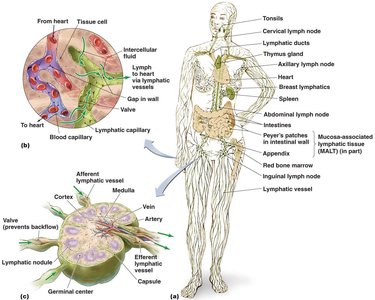
Antigens
Antigens: Molecules recognized as foreign and worthy of attack.
Epitopes: Three-dimensional regions of antigens recognized by immune cells.
Sources include bacterial components, viral proteins, fungi, protozoa, food, and dust.
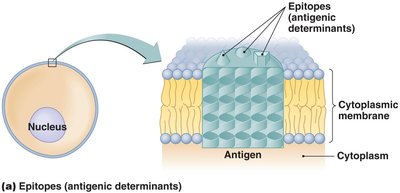
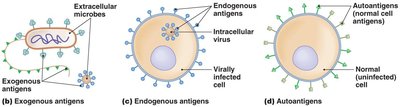
B Lymphocytes (B Cells) and Antibodies
B Cell Development and Function
B cells arise and mature in the red bone marrow.
Primarily found in the spleen, lymph nodes, and MALT; a small percentage circulate in the blood.
Major function: Secretion of antibodies.
B Cell Receptor (BCR) Specificity
Each B cell has multiple copies of a unique BCR.
BCRs have two variable regions forming antigen-binding sites, each recognizing a single epitope.
The repertoire of BCRs allows recognition of millions of different epitopes.
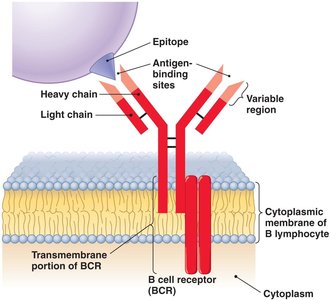
Antibody Structure and Function
Antibodies are immunoglobulins secreted by plasma cells (activated B cells).
Antibodies have identical antigen-binding sites and specificity as the BCR of the activated B cell.
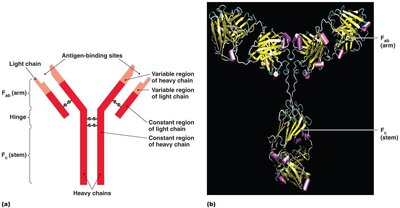
Functions of Antibodies
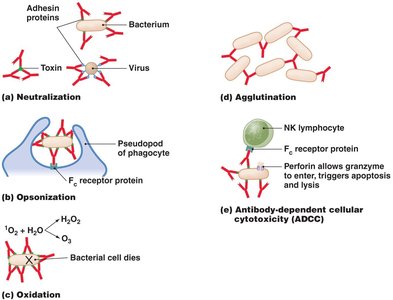
Antibodies perform several functions:
Activation of complement and inflammation
Neutralization
Opsonization
Killing by oxidation
Agglutination
Antibody-dependent cellular cytotoxicity (ADCC)
Classes of Antibodies
The immune system utilizes five classes of antibodies, each with distinct roles:
IgM: First antibody produced.
IgG: Most common and longest-lasting antibody.
IgA: Associated with body secretions.
IgE: Involved in response to parasitic infections and allergies.
IgD: Function not fully understood.
T Lymphocytes (T Cells)
T Cell Development and Function
Produced in the red bone marrow, mature in the thymus.
Circulate in lymph and blood, migrate to lymph nodes, spleen, and Peyer's patches.
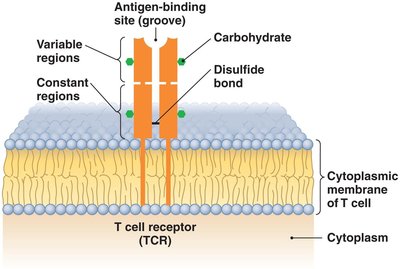
Have T cell receptors (TCRs) on their membrane, complementary to epitopes.
T Cell Receptor (TCR) Specificity
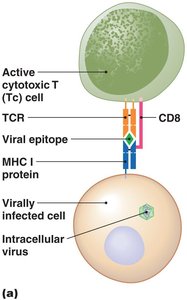
TCRs do not recognize epitopes directly; they bind epitopes associated with MHC proteins.
TCRs act primarily against cells harboring intracellular pathogens.
Types of T Lymphocytes
T cells are classified based on surface glycoproteins and functions:
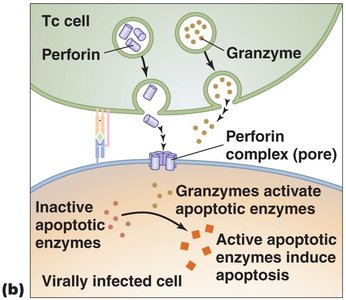
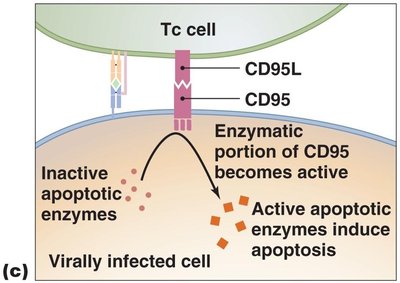
Cytotoxic T lymphocyte (Tc): Directly kills infected or abnormal cells.
Helper T lymphocyte (Th): Regulates activities of B cells and cytotoxic T cells.
Regulatory T lymphocyte (Tr): Represses adaptive immune responses.
Clonal Deletion
Prevention of Autoimmunity
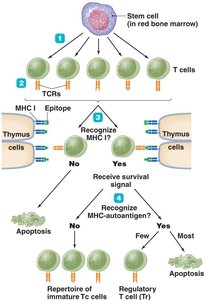
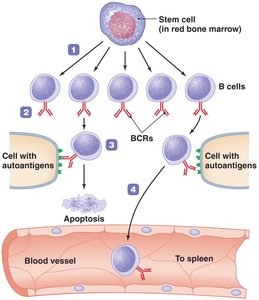
Self-reactive lymphocytes are eliminated to prevent immune responses against autoantigens.
Lymphocytes that react to autoantigens undergo apoptosis.
Immune Response Cytokines
Cytokine Network
Cytokines are soluble regulatory proteins acting as intercellular signals.
Secreted by various leukocytes, forming a complex web of signals.
Types of Cytokines
Interleukins (ILs): Signal among leukocytes.
Interferons (IFNs): Antiviral proteins, may act as cytokines.
Growth factors: Stimulate stem cell division.
Tumor necrosis factor (TNF): Kills tumor cells, regulates immune responses and inflammation.
Chemokines: Signal leukocytes to move.
Major Histocompatibility Complex (MHC)
Role in Adaptive Immunity
MHC antigens are glycoproteins found in most vertebrate cell membranes.
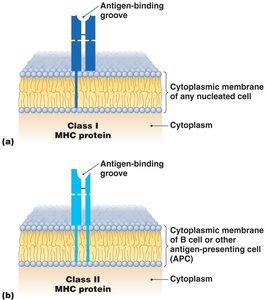
Hold and position antigenic determinants for presentation to T cells.
Two classes:
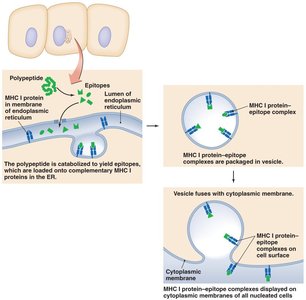
MHC class I: Found on all nucleated cells.
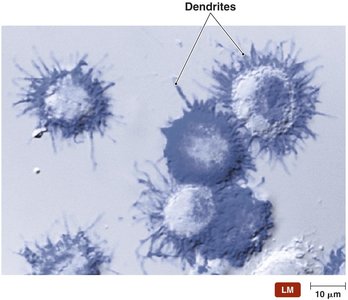
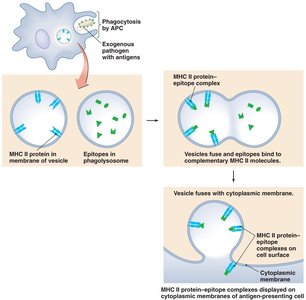
MHC class II: Found on antigen-presenting cells (APCs) such as B cells, dendritic cells, and macrophages.
Antigen Processing and Presentation
Antigen Processing
Antigens are processed for MHC proteins to display epitopes.
Different processes for endogenous (internal) and exogenous (external) antigens.
Cell-Mediated Immune Responses
Response to Intracellular Pathogens
Targets viruses, cancer cells, intracellular protozoa, and bacteria.
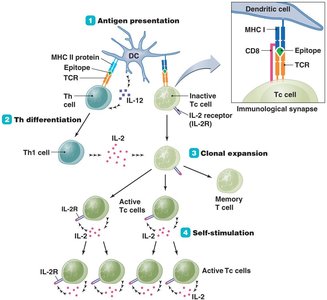
Activation of Cytotoxic T Cells
Steps involved:
Antigen presentation
Helper T cell differentiation
Clonal expansion
Self-stimulation
Memory T Cells
Some activated T cells become memory T cells, persisting in lymphoid tissues for months or years.
They respond immediately upon subsequent contact with their specific epitope.
T Cell Regulation
Regulation prevents T cell response to autoantigens.
T cells require additional signals from antigen-presenting cells to be activated.
Humoral Immune Responses
Response to Exogenous Pathogens
Humoral responses are mounted against pathogens outside cells.
Activation occurs only in response to specific pathogens.
T-Independent and T-Dependent Responses
T-independent: B cells can be activated directly by certain antigens.
T-dependent: Requires help from T cells for B cell activation.
Plasma Cells and Memory B Cells
Plasma cells secrete antibodies complementary to the specific antigen; they are short-lived but their antibodies and progeny persist.
Memory B cells do not secrete antibodies but persist in lymphoid tissue, initiating antibody production upon re-exposure to the antigen.
Types of Acquired Immunity
Acquisition of Specific Immunity
Naturally acquired: Response to antigens encountered in daily life.
Artificially acquired: Response to antigens introduced via vaccination.
Immunity can be active (body produces its own antibodies) or passive (receives antibodies from another individual).
Summary Table: Classes of Antibodies
Class | Main Function | Location |
|---|---|---|
IgM | First produced in response | Blood, lymph |
IgG | Most common, long-lasting | Blood, extracellular fluid |
IgA | Secretions (mucus, saliva, tears) | Mucosal surfaces |
IgE | Allergy, parasitic infection | Blood, tissues |
IgD | Unknown | B cell surface |
Summary Table: Types of T Lymphocytes
Type | Function |
|---|---|
Cytotoxic T (Tc) | Kills infected/abnormal cells |
Helper T (Th) | Regulates B and Tc cells |
Regulatory T (Tr) | Suppresses immune response |
Summary Table: MHC Classes
Class | Location | Function |
|---|---|---|
MHC I | All nucleated cells | Presents endogenous antigens |
MHC II | APCs (B cells, dendritic cells, macrophages) | Presents exogenous antigens |
