 Indietro
Antimicrobial Drugs: Mechanisms, Classes, and Resistance
Guida di studio - Note intelligenti
 Appunti personalizzati basati sui tuoi materiali, ampliati con definizioni chiave, esempi e contesto.
Antimicrobial Drugs
Historical Foundations of Chemotherapy
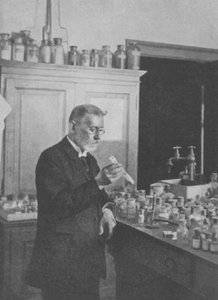
The discovery and development of antimicrobial drugs revolutionized the treatment of infectious diseases. Paul Ehrlich is recognized as the father of chemotherapy, notably for his work on Compound 606, which effectively treated syphilis. His systematic screening approach remains foundational in modern drug discovery.
Antibiotics are metabolic products of aerobic bacteria and fungi, such as Streptomyces, Bacillus, Penicillium, and Cephalosporium. These organisms produce antibiotics to reduce competition for nutrients and space in their habitats.
Types of Antimicrobial Drugs
Antimicrobial drugs are classified as synthetic (fully manufactured) or semisynthetic (chemically modified natural compounds). The spectrum of activity refers to the range of microbes affected:
Narrow-spectrum: Effective against a limited group of microbes.
Broad-spectrum: Effective against a wide variety of microbes.
Considerations in Antimicrobial Therapy
Several factors influence the effectiveness and safety of antimicrobial drugs:
Dosage: Amount and frequency of administration.
Therapeutic index: Ratio of toxic dose to effective dose (higher is safer).
Half-life: Time for 50% of the drug to be eliminated from plasma.
Route of administration: Oral, topical, or parenteral (intravenous/intramuscular).
Drug interactions: Synergistic (enhanced effect) or antagonistic (reduced effect).
Patient condition and pathogen nature.
Mechanisms of Drug Action
Overview of Drug Targets
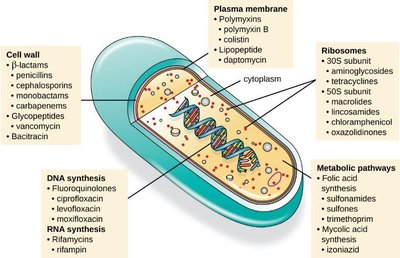
Antimicrobial drugs act by targeting specific structures or processes in microbial cells, including cell wall synthesis, protein synthesis, cell membrane integrity, nucleic acid synthesis, and metabolic pathways.
Cell Wall Synthesis Inhibition
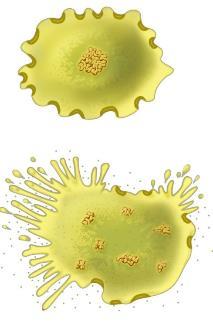
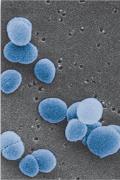
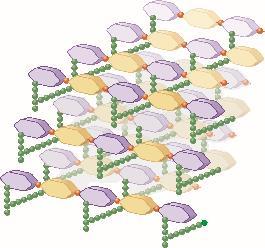
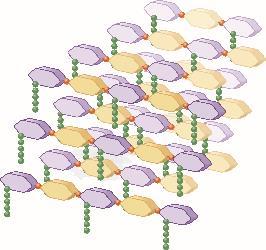
Drugs that inhibit cell wall synthesis prevent bacteria from forming strong peptidoglycan layers, leading to cell lysis. Penicillins and cephalosporins block the formation of cross-bridges in peptidoglycan, weakening the cell wall.
β-lactams: Penicillins, cephalosporins, monobactams, carbapenems (contain β-lactam ring).
Non β-lactam inhibitors: Vancomycin, bacitracin, isoniazid.
β-Lactam Antibiotics
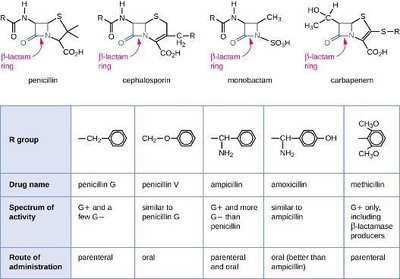
All β-lactam antibiotics share a core β-lactam ring, but differ in their R groups, which affect their spectrum, stability, and resistance to β-lactamase enzymes.
Drug Name | Spectrum of Activity | Route of Administration |
|---|---|---|
Penicillin G | G+ and a few G- | Parenteral |
Penicillin V | Similar to Penicillin G | Oral |
Ampicillin | G+ and more G- | Parenteral and oral |
Amoxicillin | Similar to ampicillin | Oral (better than ampicillin) |
Methicillin | G+ only, including β-lactamase producers | Parenteral |
Protein Synthesis Inhibition
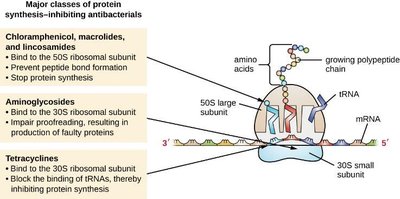
These drugs target bacterial ribosomes, preventing the production of essential proteins. Major classes include:
Aminoglycosides: Bind 30S subunit, cause faulty proteins (e.g., streptomycin, gentamicin).
Tetracyclines: Bind 30S subunit, block tRNA binding.
Macrolides: Bind 50S subunit, prevent peptide bond formation (e.g., erythromycin).
Chloramphenicol: Broad-spectrum, blocks peptide bond formation, toxic.
Cell Membrane Disruption
Drugs such as polymyxins disrupt bacterial cell membranes, leading to cell death. These are mainly used for drug-resistant infections.
Nucleic Acid Synthesis Inhibition
Rifampin blocks RNA polymerase, while fluoroquinolones inhibit DNA gyrase and topoisomerase IV, preventing DNA replication and transcription.
Metabolic Pathway Inhibition
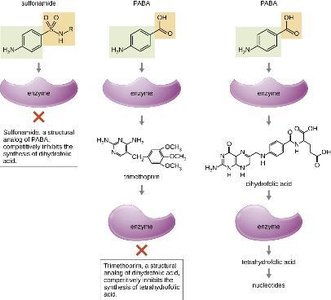
Sulfonamides and trimethoprim inhibit folic acid synthesis, blocking purine and pyrimidine biosynthesis and thus bacterial growth.
Superinfection and Drug Resistance
Superinfection
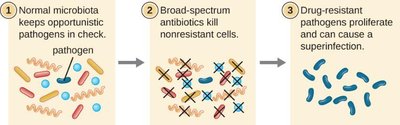
Broad-spectrum antibiotics can disrupt normal microbiota, allowing drug-resistant pathogens to proliferate and cause secondary infections.
Acquisition of Drug Resistance
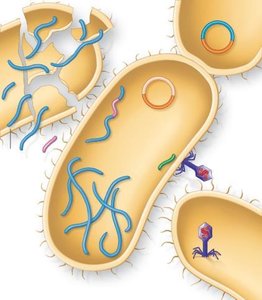
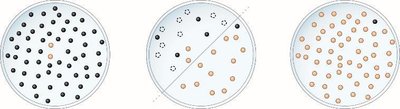
Microbes acquire resistance through spontaneous mutations or by obtaining resistance genes via plasmids, transposons, or viral delivery. This process is facilitated by natural selection, where resistant cells survive and proliferate under drug exposure.
Natural Selection and Drug Resistance
Drug-resistant cells gain a survival advantage when exposed to antimicrobials, leading to the predominance of resistant populations.
Antifungal, Antiviral, and Antiparasitic Agents
Antifungal Drugs
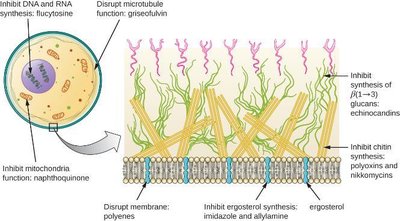
Fungal cells are eukaryotic, making selective toxicity challenging. Major classes include macrolide polyenes (e.g., amphotericin B, nystatin), azoles, and echinocandins.
Antiviral Chemotherapeutic Agents
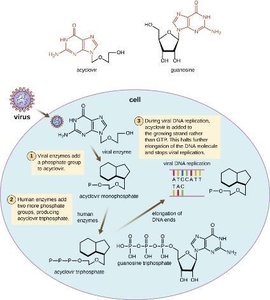
Viruses are obligate intracellular parasites, making selective toxicity difficult. Antiviral drugs block viral entry, replication, transcription, or translation. Acyclovir is a nucleotide analog activated by viral enzymes, leading to chain termination during DNA replication.
Antiretroviral Therapy (ART)
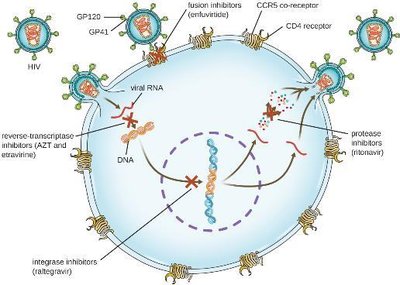
ART is used for HIV treatment, targeting viral entry, reverse transcription, integration, and protease activity.
Antiparasitic Chemotherapy
Antimalarial drugs (quinine, chloroquine), antiprotozoan drugs (metronidazole), and antihelminthic drugs (mebendazole, niclosamide) act by interfering with DNA replication, microtubule function, or metabolism.
