 Indietro
Antimicrobial Drugs: Mechanisms, Classes, and Resistance
Guida di studio - Note intelligenti
 Appunti personalizzati basati sui tuoi materiali, ampliati con definizioni chiave, esempi e contesto.
Antimicrobial Drugs
Introduction to Chemotherapeutic Agents
Chemotherapeutic agents are chemical substances used to treat infectious diseases by destroying or inhibiting the growth of pathogenic microbes within the host. Most chemotherapeutic agents used in microbiology are antibiotics, which are microbial products or their derivatives that kill or inhibit susceptible microbes.
Antibiotics: Substances produced by microorganisms that inhibit or kill other microbes.
Selective toxicity: The ability of a drug to target pathogens with minimal harm to the host.
Historical Discoveries
Penicillin: Discovered by Alexander Fleming in 1928, with further development by Florey, Chain, and Heatley. Awarded the Nobel Prize in 1945.
Streptomycin: Discovered by Selman Waksman in 1944, effective against tuberculosis. Nobel Prize in 1952.
Other important antibiotics: Chloramphenicol, neomycin, oxytetracycline, and tetracycline were isolated by 1953.
General Characteristics of Antimicrobial Drugs
Key Properties
Selective toxicity ensures minimal damage to host cells.
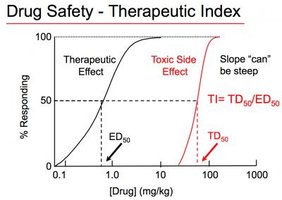
Therapeutic dose: The drug concentration required for clinical treatment.
Toxic dose: The concentration at which the drug becomes harmful to the patient.
Therapeutic index (TI): The ratio of toxic dose to therapeutic dose (). A higher TI indicates a safer drug.
Narrow-spectrum drugs: Effective against a limited range of pathogens.
Broad-spectrum drugs: Effective against a wide variety of bacteria.
Cidal agents: Kill the target pathogen.
Static agents: Inhibit microbial growth reversibly.
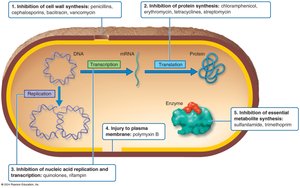
Major Modes of Action of Antibacterial Drugs
Antibacterial drugs target essential processes in bacteria, exploiting differences between microbial and human cells.
1. Inhibition of cell wall synthesis
2. Inhibition of protein synthesis
3. Injury to plasma membrane
4. Inhibition of nucleic acid synthesis
5. Inhibition of essential metabolite synthesis
Inhibitors of Cell Wall Synthesis
Mechanism and Drug Classes
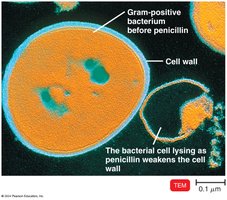
These drugs block the synthesis of peptidoglycan, weakening the bacterial cell wall and causing cell lysis. Human cells lack peptidoglycan, providing high selective toxicity. These drugs are generally bactericidal and most effective against actively growing cells, especially gram-positive bacteria.
β-lactams: Penicillins, cephalosporins, carbapenems, monobactams (bind PBPs and block cross-linking).
Non-β-lactams: Vancomycin, bacitracin, isoniazid, ethambutol (target mycobacteria or block peptidoglycan assembly).
Penicillins
Contain a β-lactam ring; prevent cross-linking of peptidoglycans.
Natural penicillins: Penicillin G (injected), Penicillin V (oral); narrow spectrum, susceptible to β-lactamases.
Semisynthetic penicillins: Modified side chains for resistance to β-lactamases (e.g., methicillin, oxacillin).
Extended-spectrum penicillins: Effective against gram-negatives (e.g., ampicillin, amoxicillin).
Penicillin + β-lactamase inhibitor: Amoxicillin + clavulanic acid (Augmentin).
Other Cell Wall Synthesis Inhibitors
Cephalosporins: Similar to penicillins but more resistant to β-lactamases.
Carbapenems: Broad spectrum, resistant to most β-lactamases, used for resistant infections.
Vancomycin: Binds D-Ala-D-Ala, blocks assembly; important for MRSA, but resistance (VRE, VRSA) exists.
Bacitracin: Blocks lipid carrier recycling; topical use for gram-positives.
Inhibitors of Protein Synthesis
Mechanism and Drug Classes
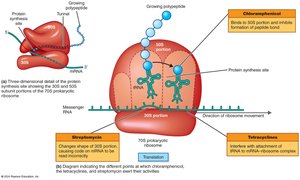
These drugs target the bacterial 70S ribosome (30S and 50S subunits), which differs from the 80S ribosome in eukaryotes, providing selective toxicity. Most are bacteriostatic, except aminoglycosides, which are bactericidal.
30S subunit inhibitors: Aminoglycosides, tetracyclines, glycylcyclines.
50S subunit inhibitors: Chloramphenicol, macrolides, lincosamides, streptogramins, oxazolidinones, pleuromutilins.
Examples of Protein Synthesis Inhibitors
Aminoglycosides: Change 30S shape, cause mRNA misreading; bactericidal; e.g., streptomycin, gentamicin.
Tetracyclines: Interfere with tRNA attachment; broad spectrum; can cause superinfections.
Chloramphenicol: Binds 50S, inhibits peptide bond formation; broad spectrum; risk of aplastic anemia.
Macrolides: Bind 50S, block elongation; e.g., erythromycin (narrow), azithromycin (broader).
Lincosamides: Clindamycin; active against gram-positives and anaerobes; risk of C. difficile infection.
Streptogramins: Synercid (quinupristin + dalfopristin); used for vancomycin-resistant gram-positives.
Oxazolidinones: Linezolid; block 70S initiation; used for MRSA and VRE.
Pleuromutilins: Retapamulin (topical), lefamulin (systemic).
Injury to Membranes
Mechanism and Examples
These drugs disrupt the bacterial plasma membrane, causing leakage of cell contents. They are bactericidal but less selective, as host cells also have membranes.
Daptomycin: Inserts into gram-positive membranes; used for MRSA and VRE.
Polymyxins: Bind LPS in gram-negative outer membrane; Polymyxin B (topical), Polymyxin E (colistin, last-resort for multidrug-resistant gram-negatives).
Nucleic Acid Synthesis Inhibitors
Mechanism and Examples
These drugs target bacterial enzymes involved in DNA replication and transcription, which differ from human enzymes.
Rifamycins (rifampin): Inhibit mRNA synthesis; used for tuberculosis; can cause orange-red body fluids.
Quinolones/Fluoroquinolones: Inhibit DNA gyrase; e.g., ciprofloxacin; broad spectrum; risk of tendon rupture.
Competitive Inhibition of Essential Metabolites
Mechanism and Examples
These drugs inhibit enzymes in metabolic pathways unique to bacteria, such as folic acid synthesis.
Sulfonamides: Inhibit folic acid synthesis by mimicking PABA; selective for bacteria.
Trimethoprim: Inhibits dihydrofolate reductase; bacterial enzyme is more sensitive than human.
TMP-SMZ (Bactrim): Combination therapy blocks two steps in folic acid pathway; used for UTIs and Pneumocystis pneumonia.
Antifungal, Antiviral, Antiprotozoan, and Antihelminthic Drugs
Antifungal Drugs
Target ergosterol in fungal membranes (not present in humans).
Polyenes: Nystatin (topical), amphotericin B (systemic; high toxicity).
Azoles: Clotrimazole, ketoconazole, fluconazole (block ergosterol synthesis).
Antiviral Drugs
Target steps unique to viral life cycle (entry, uncoating, nucleic acid synthesis, assembly, exit).
Examples: Maraviroc (entry inhibitor, HIV), acyclovir (herpes), oseltamivir (influenza), ART (HIV combination therapy).
Antiprotozoan Drugs
Quinine/chloroquine: Treat malaria; block heme detoxification.
Metronidazole: Treats Trichomonas, giardiasis; damages DNA in anaerobes.
Antihelminthic Drugs
Niclosamide: Treats tapeworms; blocks ATP production.
Ivermectin: Paralyzes roundworms and mites.
Mebendazole: Blocks nutrient absorption in intestinal helminths.
Antimicrobial Drug Resistance
Mechanisms of Resistance
Bacteria can acquire resistance through genetic changes and horizontal gene transfer. Resistance genes are often spread via plasmids or transposons.
Persister cells: Survive antibiotic exposure due to genetic traits.
Superbugs: Bacteria resistant to multiple antibiotics (e.g., MRSA, VRSA, Pseudomonas aeruginosa).
Four Main Mechanisms of Antibiotic Resistance
Enzymatic destruction or inactivation: e.g., β-lactamases break β-lactam ring of penicillins/cephalosporins.
Prevention of penetration: Modified porins in gram-negatives block drug entry.
Alteration of target site: e.g., MRSA modifies PBPs so β-lactams cannot bind.
Rapid efflux: Membrane pumps expel antibiotics from the cell.




Antibiotic Misuse and Prevention of Resistance
Causes of Misuse
Using antibiotics for viral infections (e.g., common cold).
Not completing prescribed regimens.
Using leftover or outdated antibiotics.
Over-the-counter availability and use in animal feed.
Prevention Strategies
Prescribe only when necessary; use narrow-spectrum drugs when possible.
Promote vaccination and hygiene to prevent infections.
Patients should finish prescriptions and never share antibiotics.
Effects of Drug Combinations
Synergism and Antagonism
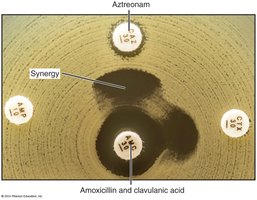
Synergism: Combined effect of two drugs is greater than either alone.
Antagonism: Combined effect is less than either drug alone.
Future of Antimicrobial Agents
New Strategies and Sources
Targeting virulence factors instead of killing pathogens directly.
Sequestering iron to starve pathogens (e.g., cefiderocol).
Combating dormant persister cells.
Developing drugs for gram-negatives and using antimicrobial peptides (e.g., defensins, bacteriocins).
Phage therapy and AI-driven antibiotic discovery (e.g., halicin).
