 Indietro
Antimicrobial Drugs: Mechanisms, Classes, and Resistance
Guida di studio - Note intelligenti
 Appunti personalizzati basati sui tuoi materiali, ampliati con definizioni chiave, esempi e contesto.
Antimicrobial Drugs: Overview
Introduction to Antimicrobial Drugs
Antimicrobial drugs are essential tools in the treatment of infectious diseases. They are designed to selectively target and eliminate pathogenic microorganisms while minimizing harm to the host. The study of these drugs includes understanding their types, mechanisms of action, and the development of resistance.
Selective toxicity: The ability of a drug to target pathogens without damaging the host.
Chemotherapy: The use of chemicals to treat disease.
Antibiotic: A substance produced by a microbe that, in small amounts, inhibits another microbe.
Antimicrobial drugs: Synthetic substances that interfere with the growth of microbes.
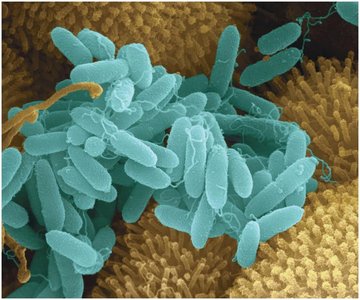
Sources of Antibiotics
Antibiotics are derived from various microorganisms, including bacteria and fungi. The following table summarizes representative sources and their antibiotics:
Microorganism | Antibiotic |
|---|---|
Gram Positive Rods | Bacitracin (Bacillus subtilis), Polymyxin (Paenibacillus polymyxa) |
Actinomycetes | Amphotericin B (Streptomyces nodosus), Chloramphenicol (Streptomyces venezuelae), Tetracycline (Streptomyces aureofaciens), Erythromycin (Saccharopolyspora erythraea), Neomycin (Streptomyces fradiae), Streptomycin (Streptomyces griseus), Gentamicin (Micromonospora purpurea) |
Fungi | Cephalothin (Cephalosporium spp.), Griseofulvin (Penicillium griseofulvum), Penicillin (Penicillium chrysogenum) |
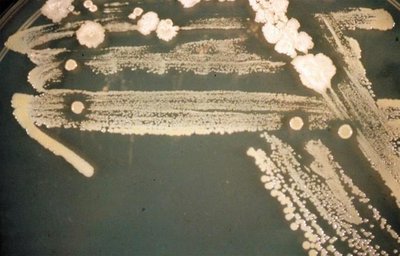
Spectrum of Antimicrobial Activity
Antimicrobial drugs vary in their spectrum of activity:
Narrow-spectrum antibiotics: Affect a limited range of microbial types.
Broad-spectrum antibiotics: Affect a wide range of gram-positive or gram-negative bacteria.
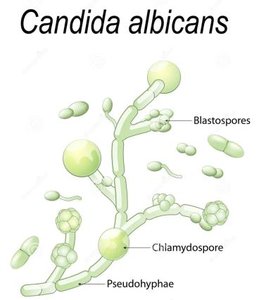
Superinfection: Overgrowth of normal microbiota resistant to antibiotics (e.g., Candida albicans, Clostridioides difficile).
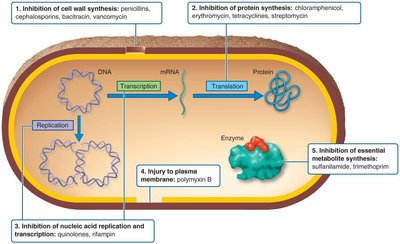
Mechanisms of Action of Antimicrobial Drugs
Major Action Modes
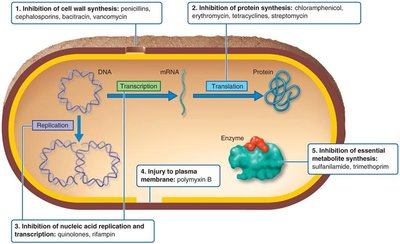
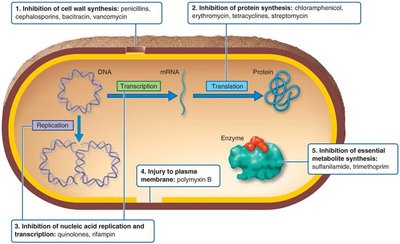
Antimicrobial drugs act through several primary mechanisms:
Inhibition of cell wall synthesis (e.g., penicillins, cephalosporins, bacitracin, vancomycin)
Inhibition of protein synthesis (e.g., chloramphenicol, erythromycin, tetracyclines, streptomycin)
Inhibition of nucleic acid replication and transcription (e.g., quinolones, rifampin)
Injury to plasma membrane (e.g., polymyxin B)
Inhibition of essential metabolite synthesis (e.g., sulfanilamide, trimethoprim)
Inhibition of Cell Wall Synthesis
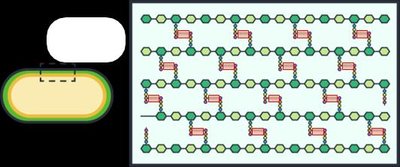
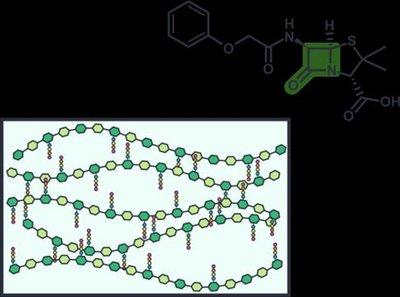
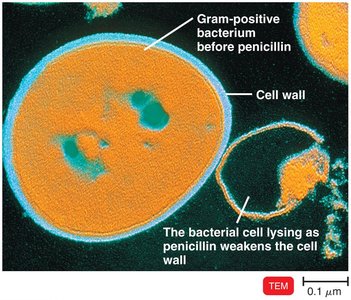
Drugs such as penicillins prevent the synthesis of peptidoglycan, a critical component of bacterial cell walls. The β-lactam ring in penicillins blocks the cross-linking of N-acetylmuramic acid (NAM) subunits, weakening the cell wall and leading to cell lysis.
Inhibition of Protein Synthesis
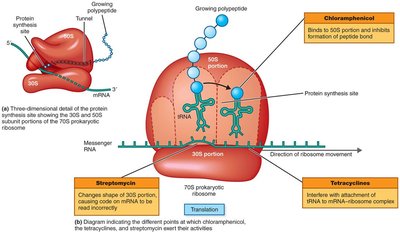
Antibiotics targeting protein synthesis act on bacterial 70S ribosomes, which differ from eukaryotic 80S ribosomes, providing selective toxicity. Examples include:
Chloramphenicol: Binds to the 50S subunit, inhibiting peptide bond formation.
Streptomycin: Changes the shape of the 30S subunit, causing mRNA misreading.
Tetracyclines: Interfere with tRNA attachment to the ribosome.
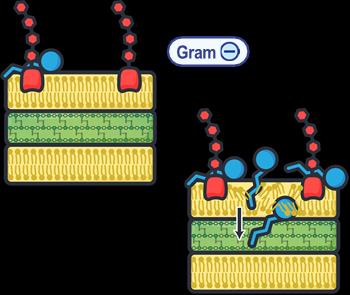
Injury to Plasma Membrane
Some antibiotics, such as polymyxin B, disrupt the plasma membrane, increasing permeability and causing cell death. Antifungal drugs often target membrane sterols, such as ergosterol, to disrupt fungal cell membranes.
Inhibition of Nucleic Acid Synthesis
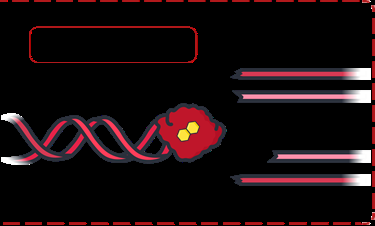
These drugs block enzymes involved in DNA replication (e.g., topoisomerase inhibitors) or transcription (e.g., RNA polymerase inhibitors), preventing microbial proliferation.
Inhibition of Essential Metabolite Synthesis
Antimetabolites, such as sulfanilamide, compete with normal substrates (e.g., PABA) for enzymes, blocking the synthesis of essential molecules like folic acid.
Classes of Antimicrobial Drugs
β-Lactam Antibiotics
β-Lactam antibiotics include penicillins, cephalosporins, carbapenems, and monobactams. They all contain a β-lactam ring and inhibit cell wall synthesis.
Penicillins: Natural (Penicillin G, V), semisynthetic, penicillinase-resistant, extended-spectrum, and those combined with β-lactamase inhibitors.
Cephalosporins: Similar to penicillins but with a different β-lactam ring structure; grouped by generation.
Carbapenems: Broad-spectrum, resistant to many β-lactamases.
Monobactams: Single ring, effective against certain gram-negatives.
Other Cell Wall Synthesis Inhibitors
Bacitracin: Topical, effective against gram-positives.
Vancomycin: Last line against MRSA; resistance is emerging (VRSA, VRE).
Teixobactin: Effective against resistant gram-positives.
Antimycobacterial antibiotics: Isoniazid (inhibits mycolic acid synthesis), Ethambutol (inhibits incorporation of mycolic acid).
Inhibitors of Protein Synthesis
Nitrofurantoin: Used for urinary infections; attacks ribosomal proteins.
Chloramphenicol: Broad spectrum; risk of aplastic anemia.
Aminoglycosides: Cause mRNA misreading; can cause auditory and kidney damage (e.g., streptomycin, gentamicin).
Tetracyclines: Broad spectrum; risk of superinfection.
Glycylcyclines: Developed to overcome tetracycline resistance (e.g., tigecycline).
Macrolides: Narrow spectrum against gram-positives (e.g., erythromycin, azithromycin).
Streptogramins, Oxazolidinones, Pleuromutilins: Used for resistant gram-positives (e.g., MRSA, VRE).
Inhibitors of Nucleic Acid Synthesis
Rifamycins (rifampin): Inhibit mRNA synthesis; used for tuberculosis.
Quinolones/Fluoroquinolones: Inhibit DNA gyrase (e.g., ciprofloxacin); risk of tendon rupture.
Inhibitors of Essential Metabolite Synthesis
Sulfonamides (sulfa drugs): Inhibit folic acid synthesis by competing with PABA.
Trimethoprim: Inhibits conversion of dihydrofolic acid to tetrahydrofolic acid.
Synergism: Combination of trimethoprim and sulfamethoxazole (TMP-SMZ) enhances efficacy.
Antifungal, Antiviral, and Antiprotozoal Drugs
Antifungal Drugs
Polyenes: Bind to ergosterol, disrupting fungal membranes (e.g., nystatin, amphotericin B).
Azoles: Inhibit ergosterol synthesis (imidazoles for topical use, triazoles for systemic infections).
Allylamines: Used for azole-resistant infections.
Antiviral Drugs
Entry and fusion inhibitors: Block viral entry into host cells.
Uncoating, genome integration, and nucleic acid synthesis inhibitors: Prevent viral replication (e.g., nucleoside analogs, non-nucleoside inhibitors).
Assembly and exit inhibitors: Protease inhibitors (e.g., Paxlovid® for COVID-19), neuraminidase inhibitors (block viral release).
Antiprotozoan Drugs
Quinine and chloroquine: Treat malaria.
Artemisinin: Kills Plasmodium species.
Metronidazole, tinidazole, nitazoxanide: Treat anaerobic bacteria and protozoal infections.
Miltefosine: Inhibits cytochrome oxidase; treats amebic encephalitis and leishmaniasis.
Susceptibility Testing and Resistance
Testing Microbial Susceptibility
Disk-diffusion method (Kirby-Bauer test): Paper disks with antibiotics are placed on inoculated agar; zones of inhibition indicate sensitivity.
Minimal inhibitory concentration (MIC): Lowest concentration of a drug that prevents microbial growth.
Minimum bactericidal concentration (MBC): Lowest concentration that kills the microbe.
Drug Interactions: Synergism and Antagonism
Synergism: Combined effect of drugs is greater than the sum of individual effects (e.g., aminoglycosides and penicillins).
Antagonism: One drug reduces the effect of another (e.g., penicillins and tetracyclines).
Mechanisms of Resistance
Enzymatic destruction or inactivation of the drug (e.g., β-lactamases)
Prevention of penetration to the target site
Alteration of the drug’s target site
Rapid efflux (ejection) of the antibiotic
Horizontal gene transfer: Resistance genes spread via plasmids or transposons (conjugation, transduction)
Superbugs are bacteria resistant to multiple antibiotics, posing significant challenges in healthcare settings (e.g., Acinetobacter baumannii, Pseudomonas aeruginosa, Enterobacteriaceae).
